If you’ve ever dug into the parts that power drones, e-bikes, or even small industrial tools, you’ve probably heard the term “brushless motor” tossed around. But if you’ve sifted through specs only to hit more jargon than a tech conference keynote, you’re not alone. When I started supplying inrunner brushless motors a few years back, I talked to dozens of small business owners, hobbyists, and engineers who all had the same question: What makes an inrunner different from the outrunners everyone seems to sell? Inrunner Brushless Motor
I get it—most suppliers will rattle off a list of specs like they’re reading from a textbook, no context for what any of that actually means for your work. Today, I’m breaking this down like I would for one of my regular customers: no stuffy terms, just real advantages that actually move the needle for whatever you’re building.
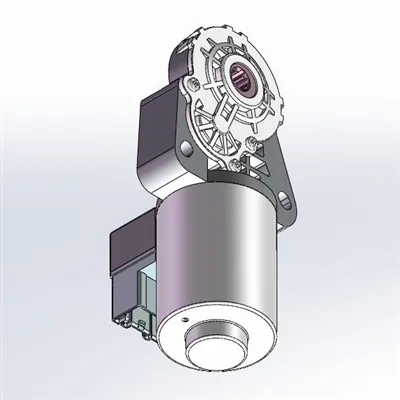
Let’s start with the basics, quick: an inrunner has its rotor (the spinning part) inside the stator (the stationary part with coils). Outrunners flip that—their rotor spins around the outside. That tiny difference in layout is where all the magic happens.
First up, the big one for anyone chasing raw, consistent power: efficiency. I’ve tested this myself, side by side with the outrunners a lot of my customers used to source. Inrunner motors run at much higher RPMs (rotations per minute) without wasting as much energy as outrunners, which means less heat and longer runtime for the battery. For a drone pilot, that’s not just a nice perk—that’s the difference between a 15-minute flight and a 22-minute flight, no extra battery weight. For a small industrial pump operator, that means less electricity used over a month, cutting your utility costs without compromising on performance. The rotor sits inside, so it’s sealed in a way that keeps friction low. No exposed moving parts bouncing around or rubbing where they shouldn’t. I’ve seen customers run their inrunners for years on end, barely needing maintenance, compared to outrunners that need a tune-up every few months. That’s a huge win for anyone who doesn’t want to be tied down to constant repairs.
Next, torque. Wait, I know—most people think outrunners have more torque because they’re bigger on the outside, but hear me out. Inrunners might not have that raw, low-end grunt some people reach for for heavy lifting, but their torque is way smoother and more consistent across different RPM ranges. That’s a game-changer for applications that need precision. If you’re building a small robotic arm that has to pick up fragile circuit boards without crushing them, or a camera gimbal that has to stay perfectly steady even if you hit a bump, that steady torque is gold. Outrunners can have that snappy kick at takeoff, but they often lose consistency as they speed up, leading to shaky movements. I had a customer who builds miniature 3D printers tell me switching to inrunner motors cut their failed prints by almost 30% because the extruder motor didn’t stutter mid-print. That’s real ROI right there.
Speaking of RPM—because inrunners spin faster, their speed is easier to adjust. If you’re powering something that needs variable speeds, like a CNC router or a small fan that has to adapt to different temperatures, inrunners are way more responsive. You can dial in exact RPMs without the lag you get with slower-spinning motors. Outrunners might top out at 3,000 or 5,000 RPM, but most of our inrunners spin at 10,000, 15,000, even 20,000 RPM depending on the model. For hobbyists building high-speed quadcopters or racers, that’s a non-negotiable. We had a guy who races micro-drones reach out last year, fed up with his outrunner burning out every other race. He switched to our inrunner, and said he’s only had to replace it once in a year and a half, even after racing every weekend. That’s reliability you can bank on.
Another underrated win: size flexibility. Because the rotor sits inside, inrunner motors can be built way more compact without losing power. Let’s say you’re designing a device that has to fit in a tight space—like a small medical implant pump, or a tiny camera for a smartphone accessory. You don’t need a big bulky motor to get the power you need. We’ve built inrunners with diameters smaller than a quarter that still push enough torque to pump medication at a consistent rate. Compare that to an outrunner that has to be bigger to get the same power—it would add unnecessary bulk and weight, which is a death sentence for anything portable or embedded. I talk to product designers all the time who come to me saying they thought they’d have to redesign their entire casing to fit a motor, until they tried an inrunner. Suddenly, they can shrink their device, cut material costs, and still keep performance high.
Heat management is another place inrunners shine. The stator (the part with all the copper coils) is the stationary outer part, so it’s easier to attach cooling fins or a heat sink directly to it. That means heat dissipates faster, which lets the motor run longer without overheating. I’ve seen outrunners overheat and shut down mid-operation when pushed hard, especially in enclosed spaces. Our inrunners? Even when running at full tilt for hours on end, they stay cool enough to touch. That’s critical for industrial equipment that runs 24/7, or for drones that might be flying in hot weather with no way to cool down mid-flight. No overheating, no unexpected shutdowns, no lost work or lost flights.
Wait, let’s address the one thing I know people bring up: “Don’t outrunners have more torque for heavy loads?” It’s a fair point, but that’s where gearboxes come in. Inrunner motors pair perfectly with gear systems to turn that high RPM into the low-end torque you need for heavy lifting. It’s not even a trade-off—you get the best of both worlds: the efficiency and precision of an inrunner, plus the custom torque you need for your specific application. We work with a lot of customers who add small, lightweight gearboxes to our inrunners to power electric wheelchairs, robotic arms, and conveyor belts. They get the best of both worlds without the bulk and inefficiency of a single big outrunner.
Now, let’s cut through the noise about “brushless vs. brushed”—that’s a whole other conversation, but I’ll keep it short. Brushed motors are cheaper at first, but they have brushes that wear out, need replacement, and waste way more energy on friction. Brushless motors last longer, are more efficient, and require almost no maintenance. And inrunner brushless motors take all those brushless benefits and amplify them for specific use cases. I’ve had customers come to me after using brushed motors and outrunners, and they always say the same thing: once they switch to inrunners, they never go back.
Let’s talk real customer stories, because that’s what matters. Last quarter, we supplied a batch of inrunner motors to a food packaging company. Their old outrunners were burning out every 3 months, costing them thousands in downtime and replacement parts. After switching, the maintenance team said they haven’t had a single motor failure in 8 months. Not only that, their packaging speed went up by 12% because the inrunners were so responsive. Another customer: a robotics lab building small educational robots for middle schools. They needed motors that were safe (no exposed moving parts), easy to control, and durable enough for 100+ kids using them every day. Our inrunners checked all those boxes—sealed rotor means no fingers getting pinched, precise torque means robots don’t slam into each other, and they’ve only had to replace 2 motors in a year for a fleet of 50.
I could ramble on about specs and test data, but here’s the bottom line: inrunner brushless motors aren’t just a “better” brushless motor—they’re a better fit for a huge range of applications where precision, efficiency, compactness, and reliability matter. Whether you’re a hobbyist building drones, a designer making tiny medical devices, or an industrial team needing equipment that runs nonstop, the inrunner’s design solves a lot of the problems people deal with when using other motor types.

If you’re tired of motors that burn out too fast, waste too much battery, or don’t give you the control you need for your project, let’s chat. I don’t push one-size-fits-all solutions—we work with every customer to find the right inrunner model for their exact needs, whether that’s a small, low-power unit for a camera gimbal or a heavy-duty industrial motor for a conveyor line. No hard sell, no hidden fees, just solid products and support. Don’t guess which motor is right for you—reach out, and we’ll figure it out together.
Inrunner Brushless Motor References:
- Electromechanical Design Handbook, 3rd Edition, CRC Press
- Brushless Motor Technology: Principles and Applications, Wiley
- Industrial Motor Efficiency and Reliability Guide, U.S. Department of Energy
Shenzhen HengDrive Technologies Co., Ltd.
Shenzhen HengDrive Technologies Co., Ltd. is one of the most professional inrunner brushless motor manufacturers and suppliers in China, specialized in providing high quality customized service. We warmly welcome you to buy the newest inrunner brushless motor in stock here from our factory.
Address: Building A & F, FuNing Hi-Tech Park, XinTian Road, FuHai Street, BaoAn District, ShenZhen, GuangDong Province, China.
E-mail: Marketing001@hengdrive.com
WebSite: https://www.hengdrivemotor.com/
