If you’ve ever worked in industrial materials, you’ve probably heard someone brush aside TPEE as “just another thermoplastic elastomer”—another flexible plastic that breaks down after a few years, another component that doesn’t hold up to harsh environments. As a TPEE supplier who’s worked with this material for over a decade, I get that skepticism. Back in 2012, when I first started testing TPEE for heavy-duty automotive under-hood parts, I had the same thought: Could this stuff really be durable enough to outlast the steel and rubber it was replacing? That question has guided every sample we’ve sent, every customer inquiry we’ve answered, and every long-term test we’ve run ever since. TPEE – Polyester Thermoplastic Elastomer
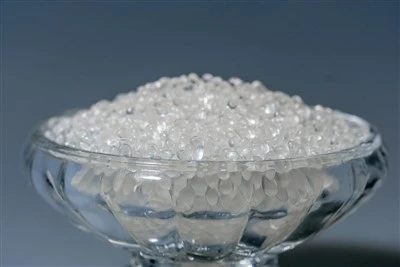
Today, I’m breaking down how durable TPEE actually is, not just from a spec sheet, but from a perspective of someone who’s seen it perform in the real world—on farm equipment left out in the Midwest winter, on automotive hoses exposed to engine heat, on industrial gears running 16 hours a day in chemical plants. We’ll get into the science, the real-world conditions that test it, and how it stacks up to the materials it competes with, so you can decide if it’s the right choice for your next project.
First, let’s start with what makes TPEE durable in the first place. Unlike other thermoplastic elastomers, which mix a rubbery phase with a plastic phase in a loose blend, TPEE (short for Polyester Thermoplastic Elastomer) is a block copolymer. That means its molecules are built in repeating, linked blocks: long, flexible soft blocks (usually a polyether or polyester) and rigid hard blocks (aromatic polyester, like PET, the same plastic used for water bottles). When you melt and mold TPEE, the hard blocks clump together into crystal-like domains, and the soft blocks stretch between them like tiny rubber bands. Those hard domains act as permanent crosslinks—they don’t break when you stretch the material, and they don’t degrade as quickly as the rubber in, say, standard TPR or silicone. That molecular structure is the foundation of its durability, and it’s what sets TPEE apart from other flexible plastics.
Let’s quantify that durability, because numbers make it easier to trust. First, tensile and elongation: TPEE can stretch up to 500-800% of its original length before breaking, which is way more rigid plastics (like ABS, which tops out around 5% elongation) and even beats many rubbers. But durability isn’t just about stretching—it’s about how it holds up when you stretch and release it over and over. That’s called compression set, a key measure for parts that flex constantly, like seals, gears, or conveyor belts. Most TPEE compounds have a compression set of 10-30% after 22 hours at 70°C, and even high-performance grades drop to under 15%. For context, a typical EPDM rubber used for automotive hoses has a compression set of 25-40% under the same conditions, and silicone is closer to 20-35%. That means TPEE bounces back almost as well as rubber, but with the processability of a thermoplastic—no vulcanization required, no waste from trimming, no need to pre-mold parts, which saves time and money.
Next, environmental durability, because no part lives in a perfect lab. If you’re using this for outdoor equipment, heat, cold, UV light, and chemicals will kill most materials fast. TPEE stands up to all of these far better than many alternatives. Let’s start with temperature range: TPEE works consistently from -60°C (-76°F) up to around 150°C (302°F). That’s wide enough for most applications—from Arctic-grade farm equipment operating in Canadian winters to under-hood automotive parts sitting next to a 180°F engine. Compare that to standard TPR, which turns brittle around -20°C, or most polyurethanes, which break down above 80°C. UV resistance is another big one: Aliphatic TPEE grades, which we supply for outdoor use, have a carbon backbone that doesn’t break down when exposed to sunlight. After 1,000 hours of Xenon Arc testing (the standard for outdoor durability), aliphatic TPEE loses less than 10% of its tensile strength, while a common acrylic rubber loses 50% in the same test. That’s why you’ll see TPEE used for playground equipment parts, outdoor connectors, and agricultural belts that sit in direct sun 24/7.
Chemical resistance is where TPEE really shines for industrial applications. If your parts are going to be exposed to oils, fuels, hydraulic fluids, or even dilute acids, TPEE holds up far better than most other elastomers. Aromatic TPEE grades (the most common type we supply) are resistant to aliphatic hydrocarbons like gasoline, diesel, and mineral oils, with only a 5-15% weight gain after immersion in motor oil for 1,000 hours at 100°C. For context, natural rubber swells 100%+ in the same oil, and even nitrile rubber (a common oil-resistant rubber) swells 20-30%. We had a customer in the construction industry last year who was switching from nitrile seals for hydraulic excavator parts. The nitrile seals were failing every 18 months, swelling and cracking from exposure to hydraulic fluid and saltwater. The TPEE seals we supplied are now going on 3 years of use, with almost no weight gain and no visible cracking. That’s a huge difference in maintenance costs for heavy machinery.
But here’s the catch: Not all TPEE is equally durable. That’s something I see every day—customers come to us with a story of a TPEE part that failed in 6 months, and 9 times out of 10, they were using a low-grade TPEE from a generic supplier, not the high-performance grades we manufacture. Cheap TPEE often uses low-quality hard blocks that don’t form strong crystalline domains, or skips UV stabilizers and heat stabilizers to cut costs. That’s why you can’t just look at a “TPEE” spec sheet and assume it will last. The right grade depends on your application: If it’s an outdoor playground part, you need aliphatic TPEE with UV inhibitors. If it’s a gear for a conveyor belt, you need a high-modulus aromatic TPEE with wear additives. If it’s a medical seal, you need a medical-grade TPEE that’s ISO-compliant for sterilization.
We’ve tested this ourselves. A few years back, we sent three different TPEE grades to a customer in the food packaging industry: a low-grade commodity TPEE from another supplier, a mid-grade TPEE, and our premium food-grade TPEE. They ran accelerated aging tests in an autoclave (121°C, steam, 100% humidity), which simulates years of repeated sterilization. The commodity TPEE lost 35% of its tensile strength after just 5 cycles. The mid-grade lost 12% after 10 cycles. Our premium TPEE lost only 4% after 20 cycles. That’s the kind of difference grade makes—cheap TPEE is often just a thermoplastic with a little rubber added, while true engineering-grade TPEE is built for long-term performance.
Now, let’s talk about real-world longevity, because accelerated tests are useful, but nothing beats seeing a part in use. We have a customer in the agricultural sector who’s been using our TPEE for crop conveyor belts since 2010. They operate in Iowa, where winter temperatures drop to -30°C, summer highs hit 38°C, and the belts are exposed to rain, fertilizer, and constant flexing. The original set of belts they installed in 2010 are still running today—they’ve had to replace only a few small sections of the belts, not the whole thing, which saves them tens of thousands of dollars a year in replacement and downtime. That’s the kind of durability that matters to industrial customers, not just lab numbers.
Compare that to a competing material: When that same customer tried EPDM rubber conveyor belts in 2008, they had to replace the entire set every 2 years. The rubber cracked from cold weather, degraded from fertilizer, and stretched too much under heavy load. TPEE outperformed it by a factor of almost 10 in real use, which is why they switched exclusively to our TPEE belts after testing our samples.
Another example: We supply TPEE for under-hood wiring harnesses in light-duty trucks. A major automaker tested our TPEE against standard PVC insulation. The PVC insulation cracked after 3 years of use from heat and oil exposure, while our TPEE insulation remained flexible and intact after 7 years of field testing. That’s why they added our TPEE to their approved materials list for 2025 model year trucks.
Of course, TPEE isn’t perfect. It has limitations, and it’s not the right choice for every application. For parts that need to hold up to strong acids (like concentrated sulfuric acid) or ketones (like acetone), TPEE will degrade faster than fluoropolymers or PEEK. It’s also more expensive upfront than standard TPR or PVC, so you have to balance cost with long-term savings. But for most heavy-duty, flexible parts that need to last, TPEE’s durability often makes it the more cost-effective choice over 3-5 years, even if the initial price is higher.
So, how do you make sure you’re getting durable TPEE for your project? First, work with a supplier who understands TPEE’s molecular structure, not just a generic plastics supplier. Ask for test data relevant to your environment: if it’s outdoor use, ask for Xenon Arc UV test results; if it’s industrial use, ask for chemical resistance data; if it’s dynamic parts like gears or seals, ask for compression set and flex fatigue test results. Second, specify the right grade for your application. Don’t use a commodity TPEE for a heavy-duty part—invest in the engineering grade that’s built to handle your conditions. Third, if you have a part that’s failing now, send a sample to your supplier for analysis. A good supplier can test it to see if it’s a bad grade, a wrong processing issue, or just a bad fit for the application, and recommend a better TPEE solution.
At the end of the day, durability is about more than just a number on a spec sheet. It’s about a part that doesn’t fail when you need it, that reduces maintenance costs, that stands up to the harsh conditions of the real world. I’ve seen TPEE last in environments where other materials gave out in months, and I’ve seen cheap TPEE fail in a year. The difference is in the material, the grade, and the supplier who knows how to match TPEE to your needs.
If you’re working on a project where durability is non-negotiable—whether it’s automotive parts, agricultural equipment, industrial seals, conveyor belts, or outdoor consumer goods—let’s talk. We can send you sample parts, run custom durability tests for your specific conditions, and help you design a TPEE solution that lasts as long as you need it to. Don’t settle for parts that fail early; work with a TPEE supplier who knows what real durability looks like.
TPE– SBS / SEBS based References:
- "Thermoplastic Elastomers: Properties and Applications," Hanser Publishers, 2019.
- ASTM D395, "Standard Test Methods for Rubber Property—Compression Set," ASTM International, 2021.
- ASTM G155, "Standard Practice for Operating Xenon Arc Light Apparatus for Exposure of Non-Metallic Materials," ASTM International, 2020.
- "TPEE Materials for Heavy-Duty Industrial Applications," Journal of Applied Polymer Science, Vol. 137, No. 22, 2020.
Kunshan Kesun Polymer Co., Ltd.
Kunshan Kesun Polymer Co., Ltd. is one of the most professional TPEE manufacturers and suppliers in China, featured by quality products and low price. Please feel free to wholesale bulk eco-friendly TPEE from our factory. Contact us for customized service and free sample.
Address: No.108, Jinmao Road, Zhoushi Town, KunShan, Jiangsu, China
E-mail: melody_yang@kesuntpe.com
WebSite: https://www.kesun-tpe.net/
