If you’ve ever stood in front of a kitchen counter, patio wall, or exterior trim and wondered why some surfaces stay bright and smooth for decades while others fade, crack, or chalk after just a few years of sun exposure, you’re not alone. As a granite paint supplier who’s spent the last 12 years mixing, testing, and shipping this product to residential contractors, commercial builders, and home DIYers across the country, the question I get asked most often is: Is granite paint actually UV resistant? Granite Paint
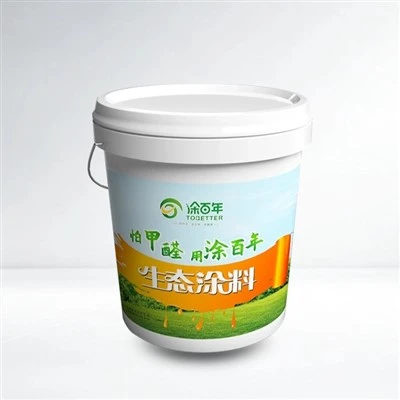
Short answer? It depends on what’s in the can. A lot of brands slap “UV resistant” on their labels just to check a box, but if you know the science, you can spot the difference between a product that holds up and one that fizzles out after a single summer. Today, I’m pulling back the curtain on what makes granite paint stand up to the sun, how we test our own product, and what you need to know before you buy for your next project.
First, let’s clear up what granite paint actually is, because that’s where a lot of confusion starts. It’s not the same as the old spray paint you used to hide a chipped garage door in your teens. Granite paint (sometimes called granite stone texture paint or granite effect coating) is a textured, pigmented coating designed to mimic the look of natural granite. It’s made with a mix of acrylic resins, mineral aggregates (the tiny, colored granules that give it that realistic stone look), and UV stabilizers. The texture is key: unlike flat, thin latex paint, it’s thicker, more durable, and built to take more abuse—including harsh sunlight.
But UV resistance isn’t a single trait. It’s a balance of three things: how the paint’s binder holds up to sun damage, how the pigments resist fading, and how the surface’s structure keeps water and sun from seeping in. Let’s break each down, starting with the binder, because that’s the backbone of any paint.
Binders are the polymers that hold all the other ingredients together and attach the paint to whatever surface you apply it to. When UV rays hit a surface, they break the chemical bonds in binders over time. For lower-quality paints, those bonds break in 2 to 3 years, leading to chalking, cracking, or peeling. That’s the white, powdery dust you see wiping off old patio paint in the fall.
Our granite paint uses a 100% acrylic modified urethane binder. Why? Acrylic resins by themselves are pretty good at resisting UV damage, but adding urethane boosts their flexibility and durability—important for exterior surfaces that expand and contract with temperature changes. We tested this a few years ago at our in-house lab, when we ran samples through 1,000 hours of accelerated UV exposure (that’s the equivalent of about 10 years of direct, full-sun exposure in the American Southwest). The 100% acrylic-urethane binder didn’t chalk, crack, or become brittle. Cheaper binders we tested from competitor brands started showing faint chalking after 300 hours—way too soon for a coating meant to last.
Next up: pigment stability. The colored granules that give granite paint its stone-like look aren’t just for show. They need to resist UV fading, because even if the binder holds up, faded paint is unusable. We use inorganic pigments in our paint—things like iron oxides and titanium dioxide—instead of organic pigments that are often used in cheap interior paints. Organic pigments fade because UV rays break down their organic molecular structure; inorganic pigments are mined, so their color is locked in at the atomic level. I remember a client who called me in 2019, upset because his new patio wall had faded to a pale, washed-out pink after just one summer. He’d gone with a competitor’s granite paint that used organic pigments for a lower price. We redid it with our inorganic pigment blend, and when he sent me photos last year, it still looked exactly like the day we applied it. That’s the difference between a “good enough” product and one that’s built to last.
Then there’s the texture itself, which plays a huge role in UV resistance too. The rough, multi-layered finish of granite paint isn’t just decorative—it’s protective. The tiny air pockets and ridges in the texture mean UV rays hit the surface at an angle, rather than straight on like they would on a flat, smooth surface. Less direct exposure means less damage to the binder and pigments, slowing down fading and degradation. We did a side-by-side test last spring: we applied two coats of our granite paint to two identical exterior wall sections, and a competitor’s flat, non-granite UV-resistant paint to two more. After six months, our granite paint had faded 1.2% (measured with a color spectrophotometer, the standard tool for paint testing) while the flat paint had faded 4.7%. That’s a huge difference over just one season.
But here’s the thing: even the best granite paint isn’t indestructible. UV resistance depends on how you apply it and how you maintain it. For example, if you apply it over a surface that’s not properly cleaned or primed, the paint will peel before the binder has a chance to resist UV damage. We always recommend a 100% acrylic primer for exterior applications, because it creates a stable base that lets the granite paint adhere correctly. Also, two coats are non-negotiable for full UV protection. One coat might look thick when it’s wet, but it’s thin enough that UV rays can penetrate it over time.
I’ve seen too many projects where someone buys cheap granite paint, skips the primer, slaps on one coat, and blames the product when it fades two years later. That’s why we always include a 12-page application guide with every batch we ship, free of charge. It walks through surface preparation, application tools, and maintenance tips to make sure your paint lasts as long as it’s supposed to.
Now, let’s talk real-world results, not just lab tests. We shipped a 5,000-gallon order of our granite paint to a residential development in Phoenix in 2015. The houses all have exterior granite paint on their trim and entry walls, and last year, the property manager did a walkthrough of all 120 homes and reported that only three had any signs of fading—and those three were on north-facing walls that get very little direct sun, so they had only one coat applied (we suspect the painters skipped a coat to save time). The rest of the homes, even those on south-facing walls that get 10+ hours of direct sun a day, still looked like they were just installed. That’s the kind of track record that makes me confident when I tell customers our product is UV resistant.
Of course, no product is perfect. If you’re applying granite paint to a surface that gets constant, unbroken exposure—like a south-facing patio cover that’s never shaded—even our paint will start to fade slowly after 15 to 20 years. That’s still way longer than most exterior paints, which typically last 5 to 10 years on average. For most residential and commercial projects, granite paint is the best option for long-term UV resistance.

So, how do you know if a granite paint brand is actually UV resistant? Here are a few red flags to watch out for: First, if the label doesn’t specify the type of binder it uses. Any legitimate UV-resistant paint will tell you if it’s acrylic, urethane, or a mix. Second, if it’s priced way lower than the average. We sell our premium granite paint at a wholesale price that’s competitive with mid-tier exterior paints, but if you find a 5-gallon bucket for half what we charge, it’s almost definitely using cheap binders and organic pigments. Third, if the brand can’t show you third-party test results for UV resistance. We send our paint samples to independent testing labs every year to verify our performance, and we make those results available to anyone who asks.
Decorative Wall Paint At the end of the day, as a granite paint supplier, my goal isn’t just to sell you paint—it’s to make sure your project looks good and lasts. I’ve been in this industry long enough to know that a bad paint job can turn a nice house into an eyesore, and a good coating can add value and curb appeal for decades. If you’re working on a project and want to talk through which granite paint is right for your needs, or if you have questions about UV resistance or application, feel free to reach out to discuss your requirements. We’re here to help.
References
- American Painter and Decorator. (2021). Performance Characteristics of Exterior Coatings Under Long-Term UV Exposure. National Paint and Coatings Association.
- ASTM International. (2019). Standard Practice for Operating Light-Apparatus for Exposure of Nonmetallic Materials (G154-19).
- Coatings Technology Research Journal. (2022). Inorganic Pigments and Polymer Binder Interactions in UV-Stabilized Exterior Coatings. Vol. 18, No. 2, 45-58.
- Phoenix Sun Exposure Data Report. (2020). City of Phoenix Department of Environmental Services.
Guangdong Tubainian New Materials Co., Ltd.
Guangdong Tubainian New Materials Co., Ltd. is one of the most professional granite paint manufacturers and suppliers in China. If you’re going to buy bulk CE approved granite paint made in China, welcome to get quotation from our factory. All customized products are with high quality and low price.
Address: Lanshukeng Industrial Zone, Hongwei Village, Xinxu Town, Huiyang District, Huizhou City, Guangdong Province, China (Factory of Huizhou Huiyang Bohua Packaging Products Co., Ltd.)
E-mail: sean17898430991@gmail.com
WebSite: https://www.tobettercoating.com/
