Yo, what’s up everyone! As a supplier of Zener diodes, I’ve been getting a lot of questions about the frequency response of these little guys. So, I thought I’d take a moment to break it down for you and explain what it all means. Zener Diode
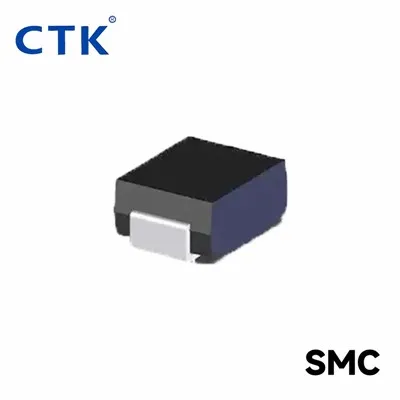
First off, let’s start with the basics. What the heck is a Zener diode? Well, it’s a special kind of diode that’s designed to operate in the reverse breakdown region. Unlike regular diodes that are meant to conduct current in one direction only, Zener diodes can conduct in both directions. When a voltage is applied in the reverse direction and it reaches the Zener voltage (Vz), the diode starts to conduct, and it maintains a relatively constant voltage across its terminals.
Now, let’s talk about frequency response. Frequency response is all about how a device behaves when it’s exposed to different frequencies of signals. In the case of Zener diodes, we’re interested in how well they can handle AC signals at various frequencies.
Why is frequency response important? Well, in a lot of electronic circuits, you’re dealing with signals that aren’t just DC. You might have AC components in your power supply, or you could be using the Zener diode in a circuit that processes signals with different frequencies. If the Zener diode can’t handle the frequencies you’re throwing at it, it can lead to all sorts of problems like distortion, signal loss, or malfunctioning of your circuit.
So, how does a Zener diode’s frequency response work? There are a few key factors that come into play.
Junction Capacitance
One of the main things that affects a Zener diode’s frequency response is its junction capacitance. Every diode has a junction capacitance, which is basically the capacitance that exists between the p-type and n-type semiconductor materials at the junction. When you apply an AC signal, this capacitance can act like a capacitor in your circuit.
At low frequencies, the junction capacitance doesn’t have much of an effect. The diode can do its job of regulating the voltage just fine. But as the frequency increases, the impedance of the junction capacitance decreases. This means that more of the AC signal can pass through the capacitance, and it starts to interfere with the normal operation of the Zener diode.
For example, if you’re using a Zener diode in a voltage regulator circuit, the presence of significant junction capacitance at high frequencies can cause the output voltage to fluctuate. The diode might not be able to maintain a stable Zener voltage, and you could end up with a noisy or unstable output.
Reverse Recovery Time
Another important factor is the reverse recovery time. When you switch the voltage across a Zener diode from forward bias to reverse bias (or vice versa), it takes some time for the diode to stop conducting in the old state and start conducting in the new state. This time is called the reverse recovery time.
At low frequencies, the reverse recovery time isn’t really a big deal. The diode has plenty of time to switch states between each cycle of the AC signal. But as the frequency goes up, the time available for the diode to switch states gets shorter. If the reverse recovery time is too long compared to the period of the AC signal, the diode might not be able to switch fast enough. This can lead to problems like increased power dissipation, distortion of the signal, and even damage to the diode in some cases.
Series Resistance
The series resistance of the Zener diode also plays a role in its frequency response. The series resistance is the resistance that exists in series with the diode junction. When an AC signal passes through the diode, this resistance can cause a voltage drop across it.
At low frequencies, the effect of the series resistance is usually small. But as the frequency increases, the impedance of the junction capacitance decreases, and the relative importance of the series resistance increases. The series resistance can cause attenuation of the AC signal, especially at higher frequencies. This means that the amplitude of the signal passing through the diode gets reduced, which can be a problem if you’re trying to maintain a certain signal level in your circuit.
So, how can you choose the right Zener diode for your application based on its frequency response? Here are a few tips:
- Check the datasheet: The datasheet of the Zener diode will usually have information about its junction capacitance, reverse recovery time, and series resistance. Look for diodes with low junction capacitance and short reverse recovery times if you’re working with high-frequency signals.
- Consider the application requirements: Think about the frequency range of the signals in your circuit. If you’re dealing with low-frequency signals, you might not need to worry too much about the frequency response. But if you’re working with high frequencies, like in RF circuits or high-speed communication systems, you’ll need to choose a Zener diode that can handle those frequencies.
- Test and experiment: Sometimes, the best way to find out if a Zener diode will work for your application is to test it. Build a prototype circuit and see how the diode behaves at different frequencies. You can use an oscilloscope or a spectrum analyzer to measure the output signal and check for any signs of distortion or signal loss.
As a Zener diode supplier, I’ve seen firsthand how important it is to choose the right diode for the job. We offer a wide range of Zener diodes with different specifications, so you can find the one that’s perfect for your specific application. Whether you’re working on a simple voltage regulator circuit or a complex high-frequency system, we’ve got you covered.
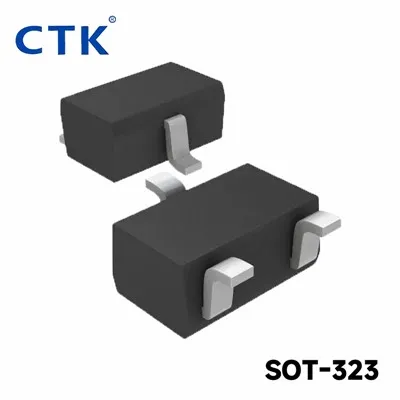
If you’re in the market for Zener diodes and want to learn more about our products or discuss your specific requirements, don’t hesitate to reach out. We’re here to help you make the right choice and ensure that your circuits work as expected.
Transistors In conclusion, understanding the frequency response of Zener diodes is crucial for anyone working with electronic circuits. By considering factors like junction capacitance, reverse recovery time, and series resistance, you can choose the right diode for your application and avoid potential problems down the line. So, if you have any questions or need more information, just give us a shout. We’re always happy to chat and help you out.
References
- "Electronic Devices and Circuit Theory" by Robert L. Boylestad and Louis Nashelsky
- "The Art of Electronics" by Paul Horowitz and Winfield Hill
Tongke Electronic Co., Ltd
Tongke Electronic Co., Ltd. is one of the most experienced zener diode manufacturers and suppliers in China, featured by quality products and low price. Please rest assured to wholesale advanced zener diode made in China here from our factory. Contact us for pricelist.
Address: No.3,Chayuan Rd, Street 3, AilingKan, Dalingshan, Dongguan, Guangdong, China.
E-mail: jack@ctk-elec.com
WebSite: https://www.ctkchip.com/
