Cold rolled products are widely used in various industries due to their smooth surface, high dimensional accuracy, and excellent mechanical properties. As a supplier of cold rolled products, one question that often comes up from our customers is whether cold rolled products can be welded. In this blog post, I’ll delve into this topic, exploring the welding possibilities of cold rolled products, the factors influencing the welding process, and the best practices to ensure successful welding. Cold Rolled Products
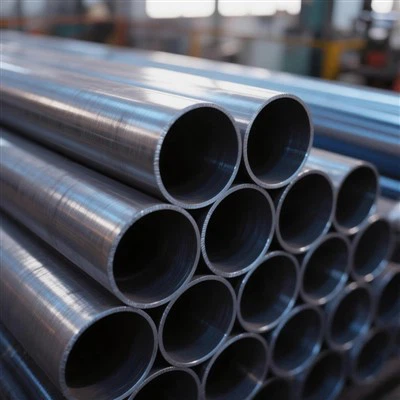
Can Cold Rolled Products Be Welded?
The short answer is yes, cold rolled products can be welded. Cold rolled steel, in particular, is known for its good weldability. During the cold rolling process, the steel undergoes a series of mechanical operations at room temperature, which refines the grain structure and improves the material’s strength and hardness. This refined structure generally makes cold rolled steel suitable for welding.
However, the weldability of cold rolled products is not just a simple yes or no. It depends on several factors, including the specific type of cold rolled material, the welding method used, and the preparation of the material before welding.
Factors Affecting the Weldability of Cold Rolled Products
1. Material Composition
The chemical composition of cold rolled products plays a crucial role in their weldability. For example, cold rolled steel typically contains elements such as carbon, manganese, silicon, and small amounts of other alloying elements. Higher carbon content can make the steel more prone to cracking during welding, as carbon can form hard and brittle martensite when the weld cools rapidly. On the other hand, alloying elements like manganese and silicon can improve the strength and toughness of the weld, but they may also affect the welding process.
2. Surface Condition
The surface of cold rolled products is usually smooth and clean, which is beneficial for welding. However, it may also have a thin layer of oil or oxide on the surface, which can interfere with the welding process. Oil can cause porosity in the weld, while oxide can prevent proper fusion between the base metal and the filler metal. Therefore, it is essential to clean the surface of the cold rolled products thoroughly before welding.
3. Welding Method
There are several welding methods available for welding cold rolled products, each with its own advantages and disadvantages. Some common welding methods include:
- Arc Welding: This is one of the most widely used welding methods for cold rolled steel. It uses an electric arc to melt the base metal and the filler metal, creating a strong bond. Arc welding can be further divided into different types, such as shielded metal arc welding (SMAW), gas metal arc welding (GMAW), and flux-cored arc welding (FCAW).
- Resistance Welding: This method uses the resistance of the metal to an electric current to generate heat, which melts the metal and creates a weld. Resistance welding is commonly used for spot welding and seam welding of cold rolled products.
- Laser Welding: Laser welding is a high-energy welding method that uses a laser beam to melt the metal. It offers high precision and speed, making it suitable for welding thin cold rolled products.
Best Practices for Welding Cold Rolled Products
1. Material Preparation
- Cleaning: As mentioned earlier, the surface of the cold rolled products should be cleaned thoroughly before welding. This can be done using solvents, degreasers, or mechanical methods such as wire brushing.
- Edge Preparation: The edges of the cold rolled products should be properly prepared to ensure good fusion during welding. This may involve beveling the edges or using a specific joint design.
2. Welding Parameters
- Current and Voltage: The appropriate current and voltage settings depend on the thickness of the cold rolled products, the welding method used, and the type of filler metal. It is important to follow the manufacturer’s recommendations or conduct test welds to determine the optimal parameters.
- Welding Speed: The welding speed should be controlled to ensure proper fusion and avoid overheating or underheating of the weld. A slower welding speed may be required for thicker cold rolled products.
3. Post-Weld Treatment
- Heat Treatment: Depending on the specific application and the type of cold rolled products, post-weld heat treatment may be necessary to relieve stress and improve the mechanical properties of the weld. This can involve annealing, tempering, or normalizing.
- Inspection: After welding, the weld should be inspected for defects such as cracks, porosity, or incomplete fusion. Non-destructive testing methods such as ultrasonic testing or X-ray testing can be used to detect these defects.
Applications of Welded Cold Rolled Products
Welded cold rolled products are used in a wide range of applications, including:
- Automotive Industry: Cold rolled steel is commonly used in the automotive industry for manufacturing body panels, frames, and other components. Welding is an essential process for joining these components together.
- Construction Industry: Cold rolled products are used in the construction industry for manufacturing structural members, such as beams and columns. Welding is used to connect these members and create a strong and stable structure.
- Electrical Appliance Industry: Cold rolled steel is used in the electrical appliance industry for manufacturing housings, frames, and other components. Welding is used to assemble these components and ensure their functionality.
Conclusion

In conclusion, cold rolled products can be welded, but the weldability depends on several factors, including the material composition, surface condition, and welding method. By following the best practices for welding cold rolled products, such as proper material preparation, appropriate welding parameters, and post-weld treatment, it is possible to achieve high-quality welds.
Coated Steel Products As a supplier of cold rolled products, we are committed to providing our customers with high-quality products and technical support. If you have any questions about the weldability of our cold rolled products or need assistance with welding, please feel free to contact us. We look forward to discussing your specific requirements and helping you find the best solutions for your applications.
References
- ASM Handbook, Volume 6: Welding, Brazing, and Soldering. ASM International.
- Welding Metallurgy and Weldability of Stainless Steels. John C. Lippold and David L. Kotecki. Wiley.
- Cold Rolled Steel Products: Properties, Applications, and Manufacturing Processes. Various industry publications.
Kennen Steel International Co., Ltd.
With abundant experience, we are one of the most professional cold rolled products manufacturers and suppliers in China. We warmly welcome you to buy high quality cold rolled products in stock here and get quotation from our factory. For price consultation, contact us.
Address: No. 10, South Road, Area C2, Lecong Iron & Steel World, Shunde District, Foshan City, Guangdong Province
E-mail: info@kennensteelco.com
WebSite: https://www.kennensteelco.com/
