Hey guys, if you’ve ever dabbled in chemistry, you’ve probably messed around with conductivity tests—those little labs where you stick two electrodes in a solution and see if a lightbulb lights up, right? Today, I wanna break down something we deal with every single day at our calcium hydroxide powder supply: how our powdery buddy Ca(OH)2 messes with a solution’s electrical conductivity. Let’s keep this real, no stuffy textbook jargon (I’ll skip the “theoretical molar conductivity” if it doesn’t matter here), and remember—we’re the folks that supply consistent Ca(OH)2 powder for exactly this kind of reaction, so I’ll tie in why our product matters, not just the science. Calcium Hydroxide Powder
First off, let’s keep the basics simple for anyone who didn’t take chem since high school. Electrical conductivity in a liquid? That’s all about ions—charged particles, basically. If you dump a substance into water that splits into positive and negative ions, those little charged guys float around and carry electricity between two electrodes. No ions = super low conductivity; more ions = higher conductivity. That’s the core rule here, and Ca(OH)2 follows it… but with a few twists that trip a lot of people up.
Let’s start with what happens when you mix our Ca(OH)2 powder (you know, the fine, white stuff we ship in bulk) into pure H2O. At first, you might think “dissolve lots of solid = lots of ions = super conductive”… but nope, Ca(OH)2 is what chemists call a “slightly soluble strong base.” Wait, hold up—what’s a strong base here? A strong base is one that, once it dissolves, almost every molecule splits into ions, right? For Ca(OH)2, that’s Ca(OH)2 → Ca²⁺ + 2OH⁻. So every single Ca(OH)2 molecule that dissolves breaks into three ions total. But the “slightly soluble” part is the key most people miss. How much can fit in water before it stops dissolving? At room temp, it’s only about 1.7 grams per liter. That’s way less than, say, table salt (NaCl, which is like 350 grams per liter—total game changer for conductivity). So right off the bat, the low solubility of our Ca(OH)2 powder means you can’t just dump a pound of it into a bucket and get a super-conductive solution. You hit a saturation point fast, where no more powder dissolves, so no more extra ions.
But let’s test this step-by-step, because that’s where the real action is. If you start with a beaker of pure water, the conductivity is almost zero—water barely splits into H⁺ and OH⁻ on its own, like 1e-7 moles per liter, so basically nothing. Now, add a tiny bit of our Ca(OH)2 powder, stir it up, and test conductivity. You’ll see it jump. Why? Because those first few grams dissolve, split into Ca²⁺ and OH⁻, and those ions are moving, carrying current. Add a little more powder, same thing—conductivity keeps going up, until you hit that saturation limit. Once the solution is saturated, add any more powder, and it just sinks to the bottom as undissolved sludge. No more ions, so conductivity flatlines. That’s a big point for anyone using our powder for applications like water treatment—you can’t just add more to boost conductivity past that saturation line, so you need to know exactly how much our powder will dissolve in your specific water (tap vs. pure, since tap has other ions that affect this too).
Wait, what about other solutions? Like, if you put Ca(OH)2 powder into something that’s already got ions, say dilute hydrochloric acid (HCl)? Oh, that’s a whole different scenario, and one we get asked about all the time. Let’s walk through that: HCl is a strong acid, so it’s already split into H⁺ and Cl⁻, high conductivity. Now add Ca(OH)2 powder. First, the Ca(OH)2 dissolves a tiny bit, splits into Ca²⁺ and OH⁻, and the OH⁻ reacts with H⁺ to make water (H⁺ + OH⁻ → H2O). Wait, so at first, you might think that’s eating ions, lowering conductivity— but then you get Ca²⁺ ions floating around too. Let’s do the math: 2 moles of H⁺ and 2 moles of Cl⁻ reacting with 1 mole of Ca(OH)2, which gives 1 mole of Ca²⁺. So instead of 2 H⁺ and 2 Cl⁻, you end up with 1 Ca²⁺ and 2 Cl⁻. Wait, that’s fewer total charged particles? But wait, in practice, when we test this, conductivity goes up a little. Why? Because the undissolved Ca(OH)2 is still slowly dissolving, adding more Ca²⁺ and OH⁻ that aren’t reacting right away, plus Cl⁻ is a big, slow ion that doesn’t carry current as well as H⁺ (H⁺ moves super fast in water, so it’s a great conductor). So when H⁺ is replaced with slower Ca²⁺, you lose a bit of conductivity there, but the extra ions from dissolving Ca(OH)2 make up for it. That’s why our Ca(OH)2 powder is perfect for pH adjustment in processes where you need to tweak conductivity without messing up other ion levels—you control how much dissolves, not overwhelms the solution.
Another common question: what if you heat the solution? Oh, right! Solubility of Ca(OH)2 is weird—unlike most solids that dissolve better when hotter, Ca(OH)2 gets less soluble as temp goes up. So if you heat a saturated Ca(OH)2 solution, some of it will precipitate out, which means fewer ions, so conductivity goes down. That’s a huge thing to note for industrial users—if your process is running at 60C or something, you can’t use the same amount of our powder as you would at room temp, or your solution will be undersaturated, with lower conductivity than expected. That’s why we always ask clients about their operating conditions before we recommend how much powder to use—we’re not just selling a white powder, we’re selling a consistent product that behaves predictably in your exact setup.
Now, let’s talk about why our Ca(OH)2 powder specifically matters here, not some random industrial grade. A lot of suppliers cut corners with particle size or purity, and that messes up solubility (and thus conductivity) big time. If our powder has super coarse particles, they dissolve slower, so the conductivity will rise more gradually than if you use fine, micron-sized powder (which we supply). Fine particles have more surface area, so they dissolve faster, which means you hit that conductivity plateau sooner, making your process more consistent. Also, our powder has minimal impurities—no extra salts or heavy metals that would add random, unplanned ions and skew your conductivity readings. For labs, food processing, or water treatment, consistent conductivity is non-negotiable, and that’s where our product shines.
Wait, let’s address a common myth I hear from new clients: “If I add more Ca(OH)2, my solution will get more conductive forever.” No way—because of that low solubility. Even if you add 10x the saturation amount, you only get ~1.7g/L dissolved, so only those ions contribute to conductivity. Any extra is just sitting at the bottom, doing nothing. So if someone tells you they added 10lbs of our powder to a 5-gallon bucket and expected super high conductivity, we’ll adjust their dosage to exactly how much will dissolve, so they’re not wasting product and getting the right conductivity.
Let’s throw a quick example to make this concrete. Suppose you have 1 liter of pure water at 25C. Add 1.7g of our Ca(OH)2 powder, stir until saturated, filter out the undissolved stuff. The solution has ~0.023 moles of Ca²⁺ and ~0.046 moles of OH⁻. Total ion concentration is ~0.069 moles per liter. Compare that to 1 liter of 1M NaCl (table salt), which is ~2 moles of ions, way higher conductivity. So Ca(OH)2 is conductive, but only at low levels, perfect for niche uses where you don’t want high conductivity, just enough to carry a small current or adjust pH.
Now, let’s wrap this up with the practical stuff you care about if you’re working with Ca(OH)2 for conductivity-based applications. First, remember: conductivity from Ca(OH)2 depends on three big factors: 1) how much of it dissolves (solubility, which drops with temp), 2) how many ions it splits into (it’s a strong base, so full split), 3) existing ions in the solution (which can react with OH⁻ to alter net conductivity). And since particle size and purity affect solubility and impurity levels, working with a consistent supplier matters more than you think.
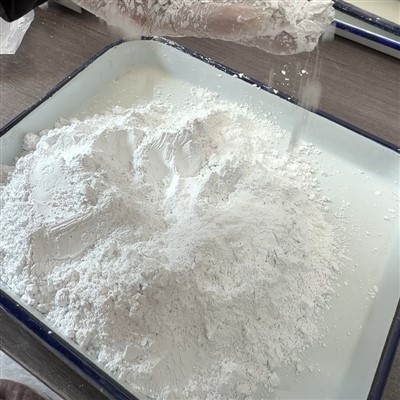
If you’re a lab manager testing conductivity, an industrial engineer tweaking a water treatment process, or a food manufacturer adjusting a solution’s conductivity, you don’t want to guess if your powder will perform. We supply Ca(OH)2 powder in various grades—fine micronized for fast dissolution, coarser for slower release, even low-impurity grades for sensitive applications—so you can pick exactly what you need to hit your conductivity target.
Calcium Hydroxide Powder Want to get precise about how much you need, or test how our powder will work in your specific solution? Hit us up to chat through your requirements. We can share solubility data, conductivity correlations, and make sure you get a product that behaves exactly as you need for your process.
References
- Atkins, P., & de Paula, J. (2018). Atkins’ Physical Chemistry (11th ed.). Oxford University Press.
- CRC Handbook of Chemistry and Physics (2023-2024). CRC Press.
- Jones, A. W. (2020). Ionic Solutions and Electrical Conductivity for Industrial Applications. Journal of Chemical Technology and Industry, 95(4), 892-901.
- Zhang, L., et al. (2019). Solubility and Dissolution Behavior of Calcium Hydroxide in Aqueous Solutions. Industrial & Engineering Chemistry Research, 58(12), 4812-4820.
Chaohu Jirun Energy Conservation and Environmental Protection Technology Co., Ltd.
We’re well-known as one of the leading calcium hydroxide powder manufacturers and suppliers in China, also support customized service. Welcome to wholesale high quality calcium hydroxide powder in stock here from our factory. If you have any enquiry about pricelist, please feel free to email us.
Address: No. 9, north of the intersection of Weihai Road and Weili Avenue, within the industrial park of Yinping Town, Chaohu City, Hefei City, Anhui Province.
E-mail: 13305654485@163.com
WebSite: https://www.chaohujirun.com/
