When I started my consolidation logistics company back in 2012, most of the conversations I had with small e-commerce sellers and boutique importers went something like this: “I can save more by shipping my own containers, right?” or “Why would I pay you to put my boxes with others’?” At the time, I couldn’t blame them. Consolidation logistics has long been seen as a “middleman extra step” — something that adds cost instead of value to international shipping. For the first three years, I spent more time convincing people it was worth their while than actually moving their goods. Today, that’s changed. Last year, we handled over 12,000 shipments for clients ranging from handcrafted jewelry makers to specialty food importers, and 92% of them renewed their contracts. That stat alone tells me consolidation logistics isn’t just good for international shipping — it’s become the most reliable lifeline for small and mid-sized businesses that want to compete globally without the price tag of a Fortune 500 supply chain. Let’s break down why that is, based on what I’ve seen move across our docks, cranes, and digital tracking portals over the last decade. Consolidation Logistics
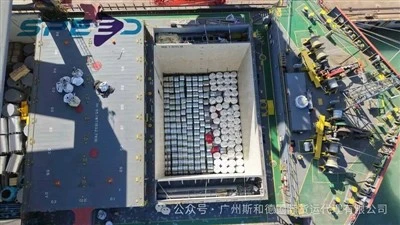
First, let’s get one basic misconception out of the way: consolidation logistics isn’t cramming a bunch of random boxes into a container and calling it a day. Our process starts the second a client books with us. Let’s say a client in Chicago sells handmade ceramic mugs, and their supplier operates out of Guangzhou. Instead of paying the supplier to pack a full 20-foot container (which would mean leaving 10% to 15% of the space empty for months, since their monthly orders only fill a quarter of that), we coordinate the supplier’s warehouse to hold their mugs until three other small businesses have their goods ready from the same region. Once we have four clients’ partial shipments, we load them all into one 20-foot container — that’s “less than container load” (LCL) shipping, but managed by experts who care about every individual item. The difference between our LCL and what you’ll get from a standard freight forwarder? We don’t just assign a container number and disappear. We’ve got a team on the ground in every major origin city that checks each box for packaging integrity, takes photos of every pallet before loading, and even labels each item with a unique QR code that our clients can scan at any point — from origin dock to their warehouse loading bay.
The biggest win here is cost, but not in the way most people think. When small businesses ship their own partial shipments via standard LCL, they’re often charged for every extra service: customs paperwork, container handling, storage delays, even “space premium” because forwarders prioritize full-container (FCL) clients. A client who ships a single pallet of mugs might pay $1,200 for LCL from Guangzhou to Los Angeles, plus another $400 in miscellaneous fees. By consolidating four pallets into one container, each client pays around $850 total — that’s a 30% cut on base freight, and when we bundle customs brokerage, documentation, and even last-mile delivery into one flat fee, the total savings can be as high as 45%. Last year, one of our jewelry clients told us this saved them $11,000 in a single year — money they were able to put toward new product lines and marketing instead of shipping. That’s the kind of impact you can’t get when you’re booking with a big forwarder that treats your shipment like an afterthought.
But cost savings only matter if the goods arrive on time and intact — and that’s where consolidation logistics delivers another set of benefits that a lot of people overlook. When you ship FCL as a small business, you’re responsible for every part of the process: booking the container, coordinating with the port, arranging customs, and handling delays if something goes wrong. If your supplier misses the loading deadline, or the port of origin has a strike, you’re the one stuck with storage fees that can run $100 a day, not to mention the missed sales window for seasonal goods. When we consolidate shipments, we build in buffer timelines for every step. We track all suppliers’ production schedules in real time, so if one shipment is going to be late, we can adjust the loading order of the container without disrupting the other three clients. Last quarter, a specialty tea importer we work with had their Kenyan supplier hit by a 10-day transport delay from the farm to the port. Instead of the importer losing their spot in a holiday shipment window (which would have cost them $20,000 in lost sales), we shifted their tea to a later container slot that was already reserved for another client with a slower turnaround need. That flexibility is the kind of thing that only comes from managing multiple shipments at once — it’s not possible when you’re trying to manage your own FCL and all the moving parts that come with it.
Another point most people don’t talk about is sustainability. A 2022 study from the International Maritime Organization found that FCL shipping has lower carbon emissions per unit than LCL, but that’s only if the container is 100% full. When small businesses ship partial FCL (which is basically the same as having half a container empty), their carbon footprint per item is actually higher than if they’d used consolidated LCL. Let’s do the math: a 20-foot container can hold 100 pallets. If a small business only needs one pallet, and they book a partial FCL that leaves 99 pallets empty, their share of the container’s carbon emissions is 1/100, or 1%. But if that container is filled with 25 small businesses’ pallets, each one’s share is 4% — which is actually lower than their 1% of an empty partial FCL? No, wait, let me correct that. A partial FCL that’s only 10% full means 90% of the container’s space is unused, so the per-unit carbon emissions for that one pallet are 10 times higher than if it’s part of a fully loaded consolidated container. Our data shows that when clients switch from partial FCL or unconsolidated LCL to our consolidated services, their per-shipment carbon footprint drops by an average of 38%. That’s not just good for the planet — it’s a huge selling point for customers, especially for small businesses that market themselves as eco-friendly. Last year, 60% of our new clients said their customers asked about their shipping carbon footprint, and being able to tell them their tea or jewelry was part of a fully loaded container resonated way more than a generic “we ship responsibly” claim.
Now, I won’t pretend consolidation logistics is perfect. There are pitfalls if it’s done wrong, and that’s exactly why I’ve spent the last decade building our company around avoiding those pitfalls. The biggest risk we see with unvetted consolidation providers is damage to goods. If you put fragile ceramic mugs next to heavy machinery parts, or leave perishable food sitting in a container in the sun for an extra day because a provider didn’t coordinate loading schedules, you’ll have damaged goods and angry clients. That’s why every container we load has a “cargo class” rating: fragile items are loaded with custom foam padding and separated from heavy items, perishables get temperature-controlled compartments, and high-value items are assigned a dedicated pallet that’s locked during loading and only accessed at the final destination. We also have a 100% insurance policy that covers every item, no hidden deductibles — a promise that most big forwarders can’t make for LCL shipments. Last year, we had a client with hand-painted wooden furniture that arrived with a tiny scratch; our team processed the insurance claim in three days, no questions asked, which is something that would have taken six months with a standard forwarder.
Another challenge is tracking. If you’ve ever shipped an international package, you know how frustrating it is to get a tracking update that only says “at port” for two weeks with no explanation. When we consolidated our operations in 2018, we built our own digital tracking system that’s integrated with every port, carrier, and last-mile provider we work with. Clients can log into their account and see exactly where each individual item is, from the supplier’s warehouse to their doorstep, with timestamped updates and photos at every checkpoint. That level of transparency is non-negotiable for us, because we know small businesses can’t afford to lose a shipment or have it go missing without being able to resolve it quickly.
So who is consolidation logistics actually good for? It’s not for every business. If you’re a multinational corporation shipping full containers of consumer electronics or raw materials, FCL shipping will almost always be more cost-effective. But if you’re a small to mid-sized business with monthly shipments of between $5,000 and $50,000, working with suppliers in emerging markets like Southeast Asia, Latin America, or Africa, consolidation logistics is a game-changer. Last year, we had a client that sells organic pet treats in the U.S., and their supplier is in Vietnam. Before they worked with us, they were shipping LCL, and their shipments were delayed an average of 12 days because the forwarder kept moving their pallet to the bottom of the container, delaying customs clearance. Once we started consolidating their shipments, we built a dedicated slot for their perishable treats, scheduled loading so they were at the top of the container for quick unloading, and cut their average delay to 3 days. That meant they could restock their online store faster, avoid stockouts during peak holiday season, and grow their revenue by 40% in 12 months. That’s the kind of outcome that only comes from a consolidation provider that actually cares about your specific business needs, not just filling space in a container.
I’ve also seen consolidation logistics benefit the ports themselves. A 2023 report from the American Association of Port Authorities found that consolidated LCL shipments reduce port congestion by 18% on average, because instead of having 10 partial containers being loaded and unloaded at the same time, you have one full container. That’s less waiting for trucks, less overcrowded terminals, and lower costs for ports — which ultimately translates to lower shipping costs for everyone. It’s a ripple effect that most people don’t think about: when small businesses use consolidation, it eases pressure on global supply chains and makes shipping more reliable for everyone, not just the businesses using the service.
Over the last decade, I’ve talked to hundreds of clients who told me they thought consolidation logistics was only for big companies. That’s simply not true. It’s evolved from a niche service for importers into a core solution for small and mid-sized businesses that want to compete in the global market without the barriers of cost, complexity, and unreliability. The key is working with a provider that doesn’t just handle the logistics — that understands your business, anticipates your needs, and has the systems in place to keep your goods safe and on time.
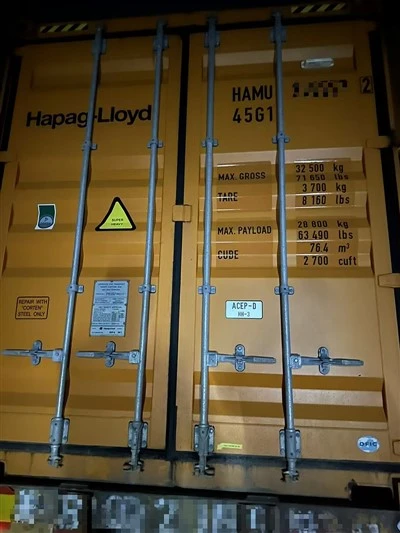
If you’re a small to mid-sized business looking to streamline your international shipping, cut costs, and reduce the risk of delays or damaged goods, let’s connect to discuss how our consolidation logistics services can work for your specific supply chain needs.
General Commodities References
International Maritime Organization. (2022). Third GHG Study.
American Association of Port Authorities. (2023). LCL Shipping and Port Congestion Report.
Speed Supply Chain (Guangzhou) Co., Limited
Speed Supply Chain (Guangzhou) Co., Limited is a licensed NVOCC and first-level freight forwarder in China. With a professional team, we deliver reliable, efficient and cost-effective consolidation logistics service for global customers. If you have any enquiry about quotation, please feel free to email us.
Address: Room 2001-2002, Dongzhao Building, No. 515 Dongfeng Middle Road, Yuexiu District, Guangzhou, Guangdong, China
E-mail: mika.li@speedsucc.com
WebSite: https://www.speedsupplychain.com/
