Hey there! I’m a supplier of medical silicone gel adhesive, and today I wanna chat about how this amazing stuff interacts with body fluids. It’s a topic that’s super important in the medical field, and I’m stoked to share what I know. Medical Silicone Gel Adhesive

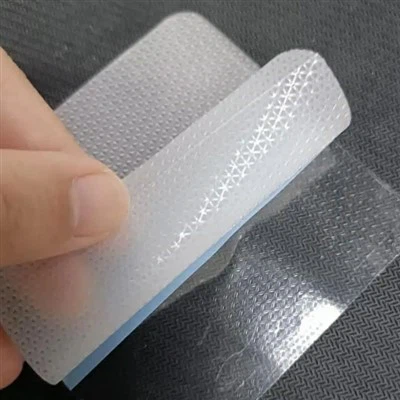
First off, let’s talk about what medical silicone gel adhesive is. It’s a special kind of adhesive that’s used in a whole bunch of medical applications. From wound dressings to medical devices, it plays a crucial role in keeping things in place and providing a protective barrier.
Now, when it comes to how it interacts with body fluids, there are a few key things to consider. One of the main factors is the composition of the adhesive. Medical silicone gel adhesives are typically made up of silicone polymers, which have some unique properties. These polymers are biocompatible, which means they’re well – tolerated by the body. They don’t cause any major immune reactions or irritation when they come into contact with body tissues and fluids.
When the adhesive meets body fluids like blood, sweat, or lymph, it has to maintain its integrity. Blood, for example, is a complex fluid that contains cells, proteins, and other substances. The silicone gel adhesive needs to be able to resist the natural flow of blood and stay stuck to the surface it’s applied to. This is where the adhesive properties of the silicone come in. The silicone molecules form a strong bond with the surface, and they’re also able to repel some of the components in the blood, preventing the adhesive from getting washed away.
Sweat is another common body fluid that the adhesive has to deal with. Sweat contains water, salts, and some organic compounds. The silicone gel adhesive needs to be able to withstand the moisture and the salts in sweat without losing its stickiness. It’s designed to have a certain level of hydrophobicity, which means it doesn’t readily absorb water. This helps it stay in place even when exposed to sweat.
Lymph, on the other hand, is a clear fluid that plays a role in the body’s immune system. It contains white blood cells and other immune – related substances. The adhesive has to be able to coexist with lymph without interfering with its normal function. Since the silicone gel adhesive is biocompatible, it doesn’t disrupt the immune response and allows the lymph to flow freely around the area where the adhesive is applied.
Another aspect of the interaction between medical silicone gel adhesive and body fluids is how it affects the healing process. In wound care, for example, the adhesive can help create a moist environment that’s conducive to healing. When it comes into contact with wound exudate (a type of body fluid that comes out of a wound), it can absorb some of the excess fluid while still maintaining a moist surface on the wound. This helps promote cell growth and tissue repair.
But it’s not all smooth sailing. Sometimes, there can be issues with the interaction. For instance, if the adhesive is exposed to a large amount of body fluid for an extended period, it might start to break down. The salts and other substances in the fluid can gradually weaken the adhesive bond. Also, if the adhesive is not properly formulated, it could cause skin irritation, especially when in contact with sensitive skin and body fluids.
To overcome these challenges, we as suppliers are constantly working on improving our products. We’re doing research to develop adhesives that are more resistant to body fluids, have better biocompatibility, and can provide long – lasting adhesion. We test our products in various conditions to make sure they perform well in real – world medical scenarios.
Now, if you’re in the medical industry and looking for a reliable medical silicone gel adhesive, you’re in the right place. Our adhesive is designed with all these considerations in mind. We’ve put a lot of effort into making sure it interacts well with body fluids and provides the best possible performance. Whether you’re making wound dressings, medical patches, or other medical devices, our adhesive can be a great choice.
If you’re interested in learning more about our medical silicone gel adhesive or want to discuss a potential purchase, don’t hesitate to reach out. We’re always happy to have a chat and see how we can meet your needs. Just drop us a message, and we’ll get back to you as soon as possible.
Medical Hydrogel Adhesive References:
- "Biomaterials Science: An Introduction to Materials in Medicine" by Buddy D. Ratner, Allan S. Hoffman, Frederick J. Schoen, and Jack E. Lemons
- "Medical Adhesives: Principles and Practice" by David G. Castner and Buddy D. Ratner
- Various medical research papers on the biocompatibility of silicone materials and their interaction with body fluids.
Shenzhen Omori Biological Technology Co., Ltd.
We’re well-known as one of the leading medical silicone gel adhesive manufacturers and suppliers in China. We warmly welcome you to wholesale high quality medical silicone gel adhesive made in China here from our factory. If you have any enquiry about customized service, please feel free to email us.
Address: Floor4, No43, Langkou Industrial park, Dalang Street, Longhua District, Shenzhen City, Guangdong Province, China
E-mail: wya@omorimed.com
WebSite: https://www.omorimed.com/
