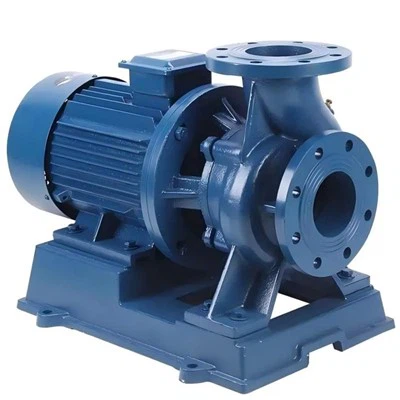
Hey there! I’m a supplier of pole-changing two-speed three-phase motors, and you know what? I get asked a ton about the deceleration time of these motors. So, today, I’m gonna break it down for you in plain English. Pole-Changing Two-Speed Three-Phase Motor
Basics About Pole – Changing Two – Speed Three – Phase Motors
First off, let’s talk a bit about these motors. A pole-changing two-speed three-phase motor is a pretty cool piece of tech. It can operate at two different speeds by changing the number of poles in the motor. This is super useful in a whole bunch of applications, like conveyors, fans, and pumps. You can switch between speeds based on the load requirements, which can save a lot of energy and improve efficiency.
But when it comes to deceleration time, it’s not as straightforward as you might think. Deceleration time is basically how long it takes for the motor to slow down from its operating speed to a stop.
Factors Affecting Deceleration Time
There are several factors that can have an impact on the deceleration time of a pole-changing two-speed three-phase motor.
Inertia of the Load
One of the biggest factors is the inertia of the load. Inertia is like a measure of how much a thing resists changes in its motion. If you’ve got a really heavy load, like a big conveyor belt filled with stuff, it’s gonna have a high inertia. And when you try to slow down the motor, this high inertia makes it harder to stop quickly. So, the deceleration time will be longer.
Let’s say you have a small fan. The blades are light, and the inertia is low. When you turn off the motor, it’ll stop spinning pretty fast. On the other hand, a large industrial pump with a lot of water flowing through it has a much higher inertia. It’ll take longer for the motor to bring that pump to a halt.
Motor Design
The design of the motor itself also plays a big role. Different motors have different winding configurations and pole numbers. These can affect how the motor produces torque, which is basically the force that makes the motor turn. A motor with a higher torque can slow down the load more quickly, reducing the deceleration time.
For example, a motor with a more robust winding design might be able to generate more braking torque. This braking torque acts against the rotation of the motor, helping it to stop faster.
Braking System
Another important factor is the braking system. Some pole-changing two-speed three-phase motors come with built-in braking systems. There are different types of brakes, like mechanical brakes and electrical brakes.
Mechanical brakes work by physically clamping down on a part of the motor, like a brake disc. This creates friction, which slows down the motor. Electrical brakes, on the other hand, use electrical currents to create a braking force. They can be more precise and faster – acting than mechanical brakes in some cases.
If your motor has a good braking system, it can significantly reduce the deceleration time. But if the brakes are worn out or not properly adjusted, the motor might take longer to stop.
Control Strategy
The way you control the motor also affects the deceleration time. You can use different control methods, like open – loop control or closed – loop control.
In open – loop control, you just send a signal to the motor to start or stop without getting any feedback from the motor. This is a simple way of controlling the motor, but it might not be very accurate when it comes to deceleration time.
Closed – loop control, on the other hand, uses sensors to measure the speed of the motor. Based on this feedback, the control system can adjust the braking force to achieve the desired deceleration time. This method is more precise but also more complex and expensive.
Calculating Deceleration Time
Now, calculating the deceleration time isn’t always easy. There’s no one – size – fits – all formula. But there are some general steps you can follow.
First, you need to figure out the inertia of the load. You can do this by looking at the specifications of the equipment the motor is driving. If you’re dealing with a simple rotating object, like a flywheel, there are formulas to calculate its inertia based on its mass and shape.
Next, you need to know the braking torque of the motor. This can usually be found in the motor’s datasheet. The braking torque is the force that the motor can use to slow down the load.
The deceleration time (t) can be estimated using the formula:
[t=\frac{J\times\Delta\omega}{T_b}]
where (J) is the inertia of the load, (\Delta\omega) is the change in angular speed (the difference between the initial speed and the final speed, which is usually zero when the motor stops), and (T_b) is the braking torque.
But remember, this is a simplified formula. In real – world situations, there are other factors at play, like friction in the mechanical parts and the characteristics of the control system.
Importance of Deceleration Time
The deceleration time is important for a few reasons.
First of all, safety. If the motor takes too long to stop, it can pose a safety risk, especially in applications where there are moving parts. For example, in a conveyor belt system, if the motor doesn’t stop quickly enough, it could cause items to pile up or even cause an accident.
Secondly, it affects the efficiency of the system. If the deceleration time is too long, the motor is using energy for longer than necessary to slow down. This can waste electricity and increase operating costs.
Finally, it can impact the lifespan of the motor and the connected equipment. A sudden stop or a very long deceleration time can put extra stress on the mechanical components, leading to premature wear and tear.
How We Can Help
As a supplier of pole-changing two-speed three-phase motors, we’ve got the knowledge and experience to help you with deceleration time issues. We can help you choose the right motor for your application based on the load requirements and the desired deceleration time.
If you already have a motor and are having problems with the deceleration time, we can check the braking system, the motor design, and the control strategy. We can make adjustments if needed, like adjusting the brake pads or tuning the control parameters.
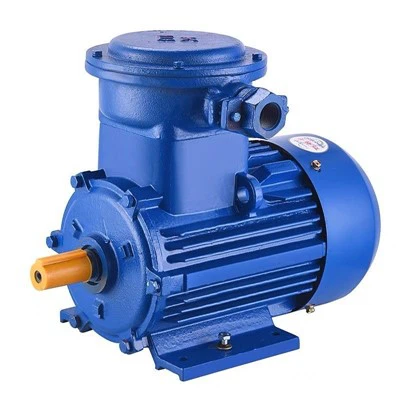
And if you’re just starting a new project and need a motor with specific deceleration time requirements, we can work with you to design a custom solution. Our team of engineers is always ready to take on new challenges and come up with the best motor for your needs.
YVF2 Variable Frequency Motor So, if you’re in the market for a pole-changing two-speed three-phase motor or need help with your existing motor, don’t hesitate to reach out. Whether you’re looking for better performance, improved safety, or lower operating costs, we’re here to help. Drop us a message, and let’s start a conversation about your motor needs.
References
- Electric Machinery Fundamentals by Stephen J. Chapman
- Industrial Electric Motor Handbook by Irving L. Kosow
Taizhou Goodpump Trading Co., Ltd.
We’re well-known as one of the most professional pole-changing two-speed three-phase motor enterprises in China, featured by quality products and good service. Please rest assured to buy discount pole-changing two-speed three-phase motor in stock here from our factory. For quotation, contact us now.
Address: No. 38, District 6, Zhengye Village, Lunan Street, Luqiao District, Taizhou City, Zhejiang Province, China
E-mail: 19548175755@163.com
WebSite: https://www.goodpump-cn.com/
