Let’s talk about a question I get at least a dozen times a week from new customers: “What’s the paper-feeding speed of a corrugated box making machine?” If you’re in the market for box-making equipment, you’ve probably wondered the same thing. It’s not a simple number you can pull off a spec sheet and call it a day—trust me, I’ve spent years walking shop owners through this, adjusting their expectations, and making sure they don’t buy a machine that’s either too slow to keep up with their orders or so fast it breaks down every other week. Corrugated Box Making Machine
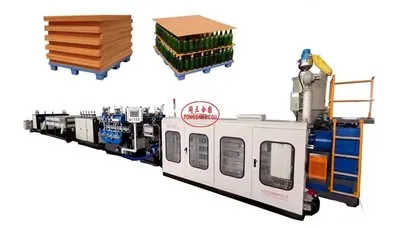
I’m Jake, and I’ve been selling corrugated box making machines for 12 years. I started out as a mechanic, fixing machines for local box shops before moving into sales. That hands-on experience means I don’t just rattle off speed numbers when someone asks. I know that a machine’s paper-feeding speed is tied to way more than just the motor. It’s tied to the type of boxes you make, the paper you use, and how many orders you ship a week. Let’s break this down like I would with a customer sitting across my desk.
First, let’s get one thing straight: paper-feeding speed is rarely a single, fixed number. Most people I talk to think “speed” is just linear feet per minute (FPM), and that’s part of it—but there’s also production speed per hour, which is what actually matters for your bottom line. A machine might have a top paper-feeding speed of 200 FPM, but if it’s constantly jamming because you’re using heavy-duty corrugated for retail shipping boxes, that number is useless. That’s the mistake new buyers make all the time: they chase the highest FPM they see, only to realize it doesn’t work for their actual product.
Let’s start with the core factors that affect paper-feeding speed, because that’s the foundation. The first is the type of corrugated material you’re feeding. Not all paper is the same. Let’s split this into three common categories: single-face paper (the thin, wavy layer that gives corrugation its strength), medium (the fluted layer), and linerboard (the flat outer layer). Lightweight linerboard, like 125 GSM, is super smooth and feeds like a dream—most machines can run that at close to their maximum speed. But if you’re feeding heavy-duty linerboard, like 200 GSM, or double-wall corrugated (two fluted layers instead of one), that’s a different story. Double-wall is thicker, stiffer, and more prone to misfeeds. I had a customer last year who bought a “200 FPM” machine for making heavy shipping pallets. He tried feeding double-wall, and the machine was jamming every 10 boxes. We had to adjust the feeding system’s hold-down pressure and slow the speed to 120 FPM, and that fixed it. The machine’s theoretical top speed was never meant for that material.
Next up is the machine’s design. Not all corrugated box making machines are built equal. I sell three main types, and their paper-feeding speeds vary wildly. First, there’s the basic flexo print slotter die-cutter—this is the workhorse for small to medium box shops that make standard shipping boxes. Entry-level models have paper-feeding speeds between 80 and 150 FPM, which translates to about 1,200 to 2,500 boxes per hour for standard 12x10x8 inch boxes. These are perfect for a shop that does 500 to 10,000 boxes a day. Then there’s the intermediate model, designed for mid-sized shops with higher volume. Those have paper-feeding speeds from 150 to 220 FPM, and they can crank out 2,500 to 4,000 boxes per hour. The high-end industrial machines we sell for large packaging plants? Their paper-feeding speeds go up to 300 FPM, pushing 5,000+ boxes per hour. But here’s the catch: the higher the speed, the more precision the machine needs. Industrial models have automatic register systems, air-assisted feeding, and servo-driven controls that keep the paper aligned even at full speed. Entry-level machines use mechanical guides, so they can’t handle the faster speeds without misfeeds.
Another big factor is the complexity of the box you’re making. A simple, straight-corner shipping box is way easier to process than a custom box with perforations, windows, or unique die cuts. When you add printing, slotting, and die cutting to the same line (most modern machines do all these steps in one pass), that adds time. The machine has to stop or slow down temporarily to complete those secondary operations. For example, a simple box with no printing can run at full paper-feeding speed the whole time, but a box with four-color printing and a custom die cut might only hit 60% of that top speed. I had a customer who was making custom retail boxes for a snack brand—each box had a logo, a perforated tear strip, and a window cutout. His machine’s top paper-feeding speed was 180 FPM, but his actual production speed was only 100 FPM because of all the secondary steps. He thought he’d wasted money on a fast machine, until we explained that if he did more simple boxes, he could run it at full speed. It’s all about matching the machine’s speed to your product mix.
Now, let’s talk about real-world performance, not just spec sheets. I keep a spreadsheet with every machine I’ve sold and their actual average paper-feeding speeds based on the customer’s use case. For entry-level flexo slotters feeding standard 150 GSM linerboard single-wall boxes, the average speed is 90 to 110 FPM. That’s not the 150 FPM listed on the spec sheet—it’s what the customer actually gets on a daily basis, with minimal jams and downtime. For intermediate models feeding the same material, it’s 140 to 180 FPM. For industrial machines, when feeding light to medium single-wall for standard shipping boxes, we see 220 to 280 FPM. Those numbers hold up because we’ve tested them in actual shops, not just in our showroom.
I also need to mention the downside of chasing maximum speed. Too many buyers call me and say they want the fastest machine available, but they don’t account for downtime. If a machine runs at 250 FPM but has a jam every 20 minutes, that’s way less productive than a machine running at 180 FPM with zero jams. Downtime costs you money—you’re paying labor, power, and rent while the machine is broken down. Last year, I had to help a customer who bought a top-of-the-line 300 FPM industrial machine. He was so focused on speed that he didn’t train his operators properly, and they were jamming the machine twice an hour. We adjusted the operator training, implemented a regular maintenance schedule, and he dropped his production speed to 240 FPM. His downtime went from 2 hours a day to 15 minutes, and his overall output increased by 20%. That’s the real win, not chasing a high FPM number.
Maintenance is another huge part of keeping consistent paper-feeding speed. I can sell you a fancy fast machine, but if you don’t clean the feeding rollers every week, replace worn guide strips, or lubricate the servo motors, the speed will drop. Paper dust builds up on the rollers, making them slippery, so they can’t grip the paper properly at high speed. Worn parts cause misalignment, which leads to jams. I tell every customer: a machine’s speed is only as good as your maintenance routine. We provide a free 30-day training course for every buyer, covering daily checks and weekly maintenance, because I’ve seen too many machines go to waste because of poor upkeep.
So, what’s the right paper-feeding speed for you? That’s the question I help every customer answer. Let’s walk through a quick example: if you’re a small business making 2,000 boxes a day, 5 days a week, and most of your boxes are standard 12x10x8 shipping boxes with no custom printing, an entry-level machine with 80-150 FPM is perfect. You don’t need the speed of an industrial machine that would sit idle half the time, costing you more in upfront costs. If you’re a mid-sized shop making 10,000 boxes a day, with a mix of standard and custom boxes, an intermediate machine with 150-220 FPM will give you the balance of speed and flexibility. If you’re a large packaging plant making 50,000+ boxes a day, mostly standard single and double-wall boxes, you’ll want an industrial machine with 250-300 FPM.
I also get a lot of questions about variable vs. fixed speed. All modern machines have adjustable paper-feeding speeds, right? So you can run it slow when making custom boxes and fast when making standard ones. That’s a key feature to look for. Some old machines only have a few fixed speed settings, which is inflexible. Newer models with variable frequency drives (VFDs) let you adjust the speed in increments, so you can match it exactly to your current job. That’s why I recommend machines with VFD controls—they give you the versatility to handle different jobs without sacrificing performance.
Another point to consider: power and space. Faster machines use more power, and they’re usually bigger. If you have a small shop with limited electrical capacity, a 300 FPM industrial machine might not be feasible. It’ll blow your circuit breakers and require upgrades to your wiring, which adds cost. Also, the faster the machine, the more space it needs for the feeding and output sections. Entry-level machines are compact, perfect for small spaces, while industrial models are long and take up a big area. I always ask customers about their shop’s power and space before I even talk about speed, because those limit what’s possible.
Let me give you one more real story to drive this home. A customer in Ohio reached out to me last month, asking about a machine with a 220 FPM paper-feeding speed. He was a custom box shop doing 8,000 boxes a day, mostly small retail boxes with logos and die cuts. I told him that at full speed, his actual production would be around 120 FPM, which would give him about 1,800 boxes per hour. He thought that was too slow, so I suggested a machine with a 180 FPM top speed. Wait, that’s a lower number, right? But for his type of work, that machine would have automatic register and air feeding, so it could handle the custom printing and die cuts at a steady 150 FPM. That would give him 2,250 boxes per hour, way more than he needed, and less downtime than the 220 FPM model, which would struggle with his custom jobs. He bought the 180 FPM machine, and he called me a week later saying his output was 20% higher than his old machine, which had a 160 FPM top speed. It’s all about matching the speed to your specific needs, not just the highest number.
At the end of the day, the paper-feeding speed of a corrugated box making machine isn’t a one-size-fits-all number. It’s a mix of machine design, material type, box complexity, operator skill, and maintenance. If you’re shopping around, don’t just ask for the fastest speed. Tell me what kind of boxes you make, how many you need per day, what materials you use, and how much space and power you have. That’s how we find the right machine for you, not the one with the biggest FPM number.
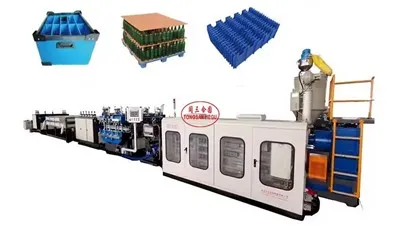
If you’re ready to stop guessing and find out what paper-feeding speed will actually work for your business, reach out to discuss your specific requirements. I’ll walk you through different models, test them against your actual jobs, and make sure you get a machine that grows with your business, not one that’s too fast or too slow for what you do.
Corrugated Box Making Machine References
- Corrugated Packaging Association. (2022). "Key Performance Metrics for Corrugated Box Manufacturing Equipment." Industry Standards Report.
- Machine Design. (2021). "Understanding Paper Feeding Dynamics in Packaging Machinery." Technical Article.
- Packaging Digest. (2023). "Matching Machine Speed to Production Needs: A Guide for Small to Mid-Sized Box Shops." Buyer’s Guide.
- Smith, J. (2020). "Downtime Reduction in Corrugated Manufacturing: The Impact of Machine Speed and Maintenance." International Journal of Packaging Technology.
Qingdao Tongsanhegu Plastic Machinery Manufacturing Co., Ltd.
With abundant experience, we are one of the most reliable corrugated box making machine manufacturers and suppliers in China. We warmly welcome you to buy durable corrugated box making machine for sale here from our factory. Quality products and reasonable price are available.
Address: West of Xixinzhi Village, Sanlihe District Jiaozhou, Qingdao City, Shandong Province, China
E-mail: info@tongsanhegu.com
WebSite: https://www.tongsanhegumachine.com/
