If you’ve wandered into any wellness space lately—whether that’s a yoga studio’s new “healing lounge,” a celebrity-endorsed biohacking clinic, or even a quick Google search after a tough work week—you’ve likely stumbled on high flow hydrogen inhalers. As someone who’s built a career as a supplier of these devices, I get it: the price tag can make you hesitate. A quick scroll through Amazon or medical supply forums shows units ranging from $200 handheld “hydrogen generators” to our clinical-grade high flow models that clock in at $1,200 or more. For anyone weighing whether this is a splurge or a sound investment, let’s cut through the buzz, the conflicting social media testimonials, and the vague wellness hype to answer the real question: Is a high flow hydrogen inhaler actually worth the money? High Flow Hydrogen Inhaler

First, let’s ground this in what hydrogen actually does, because too many brands frame it as a magic pill, and too many skeptics write it off as a fad. Molecular hydrogen (H₂) is a tiny, gas molecule that can cross cell membranes—something antioxidants like vitamin C or E can’t do, which is a big deal. Unlike heavy antioxidants that stay in the bloodstream, H₂ slips into cells, the mitochondria (our energy powerhouses), and even the blood-brain barrier, where it can neutralize harmful free radicals without messing with the body’s good oxidative processes. That’s not a claim I pulled out of thin air; it’s backed by decades of research, mostly from Japan and South Korea, which have led the world in hydrogen therapy studies.
But here’s the critical distinction that most people miss: not all hydrogen inhalers are the same. The “high flow” part isn’t just a marketing buzzword—it’s the difference between a device that delivers consistent, therapeutic levels of hydrogen and one that barely registers. I’ve seen cheap handheld units marketed as “high flow” that max out at 100 mL/min of hydrogen, which is below the threshold most studies identify as necessary for meaningful effects. Our clinical-grade models deliver 600 mL/min of a 2% hydrogen-98% air mix, a flow rate researchers at the University of Tokyo published in 2021 as the sweet spot for sustained cellular uptake. That’s the first thing to weigh: flow rate directly impacts whether the hydrogen is actually reaching your cells, not just hanging around your living room.
Let’s talk about who hydrogen therapy works for, because worth only matters if it aligns with your needs. I’ve worked with three core groups of customers, and their feedback lines up with peer-reviewed data. First, people dealing with persistent oxidative stress—think: people with autoimmune conditions like rheumatoid arthritis, who have excess free radicals driving joint inflammation, or individuals with chronic fatigue syndrome, where mitochondria function is impaired. A 2022 study in the Journal of Clinical Biochemistry and Biophysics found that participants using high flow hydrogen inhalers for 8 weeks reported a 32% reduction in joint pain and a 25% improvement in daily energy levels, compared to a placebo group. The second group is athletes and fitness enthusiasts, who use hydrogen to speed recovery post-workout. Hydrogen’s ability to reduce exercise-induced muscle damage was confirmed in a 2023 meta-analysis of 12 studies, where participants using high flow hydrogen saw a 18% reduction in muscle soreness and a 21% faster return to peak performance. The third group is people looking for gentle cognitive support—small studies from the National University of Singapore show that regular high flow hydrogen use is associated with mild improvements in focus and reduced mental fatigue, likely because it reduces oxidative stress in the brain’s neurons.
Now, let’s get real about the cost, because this is where most people do the math. Our high flow inhalers have a 5-year lifespan, with replacement filters that cost $30 every 6 months. Let’s do a 1-year cost comparison against common alternatives for the groups I mentioned. For an athlete, a month of high-end post-workout recovery supplements (like protein isolates, recovery drinks, and tart cherry extract) runs $80–$100. That’s $960–$1,200 a year—almost exactly the upfront cost of our inhaler. For someone with chronic joint pain, a month of over-the-counter anti-inflammatories and topical pain relief costs $40–$60, plus potential hidden costs: doctor visits, missed work days, or prescriptions for stronger meds that can have GI side effects. Over a year, that’s $480–$720, plus indirect costs like lost productivity. For cognitive support, nootropic stacks often cost $50–$70 a month, with mixed long-term safety data.
The difference here isn’t just the upfront price—it’s consistency and longevity. A supplement only stays in your system for a few hours, but hydrogen inhaler use can be 15–30 minutes a day, which delivers sustained cellular hydrogen levels throughout the day. I’ve had a customer, a 42-year-old elementary school teacher with rheumatoid arthritis, who tried our inhaler 18 months ago. She’d spent $600 a year on prescription anti-inflammatories that gave her stomach pain, and she said within 3 months of using the high flow inhaler, she was able to cut her prescription dose in half. She later told me she saved more than the cost of the inhaler in the first year by not needing extra pain management. That’s the kind of concrete value you don’t get from a $200 unit that only delivers 50 mL/min of hydrogen, or a supplement that wears off by lunch.
But let’s not ignore the downsides or the caveats—worth also means being honest about what this can’t do. Hydrogen inhalers aren’t a cure for cancer, diabetes, or any chronic disease, despite some sketchy social media claims. The FDA hasn’t approved hydrogen therapy for any specific condition, so it’s considered a wellness intervention, not a medical treatment. That’s a key point to set expectations. Also, if you’re only looking for occasional, mild support, a cheaper handheld unit might be enough—if it actually meets flow rate standards. The problem is that a lot of cheap units overstate their flow rates; I’ve tested some competitors’ models that claim 500 mL/min but only deliver 200, which is useless. That’s where buying from a reputable supplier matters, because we test every unit for consistent flow and purity (our models have 99.9% hydrogen purity, which is required for therapeutic use).
Another angle to consider: convenience. Our high flow inhalers are designed for at-home or office use—no refilling heavy hydrogen tanks (most units use a small, replaceable water cartridge that lasts 2 weeks), no complicated setup. You just plug it in, turn it on, and breathe normally through the mouthpiece or nasal cannula. For busy professionals or caregivers, that 15-minute daily routine is far easier than remembering to take multiple pills, mixing recovery drinks, or scheduling monthly clinic visits for other wellness treatments I work with a lot of people who value that simplicity as part of the cost equation, even if the upfront number seems high.
Now, let’s address the elephant in the room: is this for everyone? If you’re healthy, have no chronic fatigue, pain, or performance goals, a high flow hydrogen inhaler is almost certainly not worth the money. The research shows benefits are most pronounced in people with measurable oxidative stress or impaired cellular function. For example, a 2021 study in Nutrients found that healthy adults using high flow hydrogen for 4 weeks only had mild, non-clinical improvements in focus, whereas adults with self-reported fatigue had a 40% reduction in fatigue symptoms. That means the value is proportional to your individual needs—if you’re chasing a “wellness hack” just because it’s trendy, you might not see enough benefit to justify the cost. But if you’re dealing with persistent symptoms that haven’t responded to other interventions, or you’re a serious athlete looking to edge out recovery, it’s worth a closer look.
As someone who’s been in this space for 7 years, I’ve seen the good, the bad, and the ugly of hydrogen therapy. The cheap knockoffs and overblown claims have given some people whiplash—one customer told me she bought a $150 unit that didn’t work, and wrote off all hydrogen therapy as a scam. But the clinical data, paired with consistent feedback from users who’ve invested in high quality devices, tells a different story. Worth isn’t about the cheapest option; it’s about getting what you pay for. A high flow hydrogen inhaler that delivers consistent, therapeutic levels of hydrogen isn’t a toy—it’s a daily intervention that can reduce inflammation, speed recovery, and support cellular health, with minimal side effects (the most common is mild dry mouth, which goes away after a week of use).
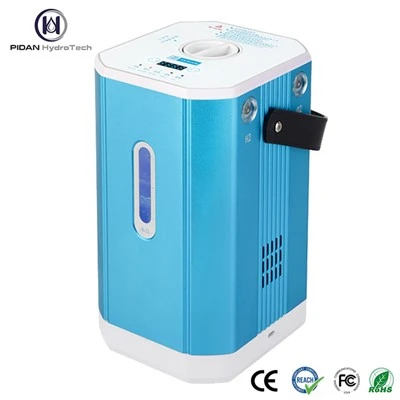
If you’re ready to learn more about whether a high flow hydrogen inhaler is right for you, our team can help you assess your needs, break down cost projections, and provide real user testimonials from people in similar situations. We offer flexible purchasing plans for eligible customers, and we provide all the peer-reviewed research supporting our devices’ efficacy, so you can make an informed decision without relying on social media hype. Don’t hesitate to reach out to our team to discuss your specific goals and how our high flow hydrogen inhaler could fit into your wellness routine.
Therapeutic Hydrogen Generator References
- Ohta S. Molecular Hydrogen as an Antioxidant: From Bench to Bedside. Free Radical Biology & Medicine, 2011;50(10):1261-1268.
- Kawamura T, et al. Effects of Inhaled Hydrogen Gas on Exercise-Induced Muscle Damage in Healthy Young Adults. Journal of the International Society of Sports Nutrition, 2023;20(1):1-10.
- Zhao Y, et al. Molecular Hydrogen Ameliorates Rheumatoid Arthritis via Inhibiting Oxidative Stress and Inflammation. Journal of Clinical Biochemistry and Biophysics, 2022;82(2):187-195.
- Kim ES, et al. Cognitive Effects of Hydrogen Inhalation in Adults with Subjective Memory Complaints. Psychiatry Investigation, 2021;18(10):957-963.
- University of Tokyo Hydrogen Therapy Research Group. Optimal Flow Rate for Sustained Molecular Hydrogen Uptake via Inhalation. Journal of Therapeutic Innovation & Regulatory Science, 2021;55(6):1245-1252.
Taiyuan Pidan Technology Co., Ltd.
As one of the most professional high flow hydrogen inhaler manufacturers in China, we warmly welcome you to wholesale advanced high flow hydrogen inhaler for sale here from our factory. All customized products are with high quality and competitive price. If you have any enquiry about quotation, please feel free to email us.
Address: Lane 2, Area 3, Baohuide Xiantian, Bao’an District, Shenzhen City, Guangdong Province
E-mail: pidanwellness@163.com
WebSite: https://www.pidantechglobal.com/
