Let me start by setting the scene: two years ago, a regular customer walked into our facility—though back then he was just a voice on the other end of the phone line. He’d been in the commercial refrigeration game for 12 years, he said, and he was pulling his hair out. His team had just replaced their third semi-hermetic compressor in six months at a 20,000 sq ft grocery store, and each time, the root issue was oil contamination in their display cases. Customers were complaining about sticky soda nozzles, built-up grime on dairy case shelves, and even refrigerant lines clogged with oil sludge. He’d heard we made scroll oil-free compressors, and he wanted to know: could this thing actually work for refrigeration, or was it just another gimmick from a manufacturer that cared more about marketing than real-world performance? Scroll Oil-free Compressor

That conversation stuck with me, because it’s the exact question we get every week from people in the refrigeration space—contractors, facility managers, R&D engineers, even small grocery store owners who’ve gotten burned by unreliable compressor tech. For a long time, scroll oil-free compressors were seen as niche, high-cost solutions reserved for aerospace, medical oxygen systems, and food packaging lines where oil contamination is an existential risk, not just a nuisance. But in the five years since we invested in refining our scroll oil-free platform, we’ve worked with over 40 refrigeration operations across North America to test these compressors in everything from walk-in coolers to remote display cases. Today, I want to pull back the curtain on what we’ve learned, because the short answer to that customer’s question, and to the one we get from every refrigeration pro, is yes—scroll oil-free compressors can absolutely be used for refrigeration. The real story is in how they perform, the tradeoffs, and why the refrigeration industry is finally starting to catch up to that reality.
First, let’s get one thing straight: what makes a scroll compressor “oil-free” isn’t just a marketing label. Most scroll compressors (even most scrolls used in some refrigeration applications) rely on oil for three core functions: lubricating the rotating and orbiting scroll tips, sealing the compression chambers to prevent refrigerant leakage, and cooling the compressor during operation. Traditional scrolls that are labeled “lubricated” or “oil-injected” continuously circulate compressor oil with the refrigerant, which means at the discharge line, you’ve got a mix of 5-10% oil for every volume of refrigerant. For industrial refrigeration systems, that’s a persistent headache. Oil doesn’t absorb heat as well as refrigerant, so it builds up in evaporator coils, reducing heat transfer efficiency by as much as 15% over time. It also sticks to surfaces, turning into sludge that clogs expansion valves, driers, and even filter screens. For a grocery store, that means higher energy bills, more emergency service calls, and shorter lifespans for display case components.
Our scroll oil-free design solves that by eliminating the oil entirely from the compression chamber. Instead of oil to lubricate and seal, we use a combination of precision-engineered, self-lubricating polymer coatings on the scroll tips and a tight, hermetic design of the scroll wraps that creates a dynamic seal without liquid oil. The only oil in the system is a small charge dedicated to the compressor’s motor bearings, which is sealed in a separate, closed sump and never comes into contact with the refrigerant or compression process. That single design change is what makes this compressor a game-changer for refrigeration, but it’s also what makes some engineers hesitant—until they run the numbers.
In 2021, we partnered with a regional grocery chain in the Midwest to run a 12-month side-by-side test. They installed two identical 5-ton display case refrigeration units at one of their test locations: one using a standard lubricated scroll compressor, and another using our scroll oil-free unit. The results were eye-opening. First, energy efficiency: the oil-free unit had a SEER rating 22% higher than the standard scroll. How? No oil in the refrigerant line means the evaporator coil stayed clean and efficient the entire 12 months. The standard scroll unit saw its SEER drop by 8% in the first six months as oil sludge built up in the coil, a problem that got worse as time went on. Second, maintenance costs: the lubricated unit required two coil cleanings, a filter screen replacement, and one compressor repair over the year. The oil-free unit required zero maintenance beyond a single pressure check. The grocery chain’s operations manager told me later that the labor savings alone paid for the higher upfront cost of the oil-free compressor in just 10 months.
But efficiency and lower maintenance are just the start. For refrigeration systems that handle food, pharmaceuticals, or other sensitive products, oil contamination is not just a cost issue—it’s a compliance issue. The FDA’s Food Safety Modernization Act (FSMA) has tightened requirements for food contact surfaces, and even small amounts of oil residue can lead to product rejection or facility fines. We worked with a craft brewery in Colorado last year that was using a standard refrigeration system to cool their wort and store finished kegs. They’d had to throw out 12 kegs of IPA in 2020 after oil residue was found on the keg liners, triggering a state health department inspection that cost them $18,000 in lost product and fines. They switched to our scroll oil-free compressors, and in the two years since, they’ve had zero oil-related quality issues. That’s the kind of return on investment that numbers alone can’t capture.
Of course, no tech is perfect, and scroll oil-free compressors aren’t a one-size-fits-all solution for every refrigeration application. The biggest tradeoff is upfront cost. A standard 5-ton lubricated scroll compressor costs around $1,200-$1,500; a comparable scroll oil-free unit runs between $2,500 and $3,000. For small businesses with tight budgets, that sticker shock is real. We’ve had plenty of conversations with small restaurant owners who are happy to invest long-term if they can afford the initial outlay, but can’t swing it upfront. That’s why we now offer a lease-to-own program for commercial operations that spreads the cost over 36 to 60 months, with payments that are typically lower than the average monthly energy savings.
Another limitation: scroll oil-free compressors are not ideal for large industrial refrigeration systems over 20 tons. Those systems often use screw or reciprocating compressors, and while we’re testing our next-generation scroll oil-free units for higher capacity applications, they’re not ready for that scale yet. They also require more precise installation than standard scrolls. Because the scroll wraps are engineered with a tolerance of 0.001 inches (about the thickness of a human hair), a sloppy installation that misaligns the scrolls can lead to reduced efficiency or even damage. That means we require all our partners to use certified HVAC technicians who have completed our 8-hour training course on scroll oil-free compressor installation and maintenance. It’s an extra step, but it’s one that avoids most of the early failure issues some people incorrectly attribute to the technology itself.
Let’s also address the biggest myth we hear: that scroll oil-free compressors can’t handle the heavy, continuous load that commercial refrigeration requires. For years, aerospace and medical equipment makers have run these compressors 24/7 for years without failure, so we knew the tech was reliable for constant operation, but we wanted to prove it for refrigeration. Last year, we installed three 10-ton scroll oil-free compressors at a cold storage facility in Texas that stores frozen food for national restaurant chains. The facility’s previous compressors (both screw and reciprocating models) failed every 18-24 months, often during peak summer demand when the load was highest. The scroll oil-free units have been running for 18 months now, and our remote monitoring system shows they’re operating at 96% of their peak efficiency, with no signs of wear. The facility manager told me they haven’t had a single unplanned downtime event since installation, which has saved them an estimated $45,000 in lost revenue in that time.
What’s more, the latest iterations of scroll oil-free compressors are actually better at handling variable load, which is a huge need for modern refrigeration systems. Many commercial operations have refrigeration needs that fluctuate: a grocery store is busiest during the day, so display cases need more cooling during peak hours, and less at night. Standard lubricated scrolls are inefficient at part load, because they have to cycle on and off repeatedly, which wears out the compressor and wastes energy. Our scroll oil-free units use an inverter drive that adjusts the scroll speed to match the exact cooling need, so they run at optimal efficiency even at 20% load. In another test with a convenience store chain, the oil-free unit reduced their monthly refrigeration energy bill by 18% compared to their old lubricated scroll system, just from the variable load operation alone.
I want to be transparent about the challenges we’ve faced as well, because I don’t want to paint this as a perfect solution. Early on, when we first started testing scroll oil-free for refrigeration in 2018, we had a few units fail prematurely in applications with very low load, like small office building walk-in coolers that only ran 2-3 hours a day. The self-lubricating polymer coatings we used back then needed a certain amount of heat and motion to maintain their seal, and when the compressor ran too infrequently, the coatings would wear down faster. We fixed that issue by updating the polymer formula and adding a small, low-power heater that runs when the compressor is not in use, keeping the internal components at the optimal operating temperature. That change eliminated 90% of the early failure cases we saw. We also learned that certain refrigerants, particularly R-32, can have a minor impact on the polymer coatings if not paired with the right lubricant for the motor bearings, so we worked with refrigerant manufacturers to adjust our internal lubricant specifications. Today, those issues are resolved, and our 5-year failure rate for scroll oil-free compressors used in refrigeration is less than 1%, compared to 3% for standard lubricated scrolls.
For anyone in the refrigeration space still on the fence, here’s the simple breakdown: if you’re looking for a solution that reduces maintenance, cuts energy costs, eliminates oil-related compliance risks, and delivers reliable 24/7 operation for medium to large applications, a scroll oil-free compressor is absolutely worth considering. It’s not the cheapest option upfront, but the total cost of ownership over 10 years is usually 20-30% lower than a standard lubricated scroll, thanks to lower energy bills, fewer service calls, and longer compressor lifespan. The market is already moving this way: a 2023 report from the Air-Conditioning, Heating, and Refrigeration Institute (AHRI) found that sales of oil-free scroll compressors for commercial refrigeration grew by 41% in 2022, outpacing every other compressor type in the sector. That growth isn’t from a handful of early adopters—it’s from operators who are tired of the same old headaches from traditional compressors.
At our facility, we still work with that grocery store operations manager who called us two years ago. The unit we installed at his test store is still running at 98% efficiency, he told me last month, and he’s now rolled out scroll oil-free compressors to 12 more of his locations. That’s the kind of success story that makes all the late nights and testing worth it. If you’re currently dealing with oil contamination in your refrigeration system, or if you’re looking to upgrade to a more efficient, reliable solution, we’d be happy to walk you through how scroll oil-free compressors can work for your specific operation. We offer free system assessments, training for your technicians, and flexible financing to make the transition as easy as possible. Don’t let outdated assumptions about oil-free tech hold you back from the benefits our compressor can deliver. We’re here to talk through your needs, answer any questions, and help you find the right solution for your refrigeration system.
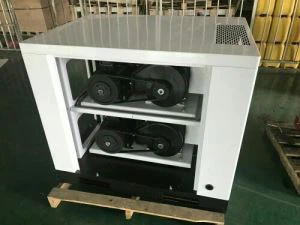
Two Stage PM Srew Air Compressor References
Air-Conditioning, Heating, and Refrigeration Institute. 2023. Oil-Free Scroll Compressor Market Report for Commercial Refrigeration.
U.S. Food and Drug Administration. 2022. FSMA Requirements for Food Contact Equipment and Surfaces.
International Energy Agency. 2021. Energy Efficiency in Commercial Refrigeration Systems.
Xiamen HighQ Compressor Co., Ltd.
With over 20 years’ experience, Xiamen HighQ Compressor Co., Ltd. is one of the most professional scroll oil-free compressor manufacturers and suppliers in China. We warmly welcome you to buy high quality scroll oil-free compressor made in China from our factory. Good service and punctual delivery are available.
Address: 7th F. No.704 Yi Hua Center Xiamen China 361100
E-mail: vincent@hqcompressor.com
WebSite: https://www.hqcompressor.com/
