If you’ve ever stood in a poorly insulated room—shouting over traffic noise from the street, cringing at how every word in your home office echoes when you’re on a Zoom call, or struggling to get a good acoustic recording in your basement—you’ve probably wondered what materials actually work for soundproofing. As a PU Stone supplier with 8 years in the industry, I get asked this question at least a dozen times a week: Is PU Stone any good for soundproofing? It’s not a yes-or-no answer, and over the years, I’ve learned that the best way to explain it is to break down what soundproofing actually requires, how PU Stone measures up, and where it fits in (and where it doesn’t) for real-world spaces. PU Stone
First, let’s get clear on what soundproofing means to most people. A lot of folks mix up “sound absorption” and “soundproofing,” and that confusion is where a lot of misinformation about materials comes from. Sound absorption is about stopping sound from bouncing around a space—think the soft panels in a recording studio that cut down on echoes so your voice doesn’t sound hollow. Soundproofing, on the other hand, is about blocking sound from moving from one space to another. If your neighbor’s bass is shaking your apartment floor, you’re not just dealing with echo—you’re dealing with airborne sound (the bass waves traveling through walls) and maybe even structure-borne sound (the vibrations moving through framing, pipes, or floors). That’s a key distinction, because not all materials are designed for both.
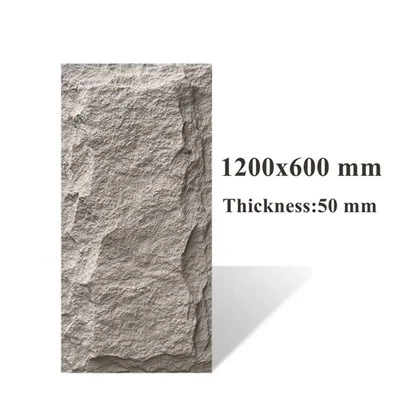
Now, what is PU Stone, exactly? For anyone who hasn’t worked with it, it’s a closed-cell foam material made by infusing polyurethane with mineral particles to mimic the look of natural stone—think a lightweight, durable faux stone panel that’s way easier to install and handle than real cut stone. It’s water-resistant, mold-resistant, and comes in a range of finishes, from smooth slate to rough limestone. As a supplier, I’ve sold it for everything from exterior cladding to interior accent walls, and I’ve watched its applications expand as more people learn about its acoustic properties.
So back to soundproofing: Let’s start with the basics of acoustic performance, measured by Sound Transmission Class (STC) ratings. STC is the industry standard for how well a material blocks airborne sound; the higher the number, the better the sound block. A standard drywall wall (½ inch thick) has an STC of about 30. That means it does a fair job of blocking loud voices, but not much good for blocking traffic, loud music, or TVs. A double-stud wall with two layers of drywall and insulation gets to STC 50, which is what most building codes require for separating apartment units to reduce noise from normal living.
Where does PU Stone fall here? A 1-inch thick PU Stone panel has an STC rating of roughly 34, which is actually slightly better than single drywall. But if that’s all you’re using, you’re not getting full soundproofing. Here’s why: PU Stone is dense, but to really block sound, you need three things, and PU Stone excels at two of them, and works on the third. First, mass—heavier materials block more sound, because sound waves have to work harder to move through dense matter. PU Stone’s mineral-infused formula gives it more mass than many foam alternatives, like EPS foam or open-cell polyurethane, which have STC ratings closer to 20. That’s a win. Second, air gaps—sound travels easiest through solid materials, so adding an air gap between your PU Stone and the existing wall creates a barrier that sound has to cross twice, weakening it in the process. Third, damping—materials that convert sound energy to small amounts of heat prevent it from passing through. PU Stone’s closed-cell structure helps with damping, too, which is why it’s different from thin, rigid stone panels that might crack or vibrate instead of absorbing sound energy.
But here’s the part that makes PU Stone stand out from other acoustic materials: it’s not just for soundproofing. A lot of acoustic panels are designed to only block echo, and they’re not durable enough for high-traffic areas, bathrooms, or exterior spaces. PU Stone works both for sound absorption (reducing echo in a living room or home theater) and for sound block, when installed correctly, which is why it’s become a go-to for commercial spaces like restaurants, where you don’t want the space to feel loud and echoey, and you also don’t want noise from one section of the restaurant carrying to another. I recently supplied a project for a downtown café that wanted accent walls made to look like natural stone but also cut down on noise from the bar area, and the PU Stone panels ended up being perfect—they handled the busy, spill-prone environment, and their STC rating added a few points to the overall wall’s performance when installed over existing drywall.
That said, I’ve also had customers come to me expecting PU Stone to be a miracle soundproofing material, and that’s where I have to be honest about its limits. If you’re trying to block loud, low-frequency noise—like a subway line running under your apartment, or a neighbor playing drums at 2 a.m.—a single layer of PU Stone won’t be enough. Low-frequency sound waves (think the rumble of a bus or a subwoofer) are bigger, harder to block, and require much thicker, heavier materials or specialized decoupling systems. For that, I usually recommend combining PU Stone with another layer of soundproofing: either resilient channels installed between the existing wall and the PU Stone panels, or a mass-loaded vinyl (MLV) layer, which is a thin, heavy material designed to add mass without taking up a lot of space. I’ve seen this combination get a wall to STC 45, which is enough to block most normal noise, and it’s way more affordable than tearing out existing walls to add thicker concrete or brick.
Another common question I get is about sound absorption in interior spaces, which is different from soundproofing (blocking sound transfer). A lot of people use PU Stone for interior accent walls, and they ask if it will cut down on the echo in their home theater or their kid’s playroom. The NRC (Noise Reduction Coefficient) rating measures how much sound a material absorbs, from 0 (no absorption, like a concrete wall) to 1.0 (full absorption, like a thick carpet). PU Stone has an NRC of about 0.35, which means it absorbs 35% of sound waves that hit it. That’s better than bare drywall (NRC 0.1) or brick (NRC 0.05), but it’s not as good as specialized acoustic foam, which can have NRC ratings up to 0.8. So if your main goal is sound absorption for echo control, you might want to add acoustic panels to your space, but if you want both a stylish, durable wall finish and a little extra echo reduction, PU Stone is a great middle ground. I recently helped a customer in Los Angeles who was renovating their open-concept living room—they didn’t want to replace all their drywall with acoustic panels, which would have looked too industrial, so we suggested installing PU Stone panels on the back wall, along with a few smaller acoustic art panels. After installation, they told me the echo in the room was way better, and their guests kept asking where they got the natural stone look.
I also want to talk about real-world use cases, because a lot of the online information about PU Stone and soundproofing is either overblown or not based on actual installation. Let’s take a home office, for example. If you work from home, you know how bad it is when your dog barks in the backyard or your kid runs around upstairs during a Zoom call. If you have a spare room that you’re converting to an office, you can install PU Stone panels on the interior walls, right over the existing drywall. Add a layer of insulation (like fiberglass batts) in the wall cavity, and a layer of MLV, and your STC rating jumps to around 40, which is enough to block most background noise. I’ve had dozens of remote workers tell me this solved their problem—they didn’t have to tear out walls, they got the polished look they wanted, and their Zoom calls stopped being disrupted by outside noise.
For exterior applications, PU Stone is actually a great option for soundproofing a home’s exterior walls against outdoor noise. If you live on a busy street, adding 1-inch PU Stone cladding to your home’s exterior, installed with an air gap between the cladding and the existing siding, can add 5 to 10 points to your wall’s STC rating. That might not sound like a lot, but it’s enough to turn a wall that’s otherwise letting in street noise into one that blocks most car traffic sounds. I supplied a project in Austin a few years ago for a home that backed up to a busy highway; the homeowners installed PU Stone cladding on the rear exterior wall, and they told me they could barely hear the highway anymore, which was a huge improvement from the old vinyl siding they had before.
Of course, no material is perfect, and PU Stone has a few drawbacks when it comes to sound-related projects. First, it’s not ideal for spaces that need extreme sound absorption—like a recording studio or a church sanctuary, where you need to absorb almost all echo. For those spaces, specialized acoustic materials (like fiberglass panels or fabric-wrapped foam) are still the best choice, because they’re designed specifically for that purpose. Second, if you’re trying to block structure-borne sound—like footfalls from the floor above, or vibration from a water heater—PU Stone alone won’t help. Structure-borne sound requires decoupling the floors or walls from the source of the vibration, which usually means resilient channels, neoprene pads, or specialized framing, not just a cladding material.
As someone who’s been selling PU Stone for years, I’ve learned that the best way to approach acoustic projects with PU Stone is to be realistic about what it can and can’t do. It’s not a replacement for dedicated soundproofing materials, but it’s a versatile, durable option that can add both acoustic performance and aesthetic value to a space. I’ve seen it work in so many different settings: apartment walls, commercial restaurant spaces, home theaters, exterior cladding, even basement walls where humidity and mold resistance were a concern. For a lot of customers, that middle ground is exactly what they need—something that doesn’t compromise on style, doesn’t require a full renovation, and actually does improve the sound quality of their space.
If you’re considering PU Stone for a sound-related project, or if you’re curious about how it can fit into your specific space, I’m here to help. I’ve worked on projects ranging from small residential accent walls to large commercial renovations, and I can walk you through the best installation methods, the combination of materials that will work for your needs, and the different PU Stone finishes that will match your style. Don’t hesitate to reach out to start a conversation about your project.
Bamboo Charcoal Panel References
- Acoustical Society of America. (2022). Sound Transmission Class (STC) Rating Standards for Building Materials. Journal of the Acoustical Society of America.
- National Institute of Building Sciences. (2021). Soundproofing and Sound Absorption in Residential and Commercial Construction. Whole Building Design Guide.
- ASTM International. (2020). Standard Test Method for Sound Transmission Class (STC) of Building Materials. ASTM C423.
- PU Foam Manufacturers Association. (2022). Technical Handbook on Acoustic Properties of Closed-Cell Polyurethane Materials. Global Polyurethane Industry Report.
- U.S. Department of Energy. (2021). Noise Control for Residential Buildings: Best Practices for Exterior Wall Insulation and Cladding.
Linyi Wilson New Material Co., Ltd
With abundant experience, we are one of the most professional pu stone manufacturers and suppliers in China. We warmly welcome you to wholesale premium pu stone at competitive price from our factory. If you have any enquiry about cooperation, please feel free to email us.
Address: Room 913, 9th Floor, International Trade Service Center, No. 100 Lingong Road, Comprehensive Bonded Zone, Chaoyang Street, Yihe New District, Linyi City, Shandong PR, China
E-mail: postmaster@wilsonwallfloor.com
WebSite: https://www.dowellspcfloor.com/
