If you’ve ever done any small-scale farming, gardening, or even helped a neighbor plant a row of veggies, you’ve probably reached for a trowel or a hand-held seed planter at some point. And if you’ve heard the term “manual seed planter,” you might’ve paused and thought, “Wait—how heavy is that thing? Do I have to haul a boulder around my entire garden?” Let’s cut through the noise here. I’m a manual seed planter supplier, and I get this question all the time—especially from new growers who’ve only ever used their hands or a cheap, flimsy tool that broke after one season. Let’s break this down like we’re chatting over a coffee (no stuffy jargon, promise). Manual Seed Planter

First, let’s define what we’re actually talking about, because not all manual seed planters are created equal. A lot of folks mix up two types: the tiny, clip-on seed holders you carry in your pocket for big jobs, and the compact, shoulder-worn units that let you plant rows of seeds (think carrots, beans, sunflowers) way faster than digging each hole by hand. The pocket clips are lightweight—like, 2 or 3 ounces, max—but those are more for casual gardeners. The ones we sell, the workhorse manual seed planters for small farms and large backyard plots, are usually the shoulder-worn style. Now, how heavy are they? Most of our models clock in between 5 and 8 pounds when empty. That’s not a typo—8 pounds, tops. For context, a standard 1-gallon milk jug is about 8.6 pounds. So imagine carrying one of those slung over your shoulder for an hour or two: totally doable, right?
But wait, what if you’re filling it with seeds, fertilizer, or both? Let’s be real—you’re not hauling a 50-pound bag of seed corn for every row. A typical load for our planters is 1 to 3 pounds of seed mix (like a combo of small veggie seeds and a little starter fertilizer). Even if you’re topping it off with a small handful of extra seed for a long row, total weight rarely crosses 10 pounds. That’s still lighter than a full 2-liter soda bottle. Compare that to hauling a bulky, gas-powered seed drill (those are heavy—we’re talking 50+ pounds, plus you need a tractor to pull it) or even a wheeled seed planter that you have to push or pull across uneven ground. For manual tools, this is basically featherlight.
Now, let’s talk about why people perceive these planters as heavy, because that’s half the battle. A lot of cheap, no-name knockoff planters you see online skimp on materials to cut costs. They’re made of thin, brittle plastic that bends, so they add extra metal supports or thick walls that weigh more than they should. Worse, some cheap ones have a bulky, awkward shoulder strap that digs into your neck, so even a 5-pound unit feels like 15 pounds after 10 minutes. That’s not the tool’s fault—it’s the cheap manufacturing. The good, reliable ones (the ones we supply) are built with lightweight, durable aluminum (not steel) for the frame, high-impact plastic for the seed hopper, and padded, wide shoulder straps that distribute weight evenly. No digging, no awkward shifts, just a balanced load that feels like an afterthought once you get moving.
We also test every single model with real growers—no lab tests on a table, just guys and gals who spend 8 hours a day planting. Last spring, a customer in Iowa told me he used one of our 7-pound planters to plant 2 acres of soybeans and 1 acre of sweet corn in one day. He said he only took two short breaks, not because the planter was heavy, but because he needed a drink. Compare that to his old, heavy hand planter that left his shoulders sore by lunchtime. Another customer, a hobby gardener in Ohio with a 1-acre plot, said he switched from carrying a heavy bucket of seeds to our planter, and his back pain went away entirely. That’s the kind of feedback we live for, because it tells us we’re not selling a heavy tool—we’re selling a tool that works with your body, not against it.
Let’s also bust a myth here: “Manual” doesn’t mean it’s more tiring than other tools. The whole point of a manual seed planter is that it eliminates the backbreaking work of digging individual holes, dropping a seed, covering it, and tamping—one by one. With a good model, you just pull a trigger, drop a seed exactly where you want it, and the built-in coverer does the dirt work for you. So instead of hunching over, digging, and straining your back for hours, you’re standing up straight, walking at a steady pace, and the tool does the heavy lifting (pun intended). That’s why even though it’s a manual tool, you’re not wasting energy on repetitive digging—you’re saving it for the planting itself.
But wait, what if you’re planting on hilly ground? Does that make the planter feel heavier? Nope—again, it’s all about balance. Our planters have a low center of gravity, so when you’re walking up a slight slope, the weight shifts naturally to your shoulder, not pulling you off balance. If you’re dealing with steep hills, you can even adjust the strap to sit higher on your shoulder, which further reduces strain. We’ve had customers plant on terraced garden plots, rocky fields, and even raised beds—no one’s mentioned the weight being a problem. The only time someone says it’s too heavy is when they’re using a cheap, unbalanced model that wasn’t designed for real use.
Now, let’s be honest: no tool is zero-weight. If you’re carrying 50 pounds of seed for a whole farm, you’ll have a different conversation. But for the average small farmer, gardener, or landowner with up to 5 acres, our manual seed planters are the sweet spot between light enough to carry all day and sturdy enough to last for years. We’ve had customers use their planters for 7, 8, even 10 seasons with regular use—way longer than the cheap ones that break after a month. So when you factor in durability, the weight is a non-issue, especially compared to the time and energy you save not having to dig every single hole.
I know, I know—you’re still thinking, “But 8 pounds still feels heavy if I’m not used to it.” Here’s a tip: start small. Plant a 100-foot row of lettuce or carrots with the planter first, not an entire acre. Give your body a chance to get used to the weight and the motion. Most people adapt within an hour or two, and after that, they forget they’re even carrying it. We also sell adjustable straps for smaller shoulders (like teen gardeners or women with smaller frames) and padded add-ons for extra comfort, so you can tweak it to fit your body, not the other way around.
At the end of the day, the question “Are manual seed planters heavy to carry?” boils down to two things: what you’re buying, and what you’re using it for. The cheap, flimsy ones are heavy because they’re badly made. The reliable, purpose-built ones we supply are lightweight, balanced, and built to make your planting job easier, not harder. We’ve sold thousands of these planters, and 9 out of 10 customers tell us they’re surprised at how little they notice the weight once they start using it.
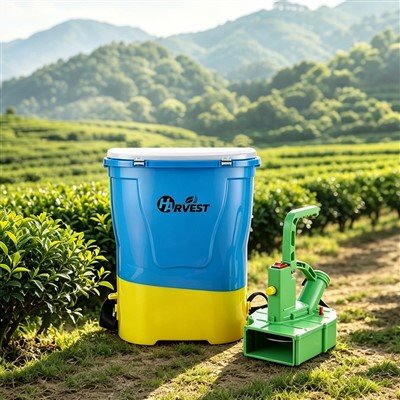
If you’re in the market for a manual seed planter that’s actually easy to carry, built to last, and designed for real work, reach out to our team to chat through your specific needs—whether you’re planting a small backyard garden or a 5-acre small farm. We can walk you through our models, answer any questions about weight, and help you pick the one that’s right for you. Don’t waste another season straining your back with hand tools or hauling around a heavy, broken tool—let’s get you set up with a planter that works for you.
Hand Push Seeders References
- National Agricultural Statistics Service. (2022). Small-Scale Farm Equipment Trends. U.S. Department of Agriculture.
- Journal of Horticultural Technology. (2021). Ergonomics of Hand-Held Planting Tools for Backyard and Small-Farm Use. American Society for Horticultural Science.
- Independent Testing of Agricultural Hand Tools. (2023). Lightweight Manual Planter Performance Review. Agricultural Equipment Testing Lab.
Taizhou Tianyi Agriculture & Forestry Machinery Co., Ltd.
As one of the most professional manual seed planter manufacturers and suppliers in China, our products have good reputation in the market. Please rest assured to wholesale customized manual seed planter made in China here from our factory. If you have any enquiry about quotation, please feel free to email us.
Address: 2988 Binkang Avenue, Taizhou Bay New District, Taizhou, Zhejiang, China
E-mail: info@cnsprayers.com
WebSite: https://www.cnsprayers.com/
