If you’ve ever stopped to watch a collaborative robot (cobot) work shoulder-to-shoulder with a factory worker—screwing a fastener on a small appliance, packing fragile electronics into boxes, or even assisting with surgical tool positioning—you might’ve wondered how these machines differ from their industrial robot cousins. For years, industrial robots were caged off in safety barriers, because their rigid, high-speed motion could be dangerous for humans nearby. Cobots, by design, eliminate that need: they work safely alongside people, and their design relies on a suite of specialized components that I, as a robot components supplier, source and supply to integrators, robot builders, and industrial teams around the world. What makes a cobot tick isn’t just one flashy part—it’s a carefully curated set of interconnected components, each with a specific role in making collaboration smooth, safe, and reliable. Robot Components
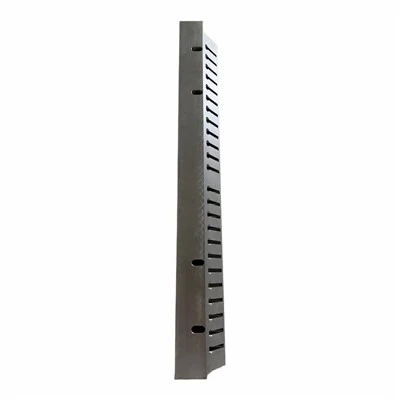
Let’s start with the foundation of any cobot: the manipulator arm. Unlike heavy industrial arms, which are built for brute force and precision at high speeds, a cobot’s arm is a lightweight, articulated series of segments, usually made from aluminum alloy or carbon fiber composite, that connect to six or seven revolute joints. Those joints are the workhorses of the arm, and for good reason: every movement a cobot makes originates here. Each joint houses a motor, a gearbox, and a feedback system that relays position data to the cobot’s central controller. I’ve worked with dozens of integrators who tell me that joint components are the most critical part of a cobot’s performance; skimp on gearbox precision, for example, and you’ll get shaky movements that can damage workpieces or feel unsafe to the worker standing next to the robot.
Next, you’ll find the core of joint control: the actuators. Actuators convert electrical energy into the physical motion that lets the cobot bend, twist, and extend its arm. For cobots, we almost exclusively supply servomotors as actuators, rather than the stepper motors used in smaller desktop robots. Servomotors deliver consistent, high-torque output even at low speeds, which is essential for delicate tasks like assembling a tiny watch part or lifting a sensitive medical device. Unlike industrial robot motors, which prioritize speed and power, cobot servomotors are designed with built-in overtorque limits—if a human worker presses a hand against the arm, the motor immediately reduces its force, rather than pushing through with thousands of pounds of pressure. That’s a deliberate safety feature, and it’s why my team and I vet every servomotor we supply for compliance with ISO 10218-2, the global safety standard for industrial robots, plus the newer ISO/TS 15066 standard specific to collaborative operations.
Pairing those servomotors are gearboxes, and here’s where the difference between cobots and other robots becomes even clearer. Industrial robots often use heavy, large planetary gearboxes that can handle high loads, but those add unnecessary weight to a cobot’s arm and create backlash— that small “slop” between gear teeth that makes movement imprecise. For cobots, we supply harmonic drive gearboxes, which are compact, lightweight, and have almost zero backlash. That precision lets a cobot repeat a task within a fraction of a millimeter, which is critical for assembly work, but the small size is key for safety, too: lighter joints mean the arm has less momentum if it makes contact with a human, reducing the risk of injury.
But a cobot can’t be safe just by being light—its internal sensing systems are what make real-time collaboration possible. That’s where torque and force sensors come in. Every joint of a cobot is fitted with these sensors, which measure the amount of force the motor is exerting as it moves. If the sensor detects an unexpected force change—say, a worker’s hand bumps the arm, or the cobot’s end effector hits a misaligned workpiece—it sends an immediate signal to the controller to slow down or stop movement entirely. Some newer cobots also add external proximity or vision sensors, which detect humans in the robot’s work envelope even before contact happens. I’ve seen integrators combine our off-the-shelf 2D vision sensors with cobot arms to create systems that adjust their path mid-task if a worker steps in the way, which is a game-changer for small batch manufacturing where tasks change often.
Position feedback is another non-negotiable component. To move accurately, a cobot needs to know exactly where every part of its arm is at all times. That’s handled by encoders, which are mounted at the end of each motor shaft. Encoders track the rotation of the motor, converting that data into position coordinates that the controller uses to calculate the arm’s next move. I’ve had customers tell me that a broken encoder is one of the most common emergency repairs for cobots on the shop floor; without reliable position data, the cobot can’t follow a programmed path, leading to misaligned parts or even unsafe movements that trigger a safety stop. That’s why we supply encoders with redundant reading systems, so if one signal drops, the other keeps the cobot operating without a full shutdown— a feature that’s saved hundreds of hours of downtime for small manufacturers who can’t afford to halt production mid-batch.
Of course, all these components need a brain to coordinate them, and that’s the cobot’s controller. Unlike industrial robot controllers, which are large, wall-mounted units with thousands of lines of code for heavy-duty tasks, a cobot’s controller is compact, often mounted directly to the base of the arm, and designed for intuitive, human-led programming. The controller runs the cobot’s motion planning software, which takes input from the encoders, torque sensors, and vision systems to adjust movement in real time. It also stores programmed tasks: most cobots are taught not with complex coding, but by a worker manually moving the arm through a task sequence, and the controller records those movements to repeat them later. We supply controller components—including the microprocessors and memory modules that power this software—with specific low-latency requirements, because a delay of even a few milliseconds between a sensor detecting a human and the controller stopping the arm can lead to a safety incident.
No cobot would be useful without the end effector, too—the “hand” at the end of the arm that actually interacts with the workpiece. End effectors are highly customizable, and I’ve worked with teams that design everything from vacuum grippers for lifting flat panels to magnetic grippers for metal parts, even soft, compliant grippers for handling fragile food products. The best end effectors for cobots are lightweight, to keep the arm’s momentum low, and designed to interface easily with the arm’s tool mounting plate, a standard component we supply that eliminates the need for custom adapters for most common cobot models. One of my recent projects involved working with a food processing plant that switched to cobots with soft silicone grippers to package fruit snacks; the low force of the gripper meant no damage to the fruit, and the cobot’s ability to work next to human packers let the plant double its production line without expanding its facility.
Power systems are another critical, often overlooked component. Cobots run on standard factory power outlets, but their power systems are designed for energy efficiency, not raw power. Unlike industrial robots that draw hundreds of volts to move heavy arms, cobots operate on 24V or 48V DC power, which is safer for workers and easier to integrate into existing small-scale manufacturing setups. I supply power distribution modules and battery backups for mobile cobots, too—since many newer cobots are mounted on wheeled bases to move between different workstations on a factory floor, rather than being fixed in one spot. Those backups ensure the cobot can safely return to its home position if there’s a power outage, instead of shutting mid-task and creating a hazard for workers trying to move around it.
What ties all these components together is the cobot’s safety communication network. Every sensor, motor, and controller communicates over a standardized bus protocol—usually EtherCAT or Profinet, which are fast, reliable, and designed for industrial automation. This network ensures that all parts of the cobot are on the same page: if the torque sensor detects a contact, it sends a signal over the bus to the motor and the controller immediately, so the arm stops in milliseconds. As a robot components supplier, I prioritize components that are compatible with these protocols, because integrators tell me that one of their biggest headaches is trying to mix parts from different vendors that don’t communicate well.
I’ve spent 10 years working in the robot components industry, and one thing I’ve learned is that cobots’ popularity isn’t just because they’re easy to program or safe— it’s because their components are built for flexibility. A factory that makes custom metal parts can swap out a gripper in 15 minutes to handle a new product. A small business can add a proximity sensor to a cobot without overhauling the entire system. Unlike industrial robots, which are often custom-built for a single task, cobots are modular, and that modularity starts with the components we supply.
If you’re a small manufacturer, a cobot integrator, or a production manager looking to add collaborative automation to your shop, you know that choosing the right components makes all the difference between a cobot that works seamlessly with your team and one that’s more hassle than it’s worth. My team and I work directly with businesses to source, test, and supply the exact components you need, whether you’re building a new cobot from scratch or upgrading an existing one. We don’t just sell parts—we’ve seen firsthand how a well-sourced harmonic drive gearbox or a reliable torque sensor can turn a basic cobot into a safe, productive addition to any workspace.

If you’re ready to explore how cobot components can fit your specific operations, don’t hesitate to reach out to discuss your needs. Let’s work together to find the right parts to build a collaborative robot that works for you.
Drone Accessories References
- International Organization for Standardization. (2011). ISO 10218-1: Robots and robotic devices – Safety requirements for industrial robots – Part 1: Robots.
- International Organization for Standardization. (2016). ISO/TS 15066: Robots and robotic devices – Collaborative robots.
- Robotic Industries Association. (2023). Collaborative Robot Components: Design and Performance Guidelines.
Dongguan Yixin Metal Products Co., Ltd.
With abundant experience, we are one of the most professional robot components manufacturers and suppliers in China. Please rest assured to wholesale advanced robot components made in China here from our factory. Good service and quality products are available.
Address: No.172, Daxing Road, Yangwu, Zhen, Dongguan City, Guangdong Province, China
E-mail: Chengxingfeng123@163.com
WebSite: https://www.zgdgyixin.com/
