Hey folks, let’s cut to the chase—if you’re here, you’re probably deep in the weeds of a production line where concentration matters. Maybe you’re in food and beverage, pharma, or industrial chemical processing, and you’ve heard that inline concentration meters are the go-to for real-time readings, but you’re stuck on one thing: how accurate are these things, really? Especially in ppm, because that’s the sweet spot for so many of you—too low and your product’s off-spec, too high and you’re wasting raw materials or running into compliance issues. Inline Concentration Meter
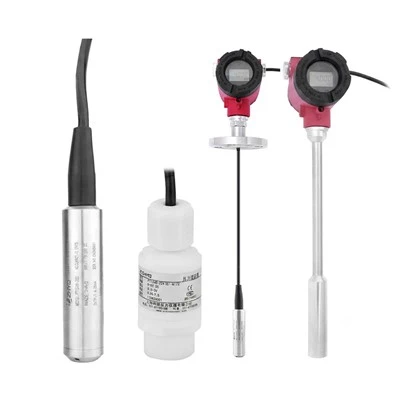
First, let’s get a quick definition out of the way (no jargon, I promise): an inline concentration meter is a sensor that sits right in your process pipe, tank, or line, measuring the amount of a specific substance in a liquid (or sometimes gas) without taking a sample to a lab. PPM, parts per million, is how we talk about that ratio—1 ppm is like 1 gram of a substance in 1,000,000 grams of total solution. So when you’re targeting 50 ppm of sanitizer in a beverage rinse or 200 ppm of a chemical in a textile dye bath, you need numbers you can trust.
Now, the accuracy question. Here’s the thing: there’s no one-size-fits-all answer. I’m a supplier, so I’m not gonna tell you every meter is perfect (trust me, if I did, I’d be lying to you and wasting your time). Most industrial inline meters you’ll find on the market hit a sweet spot of ±0.5 to ±2 ppm for readings in the 1–1,000 ppm range. Wait, that’s specific—let me break that down. If your meter says your concentration is 100 ppm, the actual amount could be between 98 and 102 ppm if it’s a mid-tier meter, or between 99 and 101 ppm if it’s a high-end model. That’s the ballpark, but there are a bunch of variables that shift that number, and that’s where most people go wrong when they’re judging accuracy.
Let’s talk about what actually affects these meters. First, the technology they use. You’ve got a few main types, right? Refractometers are super common for liquid processes—they measure how light bends through the solution, which correlates with concentration. Conductivity meters work for ionic substances, like salt or acid, because charged particles conduct electricity, and the strength of that current lines up with how much stuff’s in there. Then there are spectroscopic meters, like UV-Vis or NIR, which shoot light at specific wavelengths to pick out your target substance even if other stuff is mixed in.
Spectroscopic ones are usually the most accurate in ppm, hands down. If it’s calibrated right, a good UV inline meter can hit ±0.2 ppm at 100 ppm—way tighter than refractometry. But here’s the catch: they’re more expensive, and you can’t use them for every substance. Conductivity is cheaper, but if your solution has other ions, it’ll throw off the reading. Refractometers are great for sugars, oils, and non-ionic compounds, but they get wonky if there’s suspended solids in the line, because the particles scatter light and mess up the bend measurement.
Next up, calibration. This is the make-or-break factor, period. I’ve seen so many factories install a meter, turn it on, and walk away for 6 months, then wonder why their readings are off. If you don’t calibrate regularly—usually every 1 to 3 months, depending on how dirty your process is—the accuracy drops hard. Even a drift of 0.1 ppm a week turns into a 4 ppm error after a month, which is enough to make you fail a quality check. We always tell our clients: calibration isn’t a one-time thing. Use standard solutions that match your process as closely as possible—if you’re measuring 50 ppm of citric acid, don’t calibrate with a 100 ppm salt solution, that’ll skew your numbers.
Then there’s process conditions. No meter exists in a perfect pipe. Temperature is a huge one—most concentration meters are calibrated at 20°C, so if your process is running at 80°C and you don’t have a temperature compensation feature, your reading could be off by 10% or more. Pressure, pH, even suspended solids, bubbles, or organic fouling on the sensor—all of that adds error. A sensor that’s gunked up with protein from a dairy process might read 5 ppm higher than actual just because the film on the lens is messing with light. That’s not the meter’s fault, that’s bad maintenance.
Wait, let’s talk about real-world examples to make this concrete. I had a client last year who made craft soda, using an inline refractometer to measure citric acid concentration at 120 ppm. They kept getting rejected by their distributor because their batches were coming in at 112 ppm when they should be 120. Turns out, their meter hadn’t been calibrated in 8 months, and their process ran at 25°C instead of the 20°C the meter was calibrated for. We sent a tech to recalibrate it with their actual citric acid standards and adjust the temp compensation, and boom—accuracy went from ±5 ppm to ±1 ppm. They stopped getting rejects, saved like $12k a month in wasted raw materials. That’s the kind of impact accuracy has.
Another client was in pharma, measuring a active pharmaceutical ingredient (API) at 150 ppm for a topical cream. They were using a UV inline meter, which got them ±0.3 ppm accuracy, way more than the regulatory requirements (FDA requires ±2 ppm for API concentration, by the way). The big win here? They didn’t have to take daily lab samples, which used to tie up 2 lab techs for 2 hours a day. The inline meter’s accuracy meant they could trust the real-time numbers, so they only did lab checks once a week, saving them 10 hours a week of labor.
Now, let’s clear up a myth I hear all the time: “If it’s an inline meter, it’s automatically more accurate than lab testing.” No. Lab testing with a calibrated lab instrument is still the gold standard, but inline meters are a close second, and way more practical for continuous process. The accuracy gap is narrow—lab testing might be ±0.1 ppm, but that doesn’t help you adjust a running line in real time. If your line is making 100 gallons a minute, waiting 30 minutes for a lab result means you just made 3,000 gallons of off-spec product. Inline meters give you a reading every second, so you can tweak the concentration before you waste a single batch.
What about the worst-case scenarios? If you buy a cheap, no-name inline meter off Amazon or a discount industrial site, don’t be surprised if your accuracy is ±5 to ±10 ppm in the 100 ppm range. Those are usually calibrated for general use, not specific ppm ranges, and they don’t have proper temp compensation or drift correction. We’ve had clients who switched from those cheap meters to ours, and their error went from 8 ppm to 1.2 ppm—total game changer.
Now, how do you make sure you’re getting the accuracy you need? Let’s list out the actionable stuff, because that’s what you care about. First, match the meter technology to your use case. If you’re dealing with ionic solutions (salt, acid, caustic), go conductivity with ion-specific calibration. If you’re dealing with non-ionic stuff (sugars, oils, organic APIs), go spectroscopic or high-end refractometry. Second, calibrate with process-matched standards, on a schedule that fits your process (fouly processes = calibrate more often). Third, get a meter with built-in temperature, pressure, and fouling compensation—those features aren’t optional for consistent accuracy. Fourth, test your inline readings against lab samples once a week to keep your calibration in check, even if you’re diligent.
Wait, let’s circle back to the original question: “What is the accuracy of inline concentration meters in ppm?” The short answer is: for most industrial-grade units, ±0.5 to ±2 ppm for concentrations between 1 and 1,000 ppm. For high-end spectroscopic models, that can drop to ±0.1 to ±0.5 ppm. Cheap, uncalibrated models can be way worse, up to ±10 ppm. But here’s the real answer: accuracy only matters if it’s suited to your process. If you’re measuring 500 ppm of a fertilizer component, ±2 ppm is totally fine. If you’re measuring 5 ppm of a sanitizer for food contact, you need ±0.5 ppm to stay compliant and safe.
At the end of the day, the goal of an inline concentration meter isn’t just a number—it’s reducing waste, keeping product on-spec, and staying on top of regulations. If your meter is accurate, you don’t have to throw out half your batches, you don’t get fined for non-compliant levels, and you save time on lab work. We’ve seen clients see ROI on their meter in 2 months, just from cutting waste alone.
If you’re shopping around for an inline concentration meter, you shouldn’t just ask “how accurate is it?” You should ask “how accurate will it be in my specific process, with my solution, running at my temperatures?” That’s the question that tells you if a meter is worth your money. We don’t push one-size-fits-all models—we work with clients to match the tech that gives them the accuracy they need for their exact application, no fluff, no overpaying for features they don’t need.
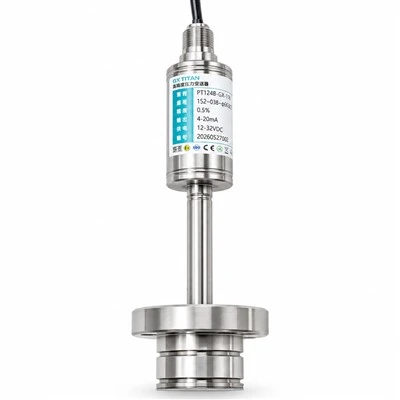
If you’ve been dealing with off-spec batches, wasted materials, or meter readings that don’t line up with your lab results, let’s chat. We can walk through your process, talk through what accuracy you actually need, and figure out a solution that works for you. No hard sells, just straight talk about what will actually move the needle for your production.
Oil Quality Sensor References:
- Technical Report: "Inline Concentration Measurement for Industrial Processes," International Society of Automation (ISA), 2022
- Concentration Meter Performance Standards, American National Standards Institute (ANSI) Standard B210.1-2021
- "Real-Time vs. Laboratory Concentration Testing: Accuracy and Practicality in Pharmaceutical Manufacturing," Journal of Process Analytical Technology, 2023
- Industrial Inline Sensor Calibration Guidelines, National Institute of Standards and Technology (NIST) Handbook 150, 2022
Shanghai Zhaohui Pressure Apparatus Co., Ltd.
Shanghai Zhaohui Pressure Apparatus Co., Ltd. is one of the most professional inline concentration meter manufacturers and suppliers in China, featured by quality products and good service. Please rest assured to wholesale advanced inline concentration meter in stock here from our factory. Also, customized service and 1 year warranty are available.
Address: 2-6/F, Building 8, No.115, Lane 1276, Nanle Road, Shanghai, China
E-mail: sensorsales@zhyqsensor.com
WebSite: https://www.sinosensor.net/
