If you’ve ever stood next to an industrial air dryer running full tilt on a plant floor, you know that low, constant hum isn’t just noise—it’s energy dollars spinning out of thin air. As someone who’s worked with air dryers for over a decade, first installing them on factory lines and now supplying them to facilities of all sizes, I’ve seen firsthand how often these systems are overlooked as major energy hogs. I’ve also seen small, intentional adjustments cut energy use by 30% or more without sacrificing dry air quality. Whether you’re running a refrigerated dryer at a packaging plant or a desiccant dryer at a chemical processing facility, these science-backed steps will help you reduce consumption and stretch every kWh. Air Dryer
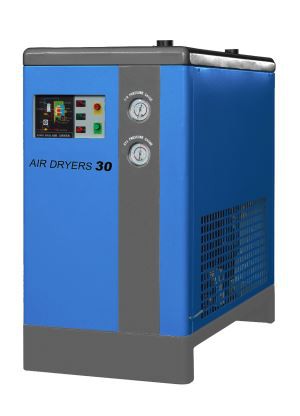
First, and most foundational, is matching your dryer to your actual load, not the maximum capacity you bought it for back when your plant was 10% larger. I can’t tell you how many times a customer has called me complaining about sky-high bills only to discover their 500 cfm dryer is running at 150 cfm for 12 hours a day. Oversized dryers cycle on and off constantly—a quirk of refrigerated models specifically—wasting energy every time they kick back on, because they have to reheating the entire air stream instead of maintaining a steady temperature. For desiccant dryers, oversize means you’re spending energy reactivating desiccant material you don’t even need. A quick audit of your compressed air system’s average demand, not just peak demand, will tell you what size you actually need. For example, a 200 cfm dryer operating at 60% of its load will use nearly 25% less energy than the same model running at full capacity, according to data from the Department of Energy’s Industrial Technologies Program (ITP). I always recommend my customers run a temporary flow meter for two weeks—no fancy tools, just a simple device that tracks when air is being used and how much—to get a real baseline before swapping or adjusting their dryer.
Next up, optimizing your dryer’s operating conditions to cut down on the work it has to do. Let’s start with inlet air temperature. Every 10°F rise in inlet air adds roughly 2% to the energy a refrigerated dryer uses, because it has to cool more hot, humid air to the dew point. I’ve seen customers cut their inlet temperature by 15-20 degrees just by relocating the dryer’s air intake from a hot, enclosed room near the compressor to a cooler area near the plant’s loading dock or outside. For desiccant dryers, inlet temperature matters even more: if air comes in above 100°F, the desiccant has to work harder to strip out moisture, and you’ll use more purge air (the dry air used to reactivate the desiccant). Another big one: check your compressed air piping for leaks. A 1/8-inch leak at 100 psi wastes about 14,000 kWh a year, enough to run a small residential home for 16 months. Even if your dryer is perfectly efficient, all that leaked air means it’s working overtime to keep up with demand. I always advise patching leaks first before touching the dryer itself—it’s the fastest, cheapest energy cut you can make.
For refrigerated dryers, tuning the thermostat and reducing compressed air pressure are two game-changers. Most facilities set their dryers to a 35°F dew point to play it safe, but for most applications, a 40°F dew point is more than enough. The ITP found that every 5°F increase in dew point for refrigerated dryers reduces energy use by 8-10%. That’s not a guess—dew point is the temperature at which moisture condenses, and unless you’re handling moisture-sensitive materials like electronics or food packaging, a slightly higher dew point won’t cause issues. Reducing operating pressure, too, has a huge impact. Refrigerated dryers consume about 1-2% more energy for every 1 psi they operate above 100 psi. Many plants run their air system at 125 psi just because that’s what compressors are set to, but lowering it to 100 or 110 psi will cut dryer energy use without hurting operations. I helped a food processing plant last year lower their dryer’s dew point by 5 degrees and their system pressure by 10 psi, and their energy bill for the dryer dropped by 32% in the first month. It was such a simple adjustment they almost ignored it.
Desiccant dryers, common for applications that need a pressure dew point below 35°F, have their own set of energy-saving tricks, and the biggest is reducing purge air use. Purge air is the dry air that flows through the desiccant bed to remove moisture during reactivation, and it can account for 15-20% of the dryer’s total energy use if not managed right. Traditional desiccant dryers use “atmospheric purge,” which pulls air from the atmosphere to reactivate the desiccant, but “heated blower purge” or “heat of compression (HOC)” desiccant dryers eliminate the need for extra external purge air. If you already have a desiccant dryer, you can cut purge use by 20% just by adjusting the reactivation cycle. A lot of dryers are set to reactivate the desiccant at set intervals, regardless of how much moisture it’s actually holding. Adding a dew point sensor to trigger reactivation only when needed—instead of on a timer—can reduce purge air use by 30-40%. For example, if a dryer’s desiccant only needs reactivation every 4 hours instead of every 2, you’re cutting purge runs in half, and that’s directly less energy wasted. I also recommend avoiding “regenerating” the desiccant more than necessary: over-reactivating desiccant wears it out faster, too, so you’ll save on energy and replacement costs over time.
Then there’s regular maintenance, the step most people skip until their dryer breaks down or their energy bill spikes. A clogged air filter upstream of the dryer restricts airflow, so the dryer has to work harder to push air through, increasing energy use. I tell customers to check their inlet filters at least once a month, or set a schedule based on how dusty their plant is—work in a sawmill or construction site means filters need changing every two weeks, while a clean pharmaceutical plant can go 2 months. For refrigerated dryers, cleaning the condenser coils every quarter is non-negotiable. Dirt and dust build up on the coils make the dryer work harder to reject heat, just like a dirty air conditioner makes your whole house hotter. We had a client a few years ago who didn’t clean their condenser for 18 months; when we did, their dryer’s energy use dropped by 18% overnight because it was no longer fighting a dirty coil. For desiccant dryers, replacing desiccant every 3-5 years (depending on load) keeps it efficient—old, saturated desiccant can’t strip moisture as well, so the dryer has to use more purge air to make up for it. I always include a maintenance log with every dryer I supply, because that’s where the long-term savings live, not just the initial setup.
Wait, I can’t forget about dryer positioning. It sounds small, but where you place your air dryer affects energy use more than you’d think. If the dryer is right next to a compressor or in a closed, hot room, its inlet air is already pre-heated by the compressor’s heat of compression, so it has to work harder to cool it down. Placing the dryer in a cool, well-ventilated area away from heat sources lowers its inlet temperature, which as we talked about earlier, cuts energy use. Also, making sure the dryer is installed far enough from walls or equipment to allow proper air circulation around the condenser coils—blocked airflow means the dryer can’t cool itself efficiently, so it uses more energy. Last year, a manufacturing plant moved their refrigerated dryer from a corner by their boiler to an open area near an exterior wall, and their energy use dropped by 12% without any other changes. It was such a simple move, but they’d been wasting energy for 7 years because they didn’t think about placement.
If you’re looking for a longer-term investment instead of just adjusting your existing system, upgrading to a high-efficiency dryer makes sense for facilities that see consistent energy use over 10 years. The difference between a standard dryer and an energy-efficient model can be 20-35% lower consumption, per ITP data. Newer models come with variable speed drives (VSDs) that adjust the dryer’s output based on actual demand, so they don’t cycle on and off or run at full capacity when they don’t need to. For example, a VSD refrigerated dryer will slow down its compressor when air flow is low, instead of turning off and on repeatedly, which wastes energy on start-up. HOC desiccant dryers, which use the heat from the compressed air stream itself to reactivate the desiccant instead of external heaters, cut purge air use by 50% or more compared to traditional desiccant models. I always advise customers to do a simple payback calculation when upgrading: if a new dryer costs $5,000 and saves $1,500 a year in energy, that’s a 3-year payback, which is a no-brainer for most facilities.
But here’s the thing: I’ve seen customers try to implement all these steps at once and end up overwhelmed. Start small, pick one that fits your system, and test it before making big changes. If you have an oversized refrigerated dryer, first check your actual load with a flow meter—don’t just guess. If you have a desiccant dryer, add a dew point sensor to adjust reactivation cycles. Even a single change can make a huge difference. I had a small print shop customer last year who cut their dryer’s energy use by 22% just by patching 10 compressed air leaks. They thought their dryer was the problem, but it was just wasting energy on leaks before it even did its job.
At the end of the day, reducing air dryer energy consumption isn’t about expensive overhauls or complicated fixes. It’s about matching your dryer to your actual needs, optimizing its operating conditions, maintaining it regularly, and making smart investments when the time is right. As a supplier, my goal isn’t just to sell you a dryer—it’s to help you get the most out of the one you have, and pick the right one when you need to upgrade, so you’re not wasting energy or money. If you’re looking to audit your current system, adjust settings, or talk about upgrading to a more efficient model, I’m here to help. We can walk through your specific needs, run the numbers, and find a solution that cuts your energy use without sacrificing the dry air quality your process needs.
AIR PIPE Reference: U.S. Department of Energy, Industrial Technologies Program. (2022). Energy Efficiency and Conservation in Industrial Compressed Air Systems. U.S. Department of Energy.
Xiamen HighQ Compressor Co., Ltd.
With over 20 years’ experience, Xiamen HighQ Compressor Co., Ltd. is one of the most professional air dryer manufacturers and suppliers in China. We warmly welcome you to buy high quality air dryer made in China from our factory. Good service and punctual delivery are available.
Address: 7th F. No.704 Yi Hua Center Xiamen China 361100
E-mail: vincent@hqcompressor.com
WebSite: https://www.hqcompressor.com/
