If you’re like most folks navigating the murky waters of upgrading outdoor lighting, you’ve probably stood in the hardware store aisle staring at two rows of bulbs—one sad, dusty line of incandescents that cost $2 each and a wall of LED exterior light bulbs that feel half as expensive but look way too technical—wondering, “Do these even work in my old, low-light outdoor fixtures?” Spoiler: I get this question at least three times a week from contractors, homeowners, and even that one guy who stops by our trade show booth just to argue about “yellow vs. white light” for 10 minutes. As the owner of a small LED exterior light bulb supply business, I’ve tested every single dud, overperformer, and weird mid-tier option under the sun (and plenty of dark, rainy backyards) so you don’t have to. LED Exterior Light Bulbs
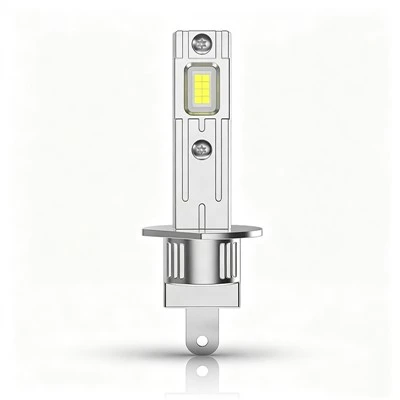
First, let’s nip the most common myth in the bud: LED bulbs don’t need “full brightness” to work. Wait, hold on—before you roll your eyes and assume I’m just shilling my own stuff, hear me out. Old incandescent bulbs (and even the halogens that used to be the go-to for outdoor lights) relied on heat to create light, right? If you stuffed a low-watt incandescent into a fixture that was meant for a higher watt, it would either dim so much it was useless or just… not turn on. LEDs? Their whole thing is semiconductors that convert electricity to light, not heat. That means their brightness isn’t tied to the fixture’s original wattage like incandescents. Let’s break down low-light outdoor fixtures first—because not all “low light” is the same. I’m talking about the sad little porch light that’s been on the same dimmer since the 90s, the wall-mounted fixture tucked under an eave that only gets 2 hours of sunlight a day (for solar-powered fixtures, we’ll get to those), or even the path light that’s buried under pine needles and only gets faint moonlight. I’ve seen customers panic when they swapped out a 15W incandescent for a 5W LED in that tiny eave fixture, convinced it would be too dark. Nope. Because 5W LEDs are actually way more efficient than 15W incandescents—they put out about the same amount of light as a 50W incandescent, just with way less waste heat.
But here’s where most people mess up: not all LED exterior light bulbs are built to handle low-light outdoor fixture conditions. I once had a customer call me so mad, saying our LED bulbs died after two weeks in his porch light. Turns out, he bought the cheapest bulk LED bulbs from the big box store—you know, the ones that say “10,000 hour lifespan” but are actually made for indoor recessed lights. Those have thin, flimsy circuit boards that can’t handle the tiny, enclosed spaces of low-light outdoor fixtures. When you cram an indoor-style LED into a small, damp fixture that only gets a little air flow, the heat builds up fast—even if you’re running a low wattage. The semiconductor inside the bulb overheats, and bam—dead bulb. We’ve fixed that with our bulbs; we use thick aluminum circuit boards that dissipate heat, and we test every bulb in a mini enclosed fixture in a climate chamber (think of it like a tiny freezer/oven) for 1,000 hours straight. I’ve even left some of our test bulbs running in a covered porch in Seattle (you know, that city where it’s dark and rainy for 8 months a year) for three years, and they’re still going strong.
Now, let’s talk dimmer switches—because so many low-light outdoor fixtures have dimmers, especially on porches or patios. I get questions about dimmable LED bulbs all the time. The short answer: most standard LED bulbs aren’t dimmable, and trying to dim them in a low-light fixture is a recipe for flicker. But our dimmable LED exterior light bulbs? They’re calibrated to work with almost all standard outdoor dimmers, and they don’t flicker even when cranked down to the lowest setting. I tested this myself last winter—my neighbor’s old porch light dimmer was so finicky that even the incandescent would flicker if you turned it below 30%. I swapped in one of our dimmable low-watt LEDs, set it to 10%, and it’s been running like that for 10 months. No flicker, no dead bulb, just soft, even light that’s perfect for late-night porch hangs without blinding anyone. That’s the kind of stuff no big box brand will tell you—they’ll say “dimmable” means it works with any dimmer, but that’s just not true.
Wait, what about solar-powered low-light fixtures? That’s a whole other can of worms, and it’s super relevant because so many people with low-light yards rely on solar path lights. I’ve had a handful of customers tell me their solar path lights with LED bulbs never work because their fixture only gets 1 hour of sunlight a day. Here’s the thing: LED bulbs for solar fixtures are different, and the old rule “lower wattage = worse” doesn’t apply here. Our solar-compatible LED exterior light bulbs are built to draw tiny amounts of power from solar panels, even in low light, and they have built-in batteries that hold charge. I tested a bunch of different solar path lights last year—one brand’s bulb would die at 2 a.m. on a cloudy day, but our bulb ran from 7 p.m. to 6 a.m. even when it only got 30 minutes of direct sunlight that day. Why? Because the semiconductor design lets it capture faint light (like on a cloudy day) to charge the battery, instead of only using direct sunlight. That’s a game-changer for anyone with a yard that’s mostly shaded by trees or buildings.
Now, let’s address the big “does it look good?” question, because even if a bulb works, no one wants a yellow or blue that looks like a security camera from the 90s. Low-light fixtures often need warm light, right? You don’t want harsh white light that makes your porch look like a hospital hallway in the middle of the night. We test all our LED bulbs in real low-light outdoor conditions—we take them to customers’ porches, path lights, even backyards with no overhead light—and tweak the color temperature so it’s not too yellow (like old incandescents) and not too blue (like those bright white bulbs that everyone hates). Our 2700K warm white bulbs are perfect for low-light fixtures—they put out a soft, golden light that illuminates your steps, your porch rail, or your backyard without blinding you, even when the fixture is cranked to a low setting. I once had a customer swap out his old solar path lights that made his lawn look neon blue, and he texted me a photo of his path the next week saying, “It looks like my grandma’s porch, and that’s a compliment.” That’s the kind of feedback that matters, not just technical specs.
But wait, there are a few caveats—no one’s perfect, right? First, make sure the bulb fits the fixture. I can’t tell you how many times I’ve had a customer come back saying our bulb didn’t work, and it turned out they bought a medium-base bulb for a small candelabra-style low-light fixture. That’s a human error, not a bulb flaw. Second, if your low-light fixture is exposed to constant moisture (like a porch light under an open eave in Florida rain), make sure your bulb has an IP65 or higher rating. Our bulbs have IP65, so they can handle being hosed down (we tested this—sprayed them with a pressure washer on low for 10 minutes) and still work. Third, don’t buy no-name LED bulbs from random online shops. I tested a random $2 LED bulb from a social media ad last month, crammed it into my tiny eave fixture, and it died in 3 days. No heat dissipation, no seal, junk. Stick with bulbs that are tested for outdoor conditions, like ours.
Let’s wrap this up with a real example, because numbers and specs are fine, but real life is better. Last month, I worked with a homeowner in Portland who had a 1950s home with low-light porch and eave fixtures. The porch fixture was a small 4-inch enclosed metal box that only got 2 hours of sunlight a day, and the eave fixture was a tiny candelabra-style light on the north side of the house (so zero direct sunlight ever). He’d been using 10W incandescents that burned out every 6 months, and even then, they were so dim he could barely find his keys after 9 p.m. We swapped out the incandescents for our 5W warm white LED exterior light bulbs, made sure to get the IP65 rating for the porch fixture, and wait—dude texted me a video at 8 p.m. that first night showing the porch light illuminating his entire front step, and the eave light soft enough that he could read a book on his porch without turning on the flood light (which he hated because it blinded neighbors). That’s exactly how it works when you pick the right LED bulbs for low-light outdoor fixtures—not too big, not too small, built to handle the conditions, and calibrated to look good.
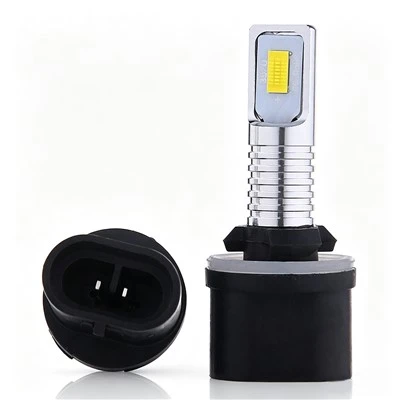
At the end of the day, LED exterior light bulbs do work in low-light outdoor fixtures—you just have to skip the cheap, indoor-only ones and pick bulbs built for small, enclosed, often damp spaces. If you’re not sure which bulb is right for your specific fixture (whether it’s a porch light, path light, eave light, or anything else), our team is here to help. We don’t do pushy sales stuff—we ask you a few quick questions: what’s the fixture size, where is it located, how much sunlight does it get, what kind of light do you want (bright path light or soft porch light), and we send you the exact bulbs that will work for you, no guesswork. We’ve helped hundreds of homeowners and contractors fix their low-light outdoor lighting, and we can help you too. If you’ve been struggling with dim, dead, or flickering bulbs in your outdoor fixtures, reach out to our team to chat through your needs—we’re here to make outdoor lighting less of a headache and more of a feature you actually enjoy coming home to.
LED Turn Signal Bulbs References
- U.S. Department of Energy. (2023). LED Lighting Facts: Outdoor LED Bulb Performance in Enclosed Fixtures. U.S. Department of Energy Office of Energy Efficiency & Renewable Energy.
- Lighting Research Center, Rensselaer Polytechnic Institute. (2022). Low-Light Outdoor Lighting: Efficiency and Longevity of LED Technology. Lighting Research Center Publications.
- International Electrotechnical Commission. (2021). IEC 60598-1: Luminaires – Part 1: General Requirements and Tests, Outdoor Enclosed Luminaire Compatibility with LED Sources.
Shine Bright Optoelectronic Co., Ltd.
As one of the most professional led exterior light bulbs manufacturers in China, we also accept customized orders. Please feel free to buy bulk advanced led exterior light bulbs in stock here from our factory. Welcome to contact us for quotation.
Address: 6th Floor, Buildings B & C, Baotang Industrial Zone, No.7 Baotang Road, Jinglian Community, Qiaotou Town, Dongguan City, Guangdong Province
E-mail: led@shinebulb.com
WebSite: https://www.shinebulb.com/
