Hey there! If you’ve ever waited for a passenger lift, staring at the little floor numbers blinking like they’re playing a weird game, or thought “how on earth does this metal box just glide up and down all day without crashing?” – same, I’ve been there too. I’ve spent the last 8 years in the passenger lifts game, helping offices, apartment blocks, and small businesses get lifts that actually work (no weird stalls mid-ride, promise), so today I’m breaking this down like I’m explaining it to my cousin who still thinks lifts run on magic. No jargon, just real talk from someone who installs and maintains these things for a living. Passenger Lifts

First off, let’s get one thing straight: lifts aren’t magic. They’re just a really clever balance trick. You know when you hold a pencil at both ends and it stays steady? Lifts do that, but way bigger. The core of every passenger lift is the “hoistway” – that narrow, shafted space between the floors, nothing fancy, just a tall box where the lift car moves up and down. The big secret? The lift car itself is only half the weight you think it is – the other half is a big counterweight hanging right next to it in the same shaft. That counterweight is roughly as heavy as the car plus 40% of its max passenger load. So if your lift’s rated for 10 people (around 800kg total), the counterweight’s sitting at like 480kg. That means when the car’s empty, it’s almost the same weight as the counterweight. When you get in, the extra weight pulls the car down, which makes the counterweight go up – super simple physics, no batteries required.
Now, how does it actually move? That’s where the traction system comes in – this is the part that’s not just a pulley like a old well bucket. Up near the top of the hoistway (usually in a machine room, though some new ones have compact machines in the shaft itself), there’s a big traction sheave – basically a thick, round wheel. Wrapped around that sheave is a set of steel cables called suspension ropes (we use 4 to 8 for passenger lifts, way more than enough to hold a small truck). The sheave spins, and because the rope has a rough coating on it, it grips the sheave like a bike chain on a gear – that’s “traction” – so when the sheave turns, it pulls the rope, which pulls the lift car up or down. No slipping, no sliding, no weird free-fall (that’s a common fear, by the way – we’ll get to safety later).
Wait, but what about the motor? Yeah, I skipped that part. The motor that spins the sheave is usually an electric one these days – old lifts used DC motors, but now we use brushless AC motors, way quieter and more efficient. If you’ve ever been in an old building with a rattly lift, that’s the old motor shaking the whole shaft – modern ones? You barely hear them, even when they’re moving at full speed (most go up to around 1m/s, so you don’t feel like you’re on a rollercoaster, just a smooth glide). The motor’s controlled by a drive system – that’s the brain of the lift, basically a computer that tells the sheave how fast to spin, when to stop, which floor to go to. If you press 3, it calculates where the car is, how far it needs to go, slows it down gradually as it approaches the floor, and stops exactly level with the door. No more that jolt when the car lurches to a stop – that’s the drive doing its job right.
Now, let’s talk about the stuff that makes lifts actually usable – the control panels and door systems. When you press a button on a floor or inside the car, that signal goes to the lift’s controller. It uses a tiny part called an encoder that tracks where the car is in the hoistway, down to the centimetre. The controller will also make smart calls – like if you’re on the 2nd floor and press up, and the lift is already going from 5th to 1st, it might pick you up on the way down instead of making it come all the way back to 2nd. That’s why lifts feel like they’re “saving” trips, even if they’re just optimising.
Doors are another big part – you’d be surprised how many people think doors are just metal slabs that slide. No, there’s a whole system here too. Each floor has a landing door, and the car has its own car door, so two sets of doors open and close every time you ride. The car door is hooked up to the lift’s motor, and when the controller tells it to stop at a floor, the car door aligns with the landing door, and a small mechanism locks both doors together so they open at the same time. That’s why you never see just the car door open if the landing door’s stuck – they work in tandem. We use two types of doors usually: centre-opening for passenger lifts (they split in the middle, easier for people with strollers or wheelchairs) and side-sliding for smaller lifts, but centre-opening is standard for most commercial and residential passenger lifts.
Okay, now the part everyone worries about: safety. Let’s get this out of the way first – passenger lifts are way safer than stairs, statistically. Way. There are backups everywhere, no single point of failure. First, there’s the overspeed governor. If the lift car starts moving too fast (like, way faster than it should), a little wheel at the top of the hoistway spins along with the suspension ropes. If it spins too fast, it grabs the rope and triggers a safety clamp – those big metal jaws that clamp onto the guide rails (the vertical metal bars on either side of the car that keep it from swinging) and stop the car dead in its tracks. And that’s not all – there’s also a buffer at the bottom of the hoistway (and sometimes the top) that’s like a big hydraulic or spring cushion. If somehow the car does hit the bottom (which almost never happens, because the governor would’ve stopped it way before), the buffer slows it down gently instead of a hard crash.
Also, the suspension ropes – we test them every year, no exceptions. Each rope can hold 10 times the weight of the max load, and even if one breaks (which is super rare), the others can still hold the car. And if the power goes out? Most modern lifts have a backup battery that kicks in, lowers the car to the nearest floor, opens the doors, and lets you out. No being stuck between floors, no panicking (though I get it, it’s scary when the lights go out – that’s why we test those batteries monthly).
Now, let’s make this relatable – I’ve installed lifts in everything from 3-storey apartment blocks to 15-storey office buildings, and the only thing that changes between them is the size of the hoistway and the speed of the lift. For a small café with 2 floors, a compact passenger lift works fine – it fits 6 people, moves at 0.5m/s, no need for a big machine room. For a 20-storey apartment, you need a faster lift (around 1.5m/s) to cut down wait times, and maybe a machine in the shaft instead of a separate room to save space.
Wait, what about maintenance? That’s the part a lot of building owners forget, and that’s why lifts get cranky. We do monthly checks: oil the sheave, test the safety clamps, make sure the doors close properly, check the battery. Every year, we do a full inspection, replace old cables if needed, update the controller software. I had a client a couple of years ago who skipped maintenance on their 10-year-old lift, and the doors started closing too fast – almost pinched a kid. Turned out the door motor was worn out, and a simple $20 part would’ve fixed it for $100, but they waited and had to replace the whole door system for $2,000. Trust me, maintenance isn’t a scam – it keeps your passengers safe and your lift running long.
Let’s bust a few common myths while we’re at it. Myth 1: Lifts use a lot of power. Nope, modern passenger lifts are super efficient. Every time you go down, the counterweight is pulling you, so the motor barely uses power – most of the energy is when you go up with a full car. Way more efficient than a elevator (wait, for all the people who mix these up – “lift” is the UK/Australian term, “elevator” is US, but I use “passenger lift” because that’s what we sell) – yeah, better for small spaces too. Myth 2: The emergency phone works all the time. If your lift’s emergency phone is static, that’s a problem – we test that every quarter, because it runs off the same battery as the backup power. Myth 3: The cables break all the time. I’ve been in this game 8 years, and I’ve never seen a cable break in a properly maintained lift. They fray slowly, and we catch it during inspections.
So, putting it all together: a passenger lift is a system of balance (counterweight), grip (traction sheave), brain (controller), doors that sync, and layers of safety backups. It’s not rocket science, but it’s also not something you want to cut corners on. I’ve seen cheap lifts installed by guys who don’t know what they’re doing, and they stall weekly, break, and are a nightmare. That’s why we take our work seriously – we build lifts that glide, open on time, and don’t make you hold your breath when you press 5.
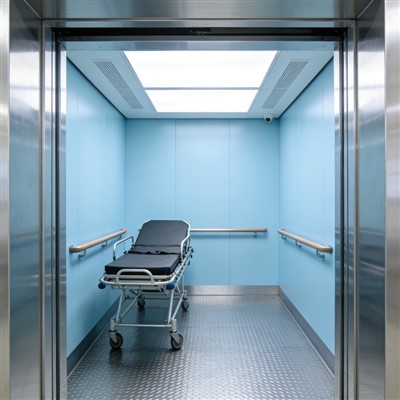
If you’re a building owner, facilities manager, or even someone who’s renovating their house and needs a passenger lift, don’t guess on this. I’ve helped small businesses get their first lift, and big offices upgrade their old ones to be more efficient. We don’t do one-size-fits-all – we’ll measure your hoistway, talk about how many people you need to carry, how fast you want it, and make sure it’s safe for everyone, including people with disabilities or strollers. No jargon, no hidden fees, just a lift that works when you need it. If you’re thinking about getting a passenger lift installed or upgrading your current one, reach out to us for a chat – we can walk you through all the options, answer any questions, and make sure you get something that fits your space and your budget.
Home Elevator References
- National Elevator Industry, Inc. (2022). Elevator Safety Standards & Operational Guidelines
- European Lift Association (2021). Passenger Lift Design & Traction System Specifications
- Occupational Safety and Health Administration (OSHA). (2023). In-Plant Elevator and Lift Safety Requirements
Weibo Elevator Co., Ltd.
We’re well-known as one of the leading passenger lifts manufacturers and suppliers in China, specialized in providing high quality custom service for global clients. We warmly welcome you to buy high-grade passenger lifts at competitive price from our factory.
Address: Dongxiang Road, Nanxun Economic Development District, Huzhou City, Zhejiang Province, China
E-mail: zoey@webstar.net.cn
WebSite: https://www.webstar-elevators.com/
