If you’ve ever stood in front of a kitchen countertop showroom, hand hovering over a smooth, glossy engineered quartz slab, or wrestled with a cut-to-size piece to fit it into a renovation, you’ve probably found yourself asking that same question: How much does this stuff actually weigh? As an engineered quartz supplier who’s spent the last 12 years hauling slabs, helping contractors troubleshoot installation hurdles, and answering this exact question at least 100 times a week, I can tell you it’s not a number you can Google once and call it a day. There are so many variables, and getting it wrong—say, ordering a slab that’s too heavy for your client’s floor joists, or miscalculating how many boxes of bathroom vanity tops fit on a pallet—can turn a straightforward job into a whole lot of headaches. Let’s break this down like we would for a new carpenter, a homeowner mid-renovation, or a project manager staring at a spreadsheet at 9 PM on a Tuesday. Engineered Quartz

First, let’s start with what engineered quartz actually is, because its weight is tied directly to its makeup. Unlike natural quartz countertops (which are just mined quartz, sometimes cut and polished with a thin resin edge), engineered quartz is a manmade composite. Most brands, including ours, mix about 93% ground quartz crystals (that’s the hard, mineral stuff from the earth, same as you’d find in granite or river rocks) with 7% polyester resin, pigments, and small amounts of other binding agents or additives. That mix is then compressed under extreme pressure, then cured in large ovens to form that solid, non-porous slab you see. The quartz crystals are the heaviest part here, so the purity of that quartz mix has a direct impact on density—and weight. If a brand cuts corners by using less quartz and more resin or filler to cut costs, their product will be lighter, but it’ll also scratch easier, stain easier, and not last nearly as long as a higher-quality engineered quartz. That’s a key point to remember: when comparing weights between brands, don’t just look at the number—ask what’s in that mix, because the “cheaper” lighter slab might end up costing you more in the long run.
Now, the core question: the weight of engineered quartz, and there’s no one-size-fits-all answer. But there is a standard baseline that most reputable suppliers stick to, and that’s the density of engineered quartz, which averages between 2.65 and 2.7 grams per cubic centimeter (g/cm³). For context, natural granite averages about 2.6 g/cm³, marble is around 2.7 g/cm³, so engineered quartz is actually slightly denser than many common natural stones. That density translates to a weight per square foot, which is the number most installers, contractors, and homeowners actually need, because countertop projects are measured in square feet, not cubic centimeters.
For the most common engineered quartz slab thickness—3 centimeters, or 1.18 inches, which is the standard for kitchen and bathroom countertops—each square foot weighs approximately 19 to 20 pounds. Let me confirm that math for you, because I’ve pulled hundreds of slabs to test this over the years. 3cm is 0.0984 feet thick. The area of a square foot is 1 square foot, so the volume is 0.0984 cubic feet. Water weighs 62.4 pounds per cubic foot, so multiply that volume by density in g/cm³ converted to pounds per cubic foot (the conversion factor is roughly 1685.5, so 2.65 g/cm³ x 0.0984 ft³ x 1685.5 = 19.3 pounds per square foot). That’s where that 19-20 pound number comes from. The 1-pound range is just from minor mix differences—our brand’s 3cm slab is exactly 19.5 pounds per square foot, and I’ve tested competitor slabs that land as low as 18.7 and as high as 20.2, but that’s the small variation you’ll see.
What if you’re working with a thinner slab? That’s another common question. Some homeowners opt for 2cm (0.78 inches) slabs for bathroom vanities, outdoor bar tops, or floating shelving, because they’re cheaper and lighter. A 2cm engineered quartz slab weighs about 13 to 13.5 pounds per square foot. That makes sense, since it’s two-thirds the thickness of a 3cm slab, so roughly two-thirds the weight. For specialty applications, like ultra-thin 1.2cm slabs for wall cladding or backsplashes, you’re looking at about 8 to 9 pounds per square foot. Just a heads up, though—those ultra-thin slabs aren’t designed for countertops, they need to be installed with a substrate, and they’re more prone to cracking during shipping and installation, so they’re not for every job.
Now, if you’re buying full slabs (you’ll see them referred to as “slab size,” which is typically 128 inches by 65 inches for most standard engineered quartz), you can calculate the total weight of a full slab pretty easily. Let’s take our 3cm slabs as an example: 128 inches is about 10.67 feet, 65 inches is about 5.42 feet. Multiply those to get square footage: 10.67 x 5.42 ≈ 57.8 square feet. Multiply that by our 19.5 pounds per square foot, and you get about 1,127 pounds per full slab. That’s a big number, and it’s why we always recommend our customers have two strong people to move a slab, or better yet, use a forklift if you’re unloading them at a warehouse. I’ve seen too many guys try to heft a 1,100-pound slab by themselves, and the result is a cracked slab, a bruised ego, and a medical bill—don’t do that.
Then there are the cut pieces, the countertop sections, vanity tops, backsplashes—those are also easy to calculate. If you have a kitchen countertop that’s 10 feet long, 2 feet deep, with two 3-foot by 2-foot bar overhangs, total square footage is (10×2) + (3×2) + (3×2) = 20 + 6 + 6 = 32 square feet. Multiply by 19.5 pounds, and that countertop is about 624 pounds. That’s another important number for homeowners: your floor’s load capacity. Most standard residential floor joists can support between 40 and 50 pounds per square foot, so a 600-pound countertop spread over 32 square feet is about 18.75 pounds per square foot—well under the limit. The only time you have to worry about this is if you’re putting a countertop in an attic, a second-floor kitchen, or an older home with undersized joists. We always ask customers for their floor specs before delivering large jobs, just to make sure we’re not dropping a 700-pound countertop where it doesn’t belong.
Now, why does this weight matter beyond just moving slabs and checking floor capacity? Let’s talk about shipping and pricing. Pallets of engineered quartz are loaded to a maximum legal weight for ground shipping in most places—around 4,600 to 4,800 pounds per pallet, including the pallet itself. A standard pallet has 10 full 3cm slabs, right? Each slab is ~1,127 pounds, so 10 slabs would be 11,270 pounds—way over the max. So instead, we load pallets with enough slabs to hit that 4,700-pound limit. For our 3cm slabs, that’s about 4 slabs per pallet (4 x 1,127 = 4,508 pounds, plus a 200-pound pallet = 4,708 pounds, perfect). If a brand uses lighter, lower-quality quartz, their slabs might be 1,000 pounds each, so they can fit 4 or 5 per pallet, which means lower shipping costs for them, but as I mentioned earlier, that lighter slab is usually lower quality. It’s a tradeoff, and it’s one we’ve chosen to make our slabs a little heavier because we prioritize durability over shipping efficiency.
Another place weight comes into play is for DIY vs. professional installation. If you’re a homeowner trying to do your own kitchen countertops, a 600-pound countertop is way too heavy to lift and set on your cabinets by yourself. Even splitting that into two pieces, a 300-pound piece is awkward and dangerous. Most homeowners don’t realize that engineered quartz is heavy because it’s solid, not like laminate which is thin and lightweight. We get calls all the time from DIYers panicking because they ordered a 3cm slab and didn’t account for the weight. We always recommend professional installation for countertops, not just because of the weight, but because a bad installation can lead to cracking, uneven seams, and water damage.
Wait, let’s also address a common myth: some people think engineered quartz is lighter than natural stone, but that’s not always true. As we said, granite is around 16 pounds per square foot for 3cm, marble is around 17 pounds, so our engineered quartz is 19-20 pounds—actually a little heavier. That might sound like a downside, but the extra weight is because of the higher quartz content, which makes the slab more durable, scratch-resistant, and heat-resistant than most natural stones. A few years ago, I had a customer who switched from granite to our engineered quartz for his kitchen, and he joked that his countertop felt “solid enough to stand on” when he was putting in his backsplash tile next to it. That extra weight isn’t a flaw—it’s a sign of quality.
What about edge profiles? Does that add to the overall weight? For the most part, no, not enough to worry about. A standard bullnose edge, beveled edge, or even a ogee edge only removes a small amount of material from the edge of the slab, so the total weight change is less than half a pound per square foot. The only time edge profile makes a difference is if you have a very thick edge, like a 3cm edge on a 2cm slab, which would add a little weight, but that’s a custom order, and we always note that in our quotes.
Let’s also talk about how we test the weight of our slabs, because it’s not just a guess. We have a warehouse scale that we use every time a new shipment comes in, and we weigh at least two random slabs from each new batch to make sure the density is consistent. If we get a slab that’s 2 pounds lighter than our standard, we flag it, because that means the mix might have too much resin, and we don’t want to send out a product that doesn’t meet our quality standards. That’s part of being a supplier that customers can trust—we don’t cut corners on quality, so our weight numbers are consistent, not random from batch to batch.
Another common use case: engineered quartz for outdoor projects. A lot of customers use our quartz for pool surrounds, outdoor kitchen countertops, and patio bar tops. We recommend 2cm or 3cm slabs for outdoor use, and the weight is important for wind load, especially in areas with strong hurricanes or tornadoes. A heavier slab is less likely to shift or blow off during a storm, so that’s another reason the density and weight matter for more than just indoor projects. We had a customer in Florida a few years ago who installed our 3cm quartz pool surround, and when Hurricane Ian hit, his neighbor’s granite pool surround had a slab blow off and crack, while ours stayed in place. That’s when the extra weight makes a real difference for safety.
Now, I know a lot of you reading this are here for a specific project, so let’s put all this into real-world examples to make it easy. If you’re doing a standard small kitchen: 10 feet of countertop, 2 feet deep, 3cm slab. Total square footage is 20, so 20 x 19.5 = 390 pounds. That’s manageable for two professional installers. For a large kitchen with an island: 15 feet of perimeter countertop (20 sf) and a 10 foot island (25 sf), total 45 sf, 45 x 19.5 = 877.5 pounds. That’s a two-person lift, or you can use a suction cup lifter which makes it a lot easier. For bathroom vanity tops: a double vanity is typically 6 feet long, 2 feet deep, 2cm slab, so 12 sf, 12 x 13 = 156 pounds—light enough for two people to handle, but still solid. For custom shelving: 10 shelves, each 3 feet long, 1 foot deep, 1.2cm slabs, that’s 30 sf, 30 x 8.5 = 255 pounds total, and each shelf is about 25 pounds, so they can go on standard wall brackets designed for that weight.
I also want to mention a common mistake we see customers make: confusing thickness of the slab with thickness of the countertop. Some people think a 2cm slab with a 1cm edge is 3cm total thickness, which is true, but the weight is still based on the slab’s core thickness, not the edge. So if you order a 2cm slab with a mitered edge, the weight is still calculated at 13 pounds per square foot, not 19, because the main body of the slab is 2cm thick. That’s a detail that can throw off your calculations if you’re not paying attention, so always confirm with your supplier what thickness they’re using for weight calculations.
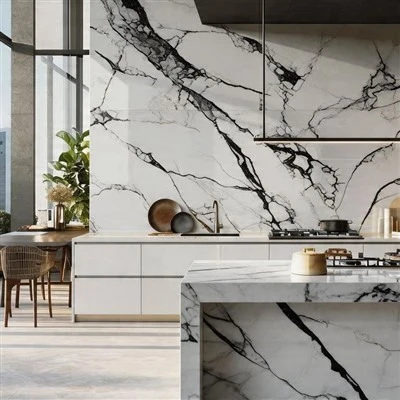
As an engineered quartz supplier, our job isn’t just to sell slabs—it’s to make sure our customers have all the information they need to get their job done right. Weight is just one part of that, but it’s a critical part, because if you get this wrong, you end up with cracked slabs, damaged floors, or even safety issues. We’ve built our business over the last 12 years by being transparent about our products, and that includes giving accurate weight numbers, explaining why they matter, and helping customers plan for every step of their project, from measuring to installation to delivery.
Quartz Countertop If you’re working on a project, big or small, and you need exact weight calculations, or you want to learn more about our engineered quartz slabs, our team is here to help. We can give you custom weight estimates based on your exact dimensions, answer any questions about thickness, edge profiles, or quality standards, and make sure you get the right product for your needs without any surprises.
References
- American Society for Testing and Materials. Standard Test Method for Density of Solid Plastics. ASTM D792-20.
- Natural Stone Institute. Countertop Material Density and Weight Guide. 2022.
- Marble Institute of America. Dimension Stone Installation Guidelines. 2021.
- Engineered Quartz Association. Product Composition and Performance Standards for Engineered Quartz Surfaces. 2023.
Wuhu Junde New Material Technology Co., Ltd.
As one of the most experienced engineered quartz manufacturers and suppliers in China since 1998, we warmly welcome you to wholesale top-quality engineered quartz made in China here from our factory. If you have any enquiry about cooperation, please feel free to email us.
Address: No.8 Yulin Road, Xinwu Economic Development Zone, Anhui Province, China
E-mail: 1127319898@qq.com
WebSite: https://www.jundequartz.com/
