As a power inductor supplier who’s spent the last decade working directly with industrial control engineers, I’ve lost count of how many times I’ve heard, “I just picked the first inductor that fit my circuit board size.” That approach works for hobby projects, but industrial control circuits aren’t the same—one wrong inductor can derail a production line’s uptime, or worse, cause a safety hazard for workers on the factory floor. Today, I’m walking you through the practical, science-backed steps I use with my own customers to select the right power inductor, no guesswork required. Power Inductor
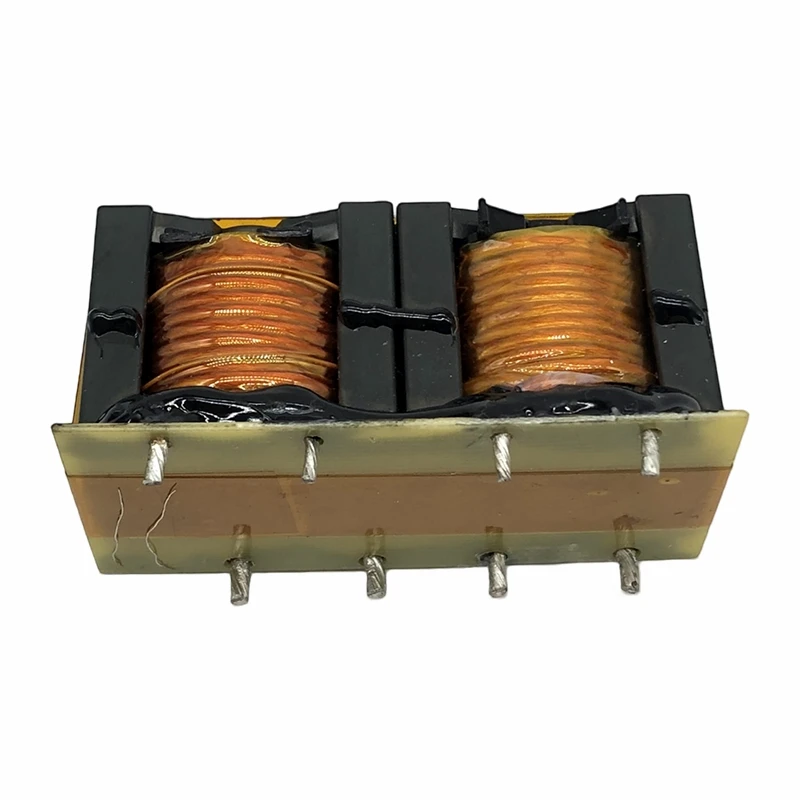
First, let’s ground this in what a power inductor actually does in industrial control. Unlike the small inductors used in consumer electronics, industrial control circuits handle variable loads, harsh temperature swings, and constant on/off cycles that happen when a motor’s relay switches or a PLC’s output triggers. The inductor’s job here isn’t just to store energy—it’s to smooth out voltage ripple, filter electrical noise that can trigger false sensor readings, and prevent sudden current spikes that fry sensitive components like microcontrollers or motor drivers. Pick the wrong one, and you’ll either deal with overheating inductors that fail mid-shift, or a circuit that’s so inefficient it’s costing you thousands in extra energy bills each year.
Let’s start with the non-negotiable electrical specs that you have to nail down before even looking at size or cost. The first is rated current, and this is where a lot of engineers cut corners. I see it all the time: someone picks an inductor with a rated current that’s just slightly higher than their average load, but they forget about the peak current. Industrial control circuits aren’t steady-state. When a servo motor starts up, it can draw two to three times its rated current for fractions of a second, and your inductor has to handle that without saturating. Saturation is the big silent killer here—it’s when the inductor’s core can’t hold any more magnetic energy, so its inductance drops. A saturated inductor stops smoothing ripple, lets current spikes go wild, and overheats in minutes. That’s why we specify two current ratings: continuous current, which is your average load plus a 20-30% buffer for normal variations, and peak current, which has to match or exceed your circuit’s maximum current draw, including transients. For example, if your PLC drives a 5A average load with a 12A startup peak, you don’t want to use a 6A continuous rated inductor—you’ll saturate the core on startup. We always recommend engineering for peak current to avoid unplanned downtime.
Next, inductance value. This isn’t just a number off a datasheet—it’s tied directly to your circuit’s switching frequency and ripple requirement. The formula is simple: Inductance (L) = (Input Voltage – Output Voltage) × Output Duration / Ripple Current. Let’s break that down for industrial use: if your circuit switches at 100 kHz (common for motor drivers and power supplies) and you need 10% or less ripple (critical for keeping sensor data accurate), a higher inductance will give you smoother output, but it will also make your inductor larger and more expensive. A lower inductance is smaller and cheaper, but you’ll get more ripple, which can cause noise interference with nearby control signals. We work with customers to find the sweet spot here—for most industrial control circuits, a 10-20% ripple range balances performance, size, and cost. If you’re working with high-frequency switching (like 500 kHz for compact drives), a lower inductance works because the switching itself already suppresses ripple, so you don’t need a big inductor. If you’re dealing with low-frequency, high-power loads (like conveyor belt motors running at 20 kHz), you’ll need a higher inductance to keep ripple in check.
Then there’s DC resistance (DCR), which is a spec that’s easy to overlook but has a huge impact on energy efficiency. DCR is just the coil’s resistance, and when current flows through it, it creates I²R heat. More heat means your inductor has to run cooler, which often means a larger unit to dissipate heat, or shorter lifespan. For industrial applications, where energy costs add up over hundreds of shifts a year, a slightly higher upfront cost for a low-DCR inductor will save you money long-term. I had a customer last year who was using a standard inductor in their packaging line’s power supply—they were losing 15% of their energy to DCR heat, and their inductor was failing every 18 months. Swapping to a low-DCR unit increased their efficiency by 12%, and the inductor lasted three times as long. That’s the kind of win that makes choosing the right inductor matter beyond just the circuit itself.
Now, the environmental factors that are specific to industrial settings—this is where off-the-shelf consumer inductors will fail, and why our line of industrial-grade units is engineered for these conditions. First, temperature range. Industrial factories have extreme swings: a plant in a cold storage facility might have ambient temperatures down to -40°F, while a metal stamping line can hit 185°F from nearby machinery. Most consumer inductors only work between 0°C and 70°C, which means in a few months, the cold will crack the core or the heat will degrade the insulation. We rate our industrial inductors for -40°C to 125°C, and we test each unit across that range to make sure inductance stays consistent. If your circuit is in an outdoor control panel in a climate with four seasons, skip the standard inductors—look for a temperature rating that covers your extreme lows and highs.
Vibration and shock are another big one. Factory floors aren’t the smooth surfaces of a consumer’s desk. Conveyors, presses, and pumps create constant vibration, and sudden shocks from dropped tools or machinery malfunctions can loosen components inside the inductor. This isn’t just a mechanical issue—loose components can change the inductance value over time, leading to ripple spikes or even open circuits. We design our industrial inductors with molded cores and welded coil leads, not the glued or soldered connections used in consumer units, so they can pass IEC 60068-2-6 vibration testing and IEC 60068-2-27 shock testing. If your inductor is going inside a moving machine or a panel near high-vibration equipment, this spec is non-negotiable. I’ve seen customers use a $0.50 consumer inductor that failed in a week because of vibration, while a $2.00 industrial unit lasted five years—no contest.
Size and form factor are practical considerations, but they shouldn’t override your electrical or environmental specs. It’s tempting to pick the smallest inductor that fits your PCB, but if it doesn’t meet the current or temperature requirements, it’s not worth it. That said, industrial control circuits are often space-constrained—PLCs are getting smaller, and control panels are designed to hold more equipment in less space. That’s why we offer both through-hole and surface-mount inductors, including high-current, low-profile surface-mount units for compact drives. We can also work with customers on custom form factors if standard sizes don’t fit their unique PCB layout, which is a common request for specialized industrial equipment like medical device controllers or offshore drilling systems.
Wait, I should also mention shielding. Electrical noise is a huge problem in industrial control circuits. An unshielded inductor acts like an antenna, picking up noise from nearby motors or radio signals, which can cause a PLC to misread a sensor or a conveyor to stop unexpectedly. Shielded inductors have a metal core that contains the magnetic field, so they don’t radiate noise or pick up external interference. Most industrial circuits need shielded inductors, but if you’re working in a low-noise environment (like a clean room for semiconductor manufacturing), an unshielded unit can be a little smaller and cheaper. Just make sure you test for noise—one customer of mine didn’t realize their inductor was radiating noise until their assembly line’s vision camera started giving bad readings, and swapping to a shielded inductor fixed the issue overnight.
Now, let’s put this all together with a step-by-step checklist, the same one I give to every engineer who reaches out to us. First, calculate your continuous load current, then add a 25% buffer, then confirm that number meets the inductor’s continuous current rating. Second, find your peak current (startup loads, transients) and make sure the inductor’s peak current rating is at least that number to avoid saturation. Third, calculate your required inductance based on switching frequency and desired ripple, using that formula I mentioned earlier. Fourth, check the DCR—aim for the lowest DCR you can afford, since it cuts energy costs. Fifth, factor in your environmental conditions: temperature range, vibration, shock, and noise. Sixth, pick a form factor that fits your PCB, but don’t sacrifice specs for size. Finally, test a sample before you buy in bulk—we always send free samples for engineers to test in their actual circuits, because datasheet specs don’t always translate perfectly to real-world conditions.
I’ll be honest—there’s no one-size-fits-all inductor, which is why so many engineers come to us frustrated after bad experiences with generic units. A lot of suppliers will sell you an inductor with nice-sounding specs on a datasheet, but not all of them are tested for industrial use. We test every inductor in our line for saturation at both low and high temperatures, vibration, and long-term lifespan, because we know that industrial uptime isn’t just a nice-to-have—it’s the difference between making a profit and losing money on a line shutdown.
If you’re currently dealing with inductor failures, excessive ripple, or energy waste in your industrial control circuit, we can help. Whether you’re designing a new PLC, upgrading a motor drive, or troubleshooting an existing line, our team has worked with thousands of industrial engineers to match them with the right power inductor.
If you’d like to discuss your specific requirements or request a sample, feel free to reach out.
Toroidal Transformer References
- IEC 60068-2-6, Environmental testing – Part 2-6: Tests – Test Fc: Vibration (sinusoidal)
- IEC 60068-2-27, Environmental testing – Part 2-27: Tests – Test Ea and guidance: Shock
- Texas Instruments, “Understanding Inductor Selection for DC-DC Converters”, Application Note SLVA446
Dongguan Hensiron Electric Co., Ltd.
As one of the most professional power inductor suppliers in China, we have world-leading production equipment and strong manufacturing capabilities. Please feel free to buy high quality power inductor made in China here from our factory. Customized orders are welcome.
Address: Building 4, Xinxing Industrial Zone, Wangao Road, Wanjiang Street, Dongguan City, China
E-mail: jessica@dghensiron.com
WebSite: https://www.dghensiron.com/
