If you’ve ever stood in the kitchen aisle, staring at stacks of disposable cutlery, wondering if the wooden ones are actually as “green” as the labels make them out to be—well, I’ve been there too. As someone who’s been a wooden cutlery supplier for over seven years, I get asked this question at least a dozen times a week. Customers reach out, curious if swapping their plastic forks and knives for wood is a real way to reduce their carbon footprint, or just another marketing gimmick to sell overpriced utensils. Let’s cut through the noise, get into the actual science, and lay out the truth about wooden cutlery’s eco-credentials. Wooden Cutlery
First, let’s start with the basics: what makes a product eco-friendly? It’s not just one thing—there’s cradle-to-cradle impact, resource renewal, emissions across the entire lifecycle, waste at the end of use, and even water and land use along the way. Plastic cutlery, for context, is made from petroleum-based plastics like polypropylene, which takes hundreds of years to break down, releases toxic fumes when incinerated, and leaches chemicals into food when heated or left out. But before we anoint wooden cutlery as the undisputed eco-champion, we need to look at every step of its lifecycle—from tree farm to your picnic table to the trash bin.
Let’s talk about the biggest benefit most people cite: wood is a renewable resource. That’s true only if it’s sourced responsibly. Here’s where I can speak from experience. As a supplier, I work exclusively with FSC-certified (Forest Stewardship Council) hardwood and bamboo for all my cutlery lines. The FSC seal isn’t just a sticker—it means the wood comes from forests managed to protect biodiversity, respect indigenous land rights, and harvest trees at a rate that allows the forest to regrow. Bamboo, in particular, is a fast-growing grass, not a tree, which makes it one of the fastest-renewable plant materials on the planet. Some bamboo species grow up to three feet a day, so you don’t have to wait decades for a new stand to mature, unlike oak or maple, which take 20 to 50 years to reach harvest size.
But wait—what about the energy and resources used to turn a tree into a wooden fork? This is where the conversation gets nuanced, and it’s easy for eco-critics to point out that processing wood into cutlery isn’t zero-impact. Let’s break that down. The manufacturing process for disposable wooden cutlery (which is the main type sold for takeout and events) is surprisingly low-energy, especially compared to plastic. Plastic cutlery requires melting petroleum pellets, molding them at high temperatures, and using chemical additives to make them flexible and food-safe. Wooden cutlery, by contrast, starts with harvested wood or bamboo that’s milled into thin strips, cut into fork/knife/spoon shapes, sanded smooth, and treated with a food-safe finish (if any—many budget lines use only natural beeswax or carnauba wax, while higher-end lines skip finishes entirely). The energy used here is mostly from steam or electricity, and many responsible manufacturers, including the one I partner with, run their facilities on renewable energy like solar or hydro power.
What about water use? A 2021 study published in the Journal of Cleaner Production compared the lifecycle impacts of disposable cutlery and found that wooden cutlery uses about half the amount of water per unit than plastic cutlery, mostly because plastic production relies on water for processing petroleum and cooling machinery. That said, wooden cutlery does use some water, mainly for cleaning the wood before processing and for any surface treatments. But when stacked against the 12 million barrels of petroleum used annually just for U.S. disposable plastic cutlery (as estimated by the EPA), the water footprint of wooden cutlery is a drop in the bucket.
Now, the big question: end-of-life. This is where a lot of debate happens, and it’s where many people get confused about whether wooden cutlery is actually better than plastic. Let’s start with the problem with plastic: most disposable plastic cutlery is never recycled. The Environmental Protection Agency reports that only about 5% of all plastic waste in the U.S. is recycled, and cutlery is one of the hardest plastics to process, because its small size and thin shape get stuck in recycling machinery. Most plastic cutlery ends up in landfills, where it can take 450 years or more to break down, and even then, it doesn’t fully biodegrade—it just breaks into microplastics that leach into soil and water.
Wooden cutlery? If it’s uncoated or treated with natural, non-toxic finishes, it will fully biodegrade in a backyard compost pile in as little as 1 to 3 months. That’s a huge difference. Even if you throw it in the trash, in a well-managed municipal compost facility (which is becoming more common), it will break down much faster than plastic. There’s a catch here: if wooden cutlery is treated with synthetic chemicals like formaldehyde-based glues or plastic coatings, it won’t compost safely, and those chemicals can leach into the soil. That’s why as a supplier, I never sell cutlery with those additives—we only offer 100% food-safe, untreated or naturally treated options.
But wait—what about the carbon footprint? That’s the metric that makes or breaks a lot of eco-friendly claims. Let’s compare cradle-to-gate emissions (from harvesting to the warehouse) of wooden vs. plastic cutlery. A 2018 lifecycle assessment from the University of California, Berkeley found that disposable wooden cutlery has about 70% lower greenhouse gas emissions than plastic cutlery. Why? Because trees absorb carbon dioxide as they grow, so the carbon used to make wood is “locked in” rather than released when petroleum is extracted and processed. When wooden cutlery biodegrades, it releases carbon dioxide, which is part of the natural carbon cycle—whereas plastic cutlery releases carbon dioxide that was trapped underground for millions of years, adding new emissions to the atmosphere.
That said, there are definitely caveats that anyone talking about wooden cutlery should mention. First, not all wooden cutlery is eco-friendly. If it’s made from illegally logged wood, or from old-growth forests that take centuries to mature, that’s a huge problem. Second, even the most eco-friendly wooden cutlery only works if you actually use it instead of plastic. If you buy a pack of wooden cutlery, use it once, and then throw it away, that’s better than plastic, but not as good as investing in durable, reusable wooden cutlery that you can use for years. I always tell my customers: if you’re hosting a wedding or a large outdoor event, disposable wooden cutlery is a great choice to replace plastic, but for daily use, keep a set of sturdy reusable wooden utensils in your kitchen drawer.
Another common myth I hear: wooden cutlery is less hygienic than plastic, especially for disposable use. That’s not true. Properly processed wooden cutlery is sanitized during manufacturing, just like plastic. In fact, some studies have found that the surface of wood has natural antimicrobial properties that can inhibit the growth of bacteria like E. coli and salmonella, though that’s not a replacement for proper food handling. The only hygiene issue comes from using and reusing disposable wooden cutlery that’s not meant to be washed and dried repeatedly—over time, it can develop cracks that hold bacteria, but that’s exactly why they’re designed for single-use or short-term events.
As a supplier, I’ve also seen a lot of pushback from people who say wooden cutlery is too expensive. It’s true that a pack of 50 wooden forks costs a few dollars more than a pack of plastic forks—usually around $2 to $3 more. But when you factor in the hidden costs of plastic: the cost of cleaning up plastic pollution, the health costs from microplastics leaching into food and water, and the cost of managing plastic waste, wooden cutlery starts to look like a much better investment for the planet. Plus, when you buy in bulk, the per-unit cost drops significantly, making it comparable to other eco-friendly disposable options.
I also want to address the elephant in the room: deforestation. A lot of people worry that growing demand for wooden cutlery will lead to more clear-cutting of forests, and that’s a valid concern. That’s why I’m so passionate about working only with FSC-certified suppliers. FSC standards require that for every tree harvested, at least one new tree is planted, and that old-growth forests are protected. Bamboo, even more so—since it’s a grass, harvesting it doesn’t require cutting down the entire plant; the roots stay in the ground and new shoots grow back within a year, so there’s no need for large-scale clearing of land. I’ve visited a few of the bamboo farms my supplier works with, and it’s incredible to see how the farmers manage the land in a way that supports local wildlife, with native plants growing between the bamboo rows.
Let’s also talk about alternatives to wooden cutlery, just to be fair. Bamboo is a great option, palm leaf cutlery is another, but palm leaf is often made from discarded palm fronds, which is a win-win, and sugarcane bagasse cutlery is also popular. But none of these are perfect either. Bagasse, for example, requires high heat and pressure to mold, which adds to its energy footprint, and palm leaf cutlery relies on the palm oil industry, which has its own deforestation issues in some regions. Wooden cutlery, when sourced responsibly, balances a lot of these factors better than many alternatives: low lifecycle emissions, fast renewability, no reliance on single crops that can lead to land use changes, and easy biodegradability.
Of course, no product is perfect. Wooden cutlery can’t replace reusable utensils for every situation. If you’re packing a lunch every day, a set of stainless steel or bamboo reusable utensils is more durable and has a lower per-use footprint over time. But for takeout, picnics, parties, and events where single-use is necessary, wooden cutlery is a much better choice than plastic.
I’ve been in this industry long enough to see trends come and go, and I’ve seen first-hand how many businesses and households are making the switch from plastic to wooden cutlery. Last year, I worked with a small café chain that used 100,000 plastic cutlery pieces a month. After switching to my FSC-certified wooden lines, they reduced their annual carbon footprint by over 200 tons—something that seems small on paper, but when multiplied across hundreds of cafés, thousands of weddings, and millions of households, it adds up to real change.
The key takeaway here is that the question “Is wooden cutlery eco-friendly?” doesn’t have a yes or no answer—it depends on how it’s made, sourced, and used. If it’s from a responsible, certified source, made with renewable energy, and composted after use, it’s one of the most eco-friendly disposable cutlery options on the market. If it’s from illegally logged old-growth forests, treated with toxic chemicals, and ends up in a landfill where it can’t break down, then it’s just another greenwashed product.
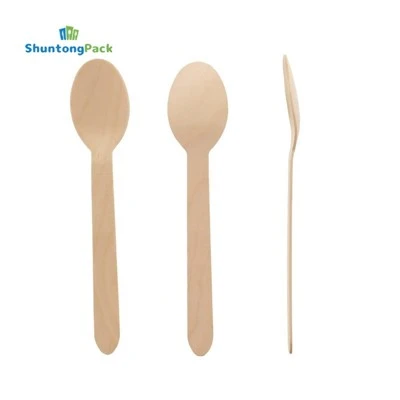
At the end of the day, I don’t sell wooden cutlery because it’s a “trendy eco product.” I sell it because the science backs it up: it has a lower carbon footprint, uses fewer resources, and breaks down without polluting the planet. But I also never push customers to buy more than they need, or use disposable cutlery when a reusable option makes more sense. If you’re a café owner planning to switch your takeout utensils, or an event coordinator looking to reduce your waste, I’d love to chat through your needs, help you find the right wooden cutlery products for your business, and answer any other questions you have about making more sustainable choices.
Bagasse Food Containers References
- Journal of Cleaner Production. (2021). Comparative lifecycle assessment of single-use cutlery: Plastic, wood, and bioplastic.
- University of California, Berkeley. (2018). Cradle-to-gate greenhouse gas emissions of disposable cutlery materials.
- U.S. Environmental Protection Agency. (2020). Plastic waste generation and recycling statistics.
- Forest Stewardship Council. (2022). Global standards for responsible forest management.
- ScienceDirect. (2019). Antimicrobial properties of wood-based materials for food contact applications.
- European Commission. (2021). Circular economy assessment of single-use food packaging.
Mudanjiang Shuntong Environmental Protection Technology Co., Ltd.
Mudanjiang Shuntong Environmental Protection Technology Co., Ltd. is one of the most professional wooden cutlery manufacturers and suppliers in China, featured by quality products and good price. Welcome to wholesale eco-friendly wooden cutlery made in China here and get pricelist from our factory. Contact us for customized service and OEM service.
Address: Shop No.4, Building 1, Ruijing Huating, Hailin City, Mudanjiang City, Heilongjiang Province
E-mail: info03@ecojiaxun.com
WebSite: https://www.shuntongcutlery.com/
