Hey there, if you’ve ever wondered how recycling turns old stuff into new stuff without wasting half the material, there’s a behind-the-scenes workhorse most folks don’t talk about: the air separation unit (ASU). As someone who’s spent years supplying these units, I’ve seen firsthand how they’re not just for big chemical plants—they’re the secret sauce that makes modern recycling actually work. Let me break this down plain and simple. Air Separation Unit
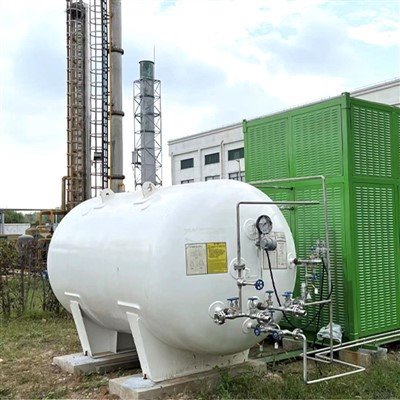
First, let’s get on the same page: what’s an ASU? It’s basically a machine that pulls the air we breathe (which is 78% nitrogen, 21% oxygen, and tiny bits of argon, neon, etc.) and splits it into pure, individual gases. No tricks, no shortcuts—just cryogenic cooling or membrane tech that separates each gas at scale. But here’s the kicker: recycling isn’t just shoving plastic or metal into a machine and calling it a day. You need super clean, consistent gases to make that process efficient, safe, and cost-effective. That’s where my ASUs come in.
Let’s start with the big one: metal recycling. You know all that scrap aluminum, steel, and copper piling up at junkyards? Getting it pure enough to use again means getting rid of impurities like moisture, carbon, and other leftover metals. ASUs supply oxygen to the furnaces that melt that scrap. Wait, why not just regular air? Because regular air only has 21% oxygen—you’d need way more fuel to melt the metal, and it would take forever. Pure oxygen from an ASU makes the furnace burn hotter, faster, and with less waste. I’ve had customers tell me switching to an ASU cut their melting time by 30%—that’s a game-changer when you’re running 24/7.
But it’s not just about heat. When recycling steel, you need to blow high-purity argon into the molten metal to stir it up and remove any leftover bubbles. Those bubbles are what make recycled metal weak and flimsy. Without argon from an ASU, your final product might not even meet industry standards. I’ve seen small scrap yards try to skip this step and end up with batches of metal that get rejected by auto manufacturers or construction companies. That’s thousands of dollars down the drain, and all because they didn’t have a reliable ASU supply.
Next up: plastic recycling. A lot of people don’t realize plastic recycling gets complicated when you’re dealing with mixed plastics—like how a soda bottle (PET) is different from a milk jug (HDPE). To separate them properly, you need a process called plastic pyrolysis, which heats plastic in an oxygen-free environment to turn it back into oil or gas that can make new plastic. ASUs provide that zero-oxygen atmosphere. If even a tiny bit of oxygen gets in, the plastic burns instead of turning into usable material, and you waste a ton of feedstock.
Also, when making new plastic from recycled materials, oxygen is used to create catalysts that help mold the plastic into consistent shapes. Too little oxygen, and the plastic is lumpy; too much, and it breaks. My ASUs give customers exact control over oxygen levels down to the percentage, so they can tweak their process without guessing. I had one client who was struggling with their recycled PET being too cloudy for water bottles—switched to a medium-purity nitrogen stream from my ASU, and suddenly their product was clear enough for food packaging. That’s the difference between selling your recycled plastic for 10 cents a pound and $1.50 a pound.
Then there’s electronic recycling—e-waste is one of the fastest growing waste streams, and it’s full of gold, silver, copper, and rare earth metals. Extracting those metals safely means using a process called hydrometallurgy, which uses chemicals and gas to leach the metals out. ASUs supply nitrogen here too—nitrogen is inert, so it prevents explosions when you’re working with flammable chemicals. E-waste recycling plants deal with all kinds of volatile stuff, and a single spark can shut down your entire operation. My ASUs provide a steady stream of nitrogen that replaces oxygen in the work area, making it safe enough to run 24/7.
Oh, and don’t forget about glass recycling. Making new glass from recycled glass (called cullet) requires high temperatures, but you have to control the atmosphere to avoid bubbles and discoloration. Oxygen from ASUs helps melt the cullet faster, while argon is used to adjust the glass’s viscosity so it doesn’t get too runny or too thick. I worked with a glass bottle manufacturer last year that was using 20% less fuel after adding an ASU—they passed those savings on to their customers, and their recycling rate jumped from 60% to 90%. That’s huge for the environment.
Wait, let’s talk sustainability, because that’s what recycling is all about. ASUs might sound like they use a lot of energy, but modern units are way more efficient than they used to be. The cryogenic units I supply use 15% less energy than models from 10 years ago, and membrane ASUs are even better for smaller operations. When you pair an efficient ASU with a recycling process that cuts down on waste, the whole thing becomes a net positive for the planet. One of my clients in Germany told me their carbon footprint went down by 40% after switching to an ASU instead of buying bottled gases (which are super energy-heavy to produce and transport). Buying gas in bulk from a supplier is cheap, but it’s not sustainable—and recycling is supposed to be about fixing that, not adding to the problem.
But here’s the catch: not all ASUs are made the same. A lot of recyclers buy cheap units online and then wonder why their process keeps breaking. I’ve seen units that can’t keep up with 24/7 runs, or that don’t deliver consistent gas purity, leading to wasted materials and downtime. That’s why I focus on building ASUs that are tailored to your specific recycling operation. If you’re a small scrap metal yard, I don’t sell you a unit big enough for a chemical plant. If you’re a large e-waste facility, I make sure the nitrogen and oxygen outputs are exactly what you need.
I also offer support that other suppliers don’t—like on-site training, regular maintenance checks, and 24/7 tech support. When a recycling plant goes down for an hour, that’s thousands of dollars in lost revenue. I’ve had customers call me at 2 a.m. because their unit had a small issue, and I send a technician out the next morning. That kind of reliability matters when you’re running a tight ship.
Let me also address a common misconception: ASUs are only for big operations. No way. I’ve sold units to small plastic recycling shops with just two furnaces, and they’ve seen the same benefits as the big guys. It’s not about size—it’s about matching the ASU to your needs. If you’re recycling 10 tons of plastic a month, you don’t need a 100-ton ASU. I can build a compact, cost-effective unit that fits your space and your budget.
So what does the future hold for ASUs and recycling? As more countries push for higher recycling rates (like the EU’s goal of 65% municipal waste recycling by 2035), demand for reliable ASUs is only going up. We’re also seeing new technologies, like using ASUs to capture carbon dioxide from the air and store it, which can be used in recycling processes too. It’s all connected—recycling can’t get better without better gas supply, and better gas supply starts with a good ASU.
If you’re running a recycling operation and you’re tired of wasting materials, dealing with inconsistent gas purity, or paying too much for bottled gases, let’s talk. I can walk you through what kind of ASU would work best for your setup, no sales pitch—just honest advice based on years in the industry. Let’s make your recycling process more efficient, more sustainable, and more profitable.

If you’d like to connect to learn more about how an air separation unit can level up your recycling operation, feel free to reach out.
Air Separation Unit References:
- Global Air Separation Equipment Market Report, 2024-2030, Grand View Research
- "The Role of Gases in Modern Recycling Processes", Industrial Gas Association, 2023
- "Sustainable Practices in Metal Recycling", Journal of Sustainable Manufacturing, Vol. 18, No. 2, 2022
- "E-Waste Recycling Technologies: A Review", Waste Management & Research, Vol. 41, No. 5, 2023
Xinxiang Jiale Intelligent Equipment Co., Ltd.
As one of the most professional air separation unit manufacturers and suppliers in China, we’re featured by quality products and good service. Please rest assured to buy durable air separation unit for sale here from our factory. We also accept customized orders.
Address: No.3913, 9th Floor, Unit 3, East Commercial and Office Complex, Baolong City Plaza, Hongqi District, Xinxiang City, Henan Province, China
E-mail: cc2397410@gmail.com
WebSite: https://www.jiale-asu.com/
