If you’ve ever worked with architectural facades, industrial filtration systems, agricultural equipment, or even retail display fixtures, chances are you’ve encountered slotted perforated metal—a versatile material that balances strength, airflow, light transmission, and functional aesthetics. As a supplier of this specialty metal product, I get questions daily from engineers, architects, project managers, and small business owners: “What exactly is the slot width of slotted perforated metal, and why does it matter?” It’s a fair question, and one that’s often misunderstood because slot width isn’t a one-size-fits-all measurement; it’s a critical specification that can make or break a project. Over 12 years in this industry, I’ve seen projects fail because someone picked the wrong slot width, and others soar because they got it just right. Let’s break this down clearly, with real-world context and practical insights you can use. Slotted Perforated Metal
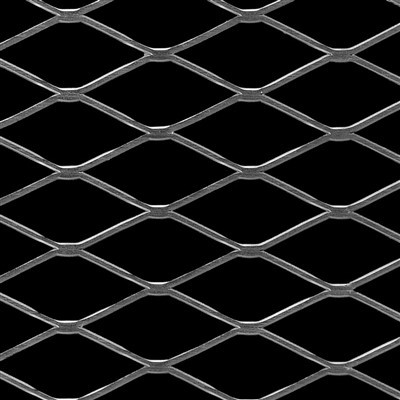
First, let’s define slotted perforated metal to set the stage. Unlike round-hole perforated metal, which features uniform circular openings, slotted perforated metal has elongated, rectangular openings called slots. These slots can be oriented straight, diagonal, or in staggered patterns, and their defining dimension is the slot width—the shorter side of the rectangular opening, not the length. That’s a key detail that trips up a lot of first-timers. For example, a common slot combination is 1/8” slot width with a 1” slot length, or 1/4” slot width with 2” length. The width is always the smaller measurement, and it’s the most impactful for your project’s performance.
Why is slot width so important? Let’s walk through common use cases to illustrate. If you’re designing a commercial building’s sun shading facade, slot width directly controls how much sunlight penetrates the interior. A 1/16” slot width might block too much light, turning the building into a dark, energy-hogging space, while a 1/2” slot width could let in so much sunlight that the interior overheats, increasing HVAC costs. For industrial filtration, slot width determines the size of particles that get caught. A chemical processing plant filtering large catalyst granules would need a 1/4” slot width, while a food and beverage plant filtering fine sugar dust would require a much narrower slot, often 1/32” or 1/16”, to prevent product loss. In agricultural applications, like grain drying beds, slot width affects airflow: too narrow, and moisture gets trapped, causing mold; too wide, and small grain kernels fall through, wasting product. I once worked with a small farm operation that installed a slotted metal screen with 3/8” slot width for their corn drying, only to lose 15% of their crop to the airflow gaps—costing them thousands of dollars. That mistake could have been avoided with the right slot width.
So, what are the standard slot width sizes available? We offer a range to suit almost every application, but standard sizes fall into two categories: imperial (for U.S. projects) and metric (for international or precise industrial use). For imperial measurements, common slot widths start at 1/32” (0.031 inches) up to 1/2” (0.5 inches), with intermediate sizes like 1/16” (0.062”), 3/32” (0.093”), 1/8” (0.125”), 3/16” (0.187”), and 1/4” (0.25”). For metric, slot widths range from 0.5mm up to 12.7mm, with common sizes like 1mm, 1.5mm, 2mm, 3mm, 4mm, 5mm, and 6mm. It’s worth noting that slot widths narrower than 1/32” (0.8mm) are possible, but they require specialized fabrication processes and are less durable for heavy-use applications, while widths wider than 1/2” (12.7mm) are usually custom-made for large-scale industrial or structural projects.
But slot width doesn’t exist in a vacuum—it works with two other key specifications to define the performance of slotted perforated metal: the material gauge (thickness of the base metal) and the center-to-center spacing (called “pitch”) between adjacent slots. This is another area where mistakes happen: a project engineer might specify a 1/4” slot width, but if the metal is too thin (say, 0.020 gauge) or the pitch is too small (so slots are too close together), the metal can become weak and sag, especially for large panels. Conversely, if the pitch is too large, you get too much solid metal, reducing the airflow or light transmission you need. For example, a 1/8” slot width in 14-gauge steel with a 3/8” pitch is a common, durable combination for architectural facades, while the same 1/8” slot width in 18-gauge aluminum with a 1/4” pitch is too flimsy for outdoor use and would need a wider slot or a thicker material.
I often get asked: “Can I adjust slot width if I have a custom project?” The short answer is yes, but with caveats. Custom slot widths are possible, but they depend on three factors: your material type (aluminum, steel, stainless steel, copper, etc.), the base metal thickness, and the size of the panels you need. For example, if you need a very narrow 1/64” slot width for a precision filtration application, you’ll need a thin base metal (usually 20-gauge or lighter) because wider slots in thick metal require more force to punch, which can warp the material. For structural applications, like a walkway grating, you’ll need a wider slot (1/2” to 3/4”) and a thick base metal (10-gauge or heavier) to support foot traffic without bending. I worked on a bridge project last year where the engineers wanted a 3/8” slot width for anti-slip traction, but they initially tried to use 16-gauge steel—it was too flimsy, so we switched to 1/4” thick steel and kept the 3/8” slot, which worked perfectly for both traction and durability.
Another common misconception: slot width is the same as “hole size,” but for slotted perforated metal, the length of the slot also matters, but only in relation to the slot width. The slot length is typically 3 to 10 times the slot width, depending on the application. For example, a 1/8” slot width is often paired with a 1” slot length (8x the width) for facades, while a 1/4” slot width might use a 1.5” length (6x the width) for filtration. If the slot length is too long relative to the width, the edges of the slot can become sharp, which is a safety hazard for applications like retail display fixtures or playground equipment. We always deburr all our slotted metal products to remove sharp edges, but that’s an extra step that’s important to confirm when ordering.
Let’s also talk about industry standards to ensure consistency. The American Society for Testing and Materials (ASTM) has standards for perforated metal products, including slotted types, which set guidelines for slot width tolerances. For most standard commercial and industrial projects, the tolerance for slot width is +/- 0.005 inches for imperial measurements, and +/- 0.1mm for metric measurements. Precision applications, like aerospace components or medical filtration, might require tighter tolerances, down to +/- 0.001 inches, which means the fabrication process has to be more precise. I once had a client in the medical device industry who needed a 0.5mm slot width with a tolerance of +/- 0.05mm for filtering sterile fluids—we used a laser cutting process instead of traditional punching to get that level of accuracy, which cost a bit more but was critical for their regulatory requirements.
Now, how do you choose the right slot width for your project? Let’s walk through a quick checklist to make this less overwhelming: First, define your primary function. If it’s sun shading, calculate the percentage of light transmission you need—most architectural facades use between 30% and 60% open area (the total area of slots divided by the total area of the panel), so slot width is a key factor here. For filtration, list the minimum and maximum size of particles you need to catch, then match your slot width to that size (the slot width should be slightly smaller than the smallest particle you want to retain). For anti-slip surfaces, the slot width should be between 1/4” and 1/2” to allow water and debris to escape while providing traction. Second, consider the environment. Outdoor projects need a slot width that resists weathering—narrower slots (1/16” to 1/8”) can clog with leaves or dirt, while wider slots (1/4” to 3/8”) self-clean better in outdoor settings. Coastal projects, which are exposed to saltwater, should use stainless steel with a slot width that’s not so wide that it causes corrosion along the slot edges. Third, confirm your material and panel size. Thin metals (aluminum, copper) can only accommodate narrower slot widths, while thick metals (carbon steel, stainless steel) can handle wider slots without losing strength. Large panels (over 4 feet wide) need a balanced slot width and pitch to prevent warping during installation.
As a supplier, I’ve learned that the best projects are collaborations, not just one-way orders. Too many clients come to us with a vague request, like “I need slotted perforated metal,” and we have to ask questions to narrow down the slot width, material, and other specs. For example, a restaurant owner who wants slotted metal for their ceiling might think any slot works, but a 1/8” slot with a 1” length provides the right amount of sound absorption and light diffusion, while a 1/2” slot would be too loud and bright. We’ve helped hundreds of clients refine their specs over the years, and that’s why we take the time to walk through their project details, no matter how small or large.

If you’re in the process of planning a project and aren’t sure what slot width is right for you, don’t guess—reach out to our team to discuss your needs. We’ll provide free technical guidance, sample cuts of various slot widths and materials, and custom fabrication options to match your exact requirements. Whether you’re a small business owner looking for display fixtures, an architect designing a new commercial building, or an engineer working on industrial equipment, we have the expertise to ensure you get the right slotted perforated metal for your project, on time and on budget.
Perforated Metal References
ASTM International. Standard Specification for Perforated Metal Sheet and Plate. ASTM A1033/A1033M-21, 2021.
Metal Building & Construction Association. Perforated Metal Design Guidelines. MB&CA, 2020.
Industrial Perforators Association. Slotted Perforated Metal: Applications and Best Practices. IPA, 2019.
Anping Yilida Metal Wire Mesh Co., Ltd.
Anping Yilida Metal Wire Mesh Co., Ltd. is one of the most reliable slotted perforated metal manufacturers and suppliers in China, also supports customized service. Please feel free to buy bulk high quality slotted perforated metal made in China here from our factory.
Address: Wire Mesh Development Zone, Anping, Hebei Province, China
E-mail: sales@wiremesh-yg.cn
WebSite: https://www.yilidametal.com/
