Hey there, let’s cut to the chase—if you’re here scrolling, chances are you’re either a car owner tired of dim, flickery headlights that make nighttime driving feel like a guessing game, or maybe someone in the auto parts game curious about the tech behind LED headlights. Today, I’m breaking down one of the most common questions I get from both groups: Do LED headlight bulbs have a self-diagnostic feature? LED Headlight Bulb
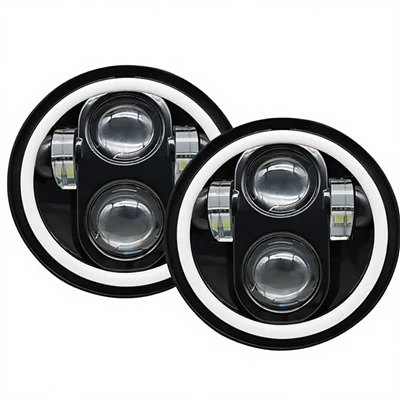
As a LED headlight bulb supplier, I deal with this question at least a dozen times a day. I hear it from folks who just swapped out their old halogens and are confused why their dash lit up like a Christmas tree, and from small auto shops looking to stock parts that don’t give their customers headaches. The short answer? Yeah, most modern LED headlight bulbs do have some form of self-diagnostic—but it’s not exactly the “check engine” light you see on your dash, and how it works depends on a bunch of factors. Let me spill the tea (minus the jargon, promise).
First, let’s get the basics straight because I’ve seen way too many people mix this up. When you replace your stock halogen bulbs with LEDs, your car’s computer (we call it the Body Control Module, or BCM for short) is built to expect a certain amount of power draw. Halogens are old-school; they pull around 55 watts of power each, which is why the BCM is calibrated to that specific load. LEDs? They’re way more efficient—usually pulling 10 to 20 watts per bulb. That big power difference is the #1 reason people get that annoying “bulb out” warning on their dash. The BCM’s like, “Wait, this is way less power than I’m used to—did a bulb burn out?”
Now, back to the self-diagnosis. Here’s the thing: LEDs themselves don’t come with little built-in sensors that scan their own lifespan or brightness (not yet, anyway—we’re working on that, actually). But the smart LED headlight bulbs—you know, the ones we supply that are CAN-bus compatible (I’ll explain that in 2 seconds)—are wired to talk to your car’s BCM. That two-way communication is the self-diagnostic part in disguise. Think of it like a text between your bulb and your car’s computer: “Hey, I’m here, I’m pulling the right power, everything’s cool.” If that text doesn’t go through, or the power is way off, the BCM sends that “bulb out” alert to the dash. So in a way, that whole system is the LED headlight bulb’s self-diagnostic feature—just paired with your car’s existing tech.
Wait, but what about bulbs that DON’T trigger the dash warning? That’s usually because they’re resistors or have that CAN-bus decoder built in. Those little add-ons (or built-in chips) trick the BCM into thinking it’s still running a 55-watt halogen. But here’s where I have to be real with you—some cheap no-name bulbs skip this part to cut costs. So if a bulb doesn’t have that power matching, it’s not just going to trigger a dash light; it might overheat, burn out in a few months, or even mess up your BCM long-term. That’s why I always tell people: don’t go for the $10 Amazon bulbs. The reliable ones do have that self-diagnostic tie-in because they need to play nice with your car’s computer.
Let’s dive deeper into how that communication actually works, because I’ve had customers ask me, “Can my LED bulb tell if it’s dying before the dash does?” Right now, most off-the-shelf LEDs can’t do that. The self-diagnosis we’re talking about is mostly power-based—checking that the bulb is drawing the right current, not checking for things like LED chip degradation or heat buildup. But that’s changing fast. We’ve been testing a new line of LED headlight bulbs that have tiny thermal sensors built right into the bulb base. If the bulb gets too hot (which is a sign it’s going to fail soon), it’ll send a heads-up to the BCM… though right now, the BCM doesn’t have a way to display that warning on the dash. It’s more for us as suppliers to handle warranty claims before a customer even notices a problem. That’s next-level self-diagnosis stuff, and it’s not widely available yet, but it’s coming.
Another common misconception: A lot of people think “self-diagnostic” means the bulb will turn itself off if something’s wrong. Again, not standard—at least not yet. Some high-end performance LED bulbs (the ones we sell to race teams for nighttime testing) do have that feature. If they detect a power spike or overheating, they’ll dim or shut down temporarily to protect the chips. But for your average daily driver LED bulb? That’s not a default feature. It’s a premium add-on, and it’s worth every extra buck if you drive a lot on back roads or in bad weather.
I also get questions from auto mechanics who say, “My customer’s dash says bulb out, but we put new LEDs in—what’s the deal?” That’s where the self-diagnostic feature can act wonky, depending on your car’s year and model. Older cars (pre-2000, roughly) don’t have a BCM that monitors headlight power at all. So if you put LEDs in an old 1998 Civic, you won’t get a dash warning, because the car doesn’t have that self-diagnostic system. It just has a ground wire and a switch. Newer cars (2010+) have way more sensitive BCMs—some even monitor each headlight bulb individually, for things like brightness output (that’s for automatic high-beam systems, by the way). So if you put LEDs in a 2022 Subaru, it’s way more likely to trigger a warning than if you put them in a 2005 pickup. That’s a big one I always tell people: check your car’s model year before buying bulbs. If it’s post-2010, look for CAN-bus compatible bulbs—that’s how you avoid that annoying dash light, and get the self-diagnostic to work properly.
Let’s talk about real-world examples, because this isn’t just theory. Last month, we had a customer who owned a 2018 Ford F-150. He bought a set of cheap LEDs from a random online shop, and within a week, his dash had the “bulb out” light on, and the high beams wouldn’t engage. He brought it to our shop (wait, no—we’re a supplier, but we work with local auto shops, so he took it to the shop that buys our bulbs). Turns out, those cheap bulbs didn’t have the CAN-bus decoder. They were drawing way too little power, so the BCM threw a warning, and also triggered the high-beam disable because it thought the bulbs were faulty. We swapped in our standard CAN-bus compatible LEDs, and the light went away, and the high beams worked like normal. That’s the self-diagnostic in action—your car’s computer is “diagnosing” the bulb, even if people don’t realize that’s what’s happening.
Another example: We supply bulbs to a local fleet company that has 50 delivery vans. They were dealing with constant bulb failures and dash warnings, so they switched to our premium line that has the built-in thermal monitoring. Now, their BCM sends a signal to our inventory system (crazy, right?) when a bulb’s thermal sensor picks up it’s going to fail soon. We reach out to the fleet manager, swap out the bulb before it burns out on a dark highway, and the dash never even gets a warning. That’s the next evolution of LED self-diagnostic—using the bulb’s built-in sensors to not just talk to your car, but make the whole maintenance process way smoother.
Now, let’s get honest about the downsides. The self-diagnostic feature isn’t perfect. We’ve had customers complain that their dash triggers a “bulb out” warning even when the bulb is working fine. That’s usually because of a bad ground connection, or a resistor that’s not calibrated right. Sometimes, it’s just the BCM being too sensitive. So if you get that warning, don’t panic—it doesn’t always mean your bulb is broken. It means the bulb and your car’s computer aren’t talking to each other properly. That’s a quick fix, though—usually tightening the ground wire or adjusting the CAN-bus decoder.
Also, I have to mention that not all LED headlight bulbs are the same. As a supplier, we test every bulb we send out for compatibility and diagnostic performance. But if you buy a knockoff, off-brand bulb, you can’t count on that. A lot of cheap bulbs skip the diagnostic components to save a few cents, so they’ll either trigger false warnings, no warnings at all when the bulb is dying, or even damage your car’s electrical system. That’s why it’s worth buying from a reputable supplier—we don’t cut corners on that self-diagnostic tech, because we know how frustrating it is for customers.
So, to wrap this up: Do LED headlight bulbs have a self-diagnostic feature? Yeah, they do—but it’s not the standalone sensor system you might be imagining. For most consumer LEDs, it’s the built-in power matching (via CAN-bus) that lets your car’s BCM “diagnose” if the bulb is working correctly. For premium bulbs, you get thermal sensors and other little extras that give even more insight into the bulb’s health. And if you have an older car, that self-diagnostic feature doesn’t exist at all—so you just have to check your headlights manually every few months.
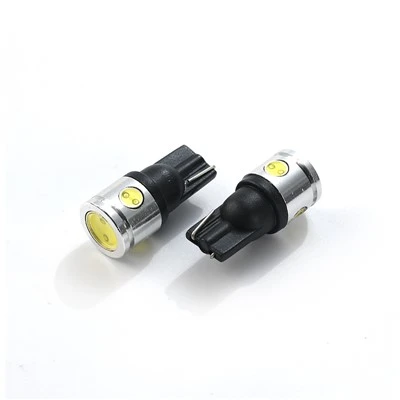
If you’re in the market for LED headlight bulbs, whether you’re a car owner looking to fix that dash warning or an auto shop needing reliable parts for your customers, hit us up. We don’t do shady deals, our bulbs come with that full self-diagnostic compatibility, and we’ll help you find the right set for your car, no matter the year or model. No matter if you’re fixing a personal vehicle or stocking a fleet, we’ve got you covered.
LED Exterior Light Bulbs References
- Society of Automotive Engineers (SAE) J1881: Lighting Systems for Motor Vehicles – Headlamps and Front Fog Lamps, 2021
- Automotive Electronics Council (AEC) Q100: Stress Test Qualification for Integrated Circuits, 2020
- International Organization for Standardization (ISO) 15008: Road Vehicles – Electromagnetic Compatibility, 2017
- NHTSA (National Highway Traffic Safety Administration) Headlight Technology Update, 2022
- LED Magazine: "The Future of Automotive LED Diagnostics" Feature, Volume 18, Issue 4, 2023
Shine Bright Optoelectronic Co., Ltd.
As one of the most professional led headlight bulb manufacturers in China, we also accept customized orders. Please feel free to buy bulk advanced led headlight bulb in stock here from our factory. Welcome to contact us for quotation.
Address: 6th Floor, Buildings B & C, Baotang Industrial Zone, No. 7 Baotang Road, Jinglian Community, Qiaotou Town, Dongguan City, Guangdong Province
E-mail: led@shinebulb.com
WebSite: https://www.shinebulb.com/
