If you’ve ever stood in an auto parts shop, scrolling through catalogs for a replacement tail light, or even fiddled with after-market upgrades in your garage, you’ve probably stopped at one question: “Wait—are white tail lights even legal?” As a tail light supplier who’s spent 12 years troubleshooting, sourcing parts, and talking to drivers, mechanics, and regulators, this question doesn’t just pop up in casual conversations—it’s one that lands in my inbox at least 20 times a week. And it’s rarely as simple as a yes or no. Let’s break down what makes a tail light legal, why white ones spark so much confusion, and what that means if you’re out shopping for parts or upgrading your ride. Tail Lights
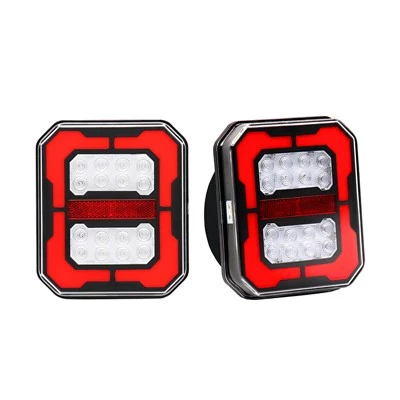
First, let’s start with the basics: what even are tail lights, and why do colors matter? Federal and state motor vehicle safety rules (in the U.S., at least—rules shift a lot internationally) aren’t random. They’re built to eliminate confusion on the road. A driver behind you needs to instantly know if you’re stopping, turning, backing up, or just cruising. Mix up those signals, and you’ve got a crash risk. That’s why every color of light on a vehicle has a specific, regulated purpose: red for stop and rear marker, amber/white for turn signals, amber for side markers, white for reverse lights.
Wait—reverse lights. That’s where the white light confusion starts. A lot of drivers see a white tail light and assume it’s a reverse light, but some after-market setups use white bulbs as the main tail light, not just the backup. That’s the core of the legality debate. Let’s cut through the noise: the National Highway Traffic Safety Administration (NHTSA), which sets U.S. standards for motor vehicle equipment, spells it out clearly in FMVSS 108—Federal Motor Vehicle Safety Standard 108. That rule requires rear position lights (what most people call tail lights) to emit a red light when illuminated, except for reverse lights, which can only be white. So if your “tail light” (the one that turns on when your headlights are on, to mark your car’s rear presence) is white? That’s almost certainly a violation.
But here’s the twist: not all white lights are reverse lights, and not all rules are one-size-fits-all. Some states have exceptions for antique vehicles, or for off-road vehicles registered for street use only. I’ve had a customer who restores 1960s Chevy pickups come to me with a vintage replacement tail light assembly—original models from that era did have white elements, but they were paired with a red lens, so the light output was still red when the tail light was on. Those are legal, because the emitted light is still red, matching the FMVSS requirement. The problem comes with people who swap out red lenses for clear ones, so a white bulb shines through as the main tail light. That’s where you run into legal trouble.
I’ve seen this mistake a lot, both as a supplier and a former mechanic. A customer comes in, excited about a “custom look,” and picks a set of clear tail light housings. They install them, and when they turn their headlights on, the rear of their car glows white instead of red. A cop pulls them over, slaps on a fix-it ticket, and they’re back the next day, frustrated, asking what went wrong. I always walk them through the difference between light color and lens color, because that’s the part most people miss. The lens is what filters the bulb’s light—so a red lens needs a bulb that shines (or filters through to) red, a clear lens can work with white, but only if that white light is only for reverse, not for the main tail light function.
Another common misconception: what about auxiliary lights? Things like brake lights, turn signals, or rear fog lights. NHTSA rules say brake lights can be red or amber, but tail lights (rear position lights) must be red. I once had a client who wanted to add a white auxiliary light to his tail section for better visibility when towing, but he wasn’t sure if it was legal. The rule here is that auxiliary lights can’t mimic standard signals. If that white auxiliary light only comes on when he shifts into reverse or when his tow mode is engaged, it’s fine. If it lights up every time his headlights do, blending in with the main tail lights? That’s a no-go. It confuses drivers behind him, who might not tell it apart from a reverse signal and might not realize he’s slowing down.
Now, what about international rules? If you’re reading this outside the U.S., things change fast. The UN R48 regulation, used in most of Europe, parts of Asia, and Africa, allows for some rear position lights to be amber in certain conditions, but again, white main tail lights are still only for reverse. I’ve had clients from Canada and Australia reach out asking about cross-compatible parts, and I always caution them to check their local transport department rules, because even adjacent regions can have small differences. For example, in the UK, rear fog lights can be red or amber, but main tail lights are strictly red, same as the U.S.
So what does this mean for you, if you’re a driver looking to upgrade your tail lights? First, don’t assume a “cool” white housing is legal. If you want a custom look, look for assemblies that have a red lens (or a tinted lens that filters light to red) even if it’s clearish in daylight. A lot of my customers opt for smoked red lenses, which give a dark, custom vibe when parked, but light up red when in use—perfect for staying legal and getting the look you want. Second, if you do want to add a white light element, make sure it’s only wired to activate when you’re in reverse, not with your headlights. That’s the number one mistake I see, and it’s easily fixed with a simple wiring adjustment.
I get asked a lot about after-market LED tail lights, too—those are super popular right now, with bright, energy-efficient bulbs. A lot of LED kits come with white options, so drivers wonder if those are legal. Most high-quality LED tail light kits, the ones I supply, are tested to meet FMVSS 108 standards. They have the right lens coatings and bulb output to ensure the light is red for tail lights, amber for turn signals, and only white for reverse. The cheap, untested kits you might find on random online marketplaces? Those are the ones that often get it wrong—their white bulbs shine through as the main tail light, or their reverse lights aren’t bright enough, leading to a ticket.
I’ve had customers come to me after a ticket, telling me they thought white tail lights were just a style choice, not a legal issue. That’s why I always make it a point in my conversations with buyers to walk them through the rules, not just sell them a product. At the end of the day, tail light rules aren’t about punishing drivers—they’re about keeping everyone safe. A driver behind you doesn’t have time to squint at a white tail light to tell if you’re stopping or backing up. Red is universal, easy to recognize, and hard to mistake.
Now, let’s talk about the gray areas, because there are always exceptions. For cars manufactured before FMVSS 108 was put in place (most cars made before 1968), there’s some leeway. A lot of vintage cars from the 1950s and early 1960s had white elements in their tail lights, and as long as the main light is red, they’re generally grandfathered in. I supply a lot of these replacement parts for classic car owners, and I always confirm with them that their local DMV doesn’t have stricter rules, which some states do for antique vehicles. For off-road vehicles that aren’t registered for street use, the rules are way more lenient, but if you take that off-road truck on the street, you have to conform to street safety standards.
Another gray area: tinted tail lights. A lot of drivers add dark tint to their tail lights to match their car’s look. If the tint is too dark, it can make a red tail light look dim, or even make white bulbs visible when they shouldn’t. Some states have rules about tint darkness, specifically for tail lights. I always recommend my customers test their tint by turning on their headlights in a well-lit area, then stepping back 50 feet to see if the light is clearly red. If you can see a white glow through the tint, that’s a sign you need a lighter tint or a red-specific bulb.
So, to circle back to the original question: “Are white tail lights legal?” The short answer is, not as main rear position lights. White is reserved for reverse lights, exclusively. But if you’re talking about a white reverse light (or a white auxiliary light wired only for reverse), that’s 100% legal, as long as it’s bright enough and meets safety standards. The confusion comes from mixing up light color, lens color, and function—something I’ve helped hundreds of customers navigate over the years.
At the end of the day, whether you’re a weekend restorer, a daily driver, or a mechanic, the key to avoiding legal issues with tail lights is knowing what each light is supposed to do. If you’re looking for replacement parts, custom upgrades, or just clarity on what’s legal for your vehicle, I’m here to help. We supply a full line of tested, FMVSS-compliant tail lights, reverse lights, and replacement assemblies, and I’m happy to answer any questions you have to make sure your vehicle stays both legal and looks great. If you’re ready to source parts for your fleet, your personal car, or a project build, don’t hesitate to reach out to discuss your specific needs.
Tail Lights References:
- National Highway Traffic Safety Administration (NHTSA). FMVSS No. 108: Lamps, Reflective Devices, and Associated Equipment.
- United Nations Economic Commission for Europe (UNECE). Regulation No. 48: Provision of Lighting and Light-Signalling Devices for Motor Vehicles and Their Trailers.
- U.S. Department of Motor Vehicles. State-Specific Vehicle Equipment Regulations (2024 Edition).
- Insurance Institute for Highway Safety (IIHS). Visibility and Motor Vehicle Safety: The Role of Tail Light Color and Design.
Shenzhen Idun Photoelectric Technology Co., Ltd.
As one of the most professional tail lights manufacturers and suppliers in China, we have world-leading production equipment and strong manufacturing capabilities. Please feel free to wholesale customized tail lights at competitive price from our factory. Contact us for more cheap products.
Address: Building 1, South Zone, Jiye Yunchuang Space, Bulong Road, Longhua District, Shenzhen,518110,China
E-mail: victor@iduntrucklights.com
WebSite: https://www.iduntrucklights.com/
