If you’re in the market for a campaigns truck—whether for political outreach, pop-up brand activations, or community mobilization—one of the most common questions we get every single week is this: Do campaigns trucks have air conditioning? As a third-generation operations manager running a company that’s supplied these trucks for 18 years, I can tell you the answer isn’t a simple “yes” or “no”… and the decision to include AC is one of the most impactful choices we help clients make, because it ties directly to their core mission. Campaigns Truck
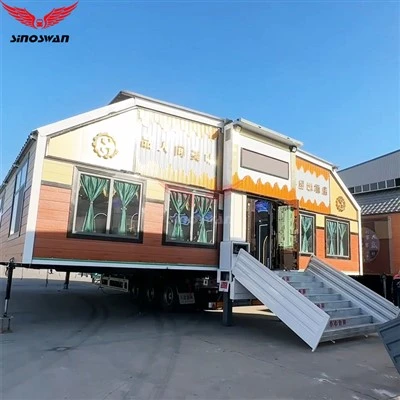
Let’s start with the basics: For the first decade of our business, most small-scale campaigns and community organizations opted for trucks without AC. Back then, campaigns were smaller, events were shorter, and most teams worked in spaces that already had temperature control. But that was before the rise of 24/7 pop-up canvassing, rural outreach trips that last 12 hours, and summer campaign events where temperatures regularly soar above 95 degrees. We’ve seen what happens when a volunteer driver or a canvassing team member has to work in a metal box with no cooling: Dehydration, fatigue, and even heat exhaustion, which directly leads to lower productivity and high turnover. So over the last 8 years, AC has stopped being a luxury and started being a non-negotiable for most of our clients. That said, it’s not a one-size-fits-all solution—there are factors that go into every build, and some clients still choose to skip it, depending on their needs.
First, let’s break down what campaigns trucks actually are, because not all are created equal. When we supply a campaigns truck, we’re not talking about a standard delivery van or a semi-truck. These are purpose-built mobile command centers: They have canvassing desks, storage for voter registration materials, a media station for live streaming, and often a small sleeping area for overnight trips. The average size we work with is a 16-foot box truck, which is big enough for a 3-person team, all their gear, and enough space to move around. That enclosed box—with walls, a roof, and minimal airflow—acts like a greenhouse when the sun hits it. On a 90-degree day, the interior can reach 110 degrees in under an hour, even if the outside has a breeze. That’s why AC isn’t just for comfort; it’s for keeping your team able to do their jobs.
But why would anyone skip it? We still have clients who choose no AC, and their reasons are practical. For example, a small local school board campaign that only uses the truck for 4-hour weekend events in mild climates (average summer highs around 82 degrees) might skip AC to cut costs—both on the initial build and on ongoing fuel. A campaign doing outreach in cold-weather states might also pass, since they’d rather invest in a strong heating system for winter door-knocking trips. And some clients go for off-grid builds with solar power, where adding an AC unit would require a larger battery bank that’s too heavy for their routes. That’s where we come in: We customize every truck to fit the unique needs of the campaign, no matter what they’re asking for.
Now, if you do decide AC is right for you, there are two main types we install on campaigns trucks, and each has pros and cons that we walk through with every client. The first is a “self-contained” AC unit, which is mounted directly on the roof or the side of the truck’s box. These are the most common for medium-sized trucks because they’re easy to install, they don’t take up interior space, and they’re powerful enough to cool the entire box in 10 to 15 minutes. We usually pair them with a 12,000 BTU unit for 16-foot trucks, which is enough to keep the space at a comfortable 72 degrees even on a 95-degree day. The downside? They use a bit more fuel when running, and if you’re doing long off-grid trips, you need to make sure your truck’s battery can handle the unit’s draw. For most urban campaigns, though, this is the best option.
The second type is a “split” AC system, which has a compressor mounted under the truck’s hood and an air handler inside the box. These are less common, but they’re perfect for clients who need to maximize interior space—since the compressor doesn’t take up room on the roof. They’re also more fuel-efficient than self-contained units, because the compressor runs off the truck’s main engine instead of a separate system. The tradeoff is that they’re a bit more expensive to install, and they’re not as powerful for very hot climates—if you’re working in Arizona or Texas, a split system might struggle to cool a full box truck during peak midday hours. We always test both systems in our workshop before delivering a truck, so our clients know exactly what to expect.
I should also mention a common misconception: A lot of people think if their truck has a cab with AC, that’s enough. But the cab is just the driver’s space, separated from the back box by a thin wall. If you’re in the back of the truck—where your canvassers, storage, and media gear are—the temperature is almost always 5 to 10 degrees hotter than the cab, even if the driver has AC on full blast. We’ve had clients come to us after buying a used truck with cab-only AC, only to tell us their canvassers refused to work because the back of the truck was unlivable. That’s one of the biggest mistakes new campaign operators make, and it’s why we emphasize that in every consultation: AC for the back box is non-negotiable, not just for the cab.
Another factor we consider is power, which ties directly to whether AC makes sense. Most campaigns trucks have auxiliary power—meaning a separate battery bank that runs when the main engine is turned off, so you don’t drain the battery while parked at an event. If you’re going to be running the truck for 8+ hours at a time, canvassing or hosting a pop-up, you need an AC unit that can run on auxiliary power without cutting out. We install deep-cycle lithium batteries in all our builds, which can power a 12,000 BTU AC unit for up to 10 hours on a single charge—enough for a full day of events. For clients who do overnight trips off-grid, we add a small solar panel on the roof to keep the battery topped up, so they never have to choose between cooling and powering their media station.
We’ve also run tests on our own trucks to make sure our AC systems work in real-world conditions. Last summer, we took two identical trucks to a community event in Atlanta, where the temperature was 97 degrees with 60% humidity. The first truck had a 12,000 BTU self-contained AC unit; the second didn’t. By 2 p.m., the back of the non-AC truck hit 108 degrees. We pulled the canvassing team out after 45 minutes—they were dizzy and dehydrated. The AC truck stayed at 74 degrees all day, and the team completed 30% more voter registrations than the non-AC team. That’s not just a fun stat; that’s a real difference in election outcomes. A cooler team is a productive team, and productive campaigns win.
Now, I know some smaller campaigns might worry about cost. A lot of people think adding AC will add thousands of dollars to the build, but it’s not as expensive as you might think. For a standard 16-foot campaigns truck, adding a quality AC unit costs about $1,200 to $1,800—less than the cost of replacing a canvassing team’s gear after a heat-related event, or losing volunteers to a competitor’s cooler truck. We also work with clients to budget for ongoing costs: A well-maintained AC unit uses about 1 gallon of fuel per hour when running, which for an 8-hour day is $8 to $12—way less than the cost of recruiting new volunteers to replace people who quit due to heat.
We also get questions about durability. Campaigns trucks are used hard: They drive on dirt roads, sit in the sun for days at a time, and get loaded and unloaded with heavy gear every week. A lot of budget AC units from big-box stores break after a few months, which is why we only use industrial-grade units made specifically for commercial trucks. We test every AC unit in our workshop by running it for 24 hours straight before delivery, so we know it can handle the wear and tear of campaign work. We also offer a 2-year warranty on all our AC installations, which is something most of our competitors don’t provide.
Let’s talk about edge cases. For example, a campaign that does all its work in very cold climates—like northern Minnesota, where winter temps drop to -10 degrees—AC might be a waste of money, but a high-powered heating system is non-negotiable. We’ve built trucks for those clients where we skip AC entirely, and instead install a 15,000 BTU heating unit that can warm the entire box in 10 minutes. For rural campaigns that only use the truck for weekend trips, we also offer window AC units that mount in the back door, which are cheaper and easier to replace if they break, instead of a permanent roof unit. The key is that there’s no one right answer, which is why we don’t push a one-size-fits-all AC solution on every client.
I want to share a quick story that sums up why this matters. Last year, a small progressive campaign in western North Carolina reached out to us. They were a group of volunteers running a get-out-the-vote drive for a local city council seat, and they had two used trucks without AC. Their first event was in July, and by midday, their team was struggling—one volunteer passed out from heat, and another quit on the spot. They needed a new truck fast, but their budget was tight. We worked with them: We built a 16-foot truck with a mid-sized AC unit that ran on auxiliary power, and we adjusted their build to include a smaller storage area for voter materials to keep the cost down. That truck ended up helping them register 2,100 new voters, and they won the race by 127 votes. The candidate later told us that the team’s ability to work long, hot days without being distracted by heat was the reason they pulled ahead. That’s the impact of a small, seemingly simple addition like AC.
So to circle back to the original question: Do campaigns trucks have air conditioning? The answer is: Most of the ones we supply do, because our clients understand that a cool team is a successful team. But if you’re a small campaign on a tight budget, working in mild climates, or doing only cold-weather outreach, we can build you a truck without AC that meets your needs. The best part about working with us is that we don’t sell a pre-packaged truck—we listen to your mission, your route, your budget, and your team’s needs, and we build something that fits exactly.
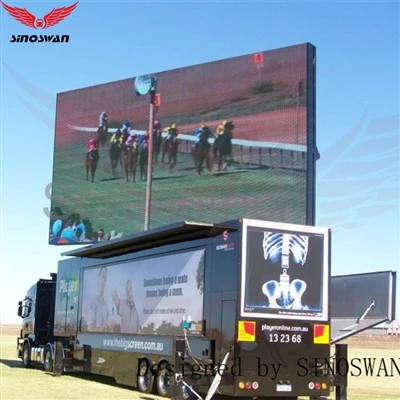
If you’re planning a campaign, a brand activation, or any mobile outreach project, and you want to talk about whether AC is right for your truck, we’re here to help. We’ve been doing this for 18 years, and we’ve worked with everything from small local campaigns to national political action committees, so we know how to build a truck that works for you. Don’t waste time on a truck that doesn’t meet your team’s needs—reach out to us to start a consultation, and we’ll walk through every option, cost, and pros and cons so you can make the best decision for your campaign.
Mobile LED Advertising Truck References:
- National Safety Council. (2022). Heat Illness Prevention in Outdoor and Manual Labor Settings. National Safety Council, Itasca, IL.
- Campaign Legal Center. (2021). Mobile Outreach Best Practices for Local Political Campaigns. Campaign Legal Center, Washington, DC.
- North American Truck Equipment Association. (2020). Commercial Truck HVAC System Guidelines for Mobile Work Vehicles. North American Truck Equipment Association, Alexandria, VA.
- University of Minnesota Extension. (2023). Heat Stress Management for Volunteer Outdoor Events. University of Minnesota Extension, St. Paul, MN.
Zhengzhou Sinoswan Tech Co., Ltd.
Zhengzhou Sinoswan Tech Co., Ltd. is one of the most professional campaigns truck manufacturers and suppliers in China. We are committed to providing high quality customized products for global clients. We warmly welcome you to wholesale durable campaigns truck for sale here from our factory. Also, quotation is available.
Address: No.21 Shangdu Road, Zhengzhou, Henan Province, China
E-mail: info@sinoswan.com
WebSite: https://www.electiontruck.com/
