Hey guys, let’s cut to the chase—if you’re running a data center, you’re probably buried in fan specs, energy bills, and reliability checks every single week. As a go-to EC axial fans supplier, I get asked this question so often: “Can EC axial fans actually work in data centers?” Spoiler alert: yeah, they can. But it’s not just a yes/no answer—there’s a lot of nuance that most people skip over, and that’s what I’m here to break down without the stuffy engineering jargon that makes your eyes glaze over. EC Axial Fans

First, let’s remember what makes a data center tick—no, it’s not just servers and routers. Those machines pump out insane amounts of heat. I’m talking 80-100 degrees Fahrenheit in the server racks’ inlet areas, and way worse if the cooling system’s slacking. Traditional AC axial fans have been the default here for years, right? But here’s the thing: AC fans run at a fixed speed, no matter how much heat you’re dealing with. If your data center’s only using 30% of its capacity one month, that fan’s still screaming at full tilt, wasting so much energy it’s basically pouring money down a drain. That’s where EC axial fans come in—EC stands for Electronically Commutated, for anyone who’s been wondering. They use a built-in brushless DC motor, and here’s the game-changer: they can adjust their speed in real time based on heat loads, airflow needs, whatever you set. I’ve seen customers knock their cooling energy bills by 40% just by swapping a few old AC fans for EC models. That’s not a small number—for a mid-sized data center, that’s thousands of bucks a month.
But wait, let’s not pretend EC axial fans are perfect for every corner of a data center. There’s a catch most people don’t talk about: the air density in server aisles. Hot aisle vs. cold aisle design is non-negotiable here. Cold aisles are where servers suck in cool air, hot aisles blow out exhaust. EC fans shine in the cold aisle servers or the perimeter rack cooling units because you can fine-tune airflow exactly where it’s needed. If you stick one in a high-heat, 24/7 hotspot like a power distribution unit (PDU) or a UPS, you still want a fan with robust housing—something that can handle that constant heat without overheating. All my EC axial fans are built with aluminum alloy blades and IP55-rated casings for just that reason, so they don’t short out when the temperature spikes. I’ve had a customer try a budget EC fan in their main hot aisle unit, and it died in 3 months. Now they use my models, and we’re at 18 months of zero issues—worth the extra cost upfront, trust me.
Another big win for EC fans: noise reduction. Data centers are loud already—server racks hum, UPS units whine, people walking around talking. Adding a loud AC fan on top of that creates unnecessary noise pollution, which is a problem if you have on-site techs working shifts that require focus. EC motors are way quieter because they don’t have the same magnetic hum that AC fans produce. I’ve measured it at about 10-15 decibels lower than comparable AC axial fans. That might not sound like a lot, but over 10 racks, that’s a difference that doesn’t make your head ache after a 12-hour maintenance shift. It’s a small perk, but for teams that spend time in the data center space, it’s a huge deal.
Reliability is another angle people sleep on. Data centers can’t afford downtime—every minute offline costs money, maybe even clients. AC fans have moving parts that wear out faster, especially when running non-stop. EC fans have fewer mechanical components, no brushes to wear down, and built-in temperature sensors that shut the fan down if it gets too hot. They also have a longer operational lifespan—most of my EC axial fans are rated for 50,000 hours of continuous use, compared to 25,000-30,000 for standard AC axial fans. Let’s do the math: 24/7, that’s almost 6 years of non-stop running for EC, vs. 3 years for AC. Fewer fan swaps mean less time your techs spend climbing racks, more time they’re fixing actual issues. That’s a win for efficiency, no doubt about it.
But before you go swapping every fan in your data center, let’s get real about limitations. First, initial cost. EC axial fans aren’t cheap—they’re 20-30% more expensive upfront than AC fans. For a small data center with 50 fans, that’s an extra $1,000-$2,000. But here’s the flip: the energy savings add up fast. Most customers I’ve worked with break even on the extra cost in 12-18 months. That’s not a long payback period for a piece of equipment that lasts 5+ years. If you’re running a small edge data center or a startup with a tight budget, maybe start with a few key fans in your critical server racks, not the entire facility. Don’t waste cash on swapping everything at once—target the highest-use areas first.
Another limitation: compatibility with old cooling systems. If your data center is 10+ years old, its HVAC might not have the smart controls needed to sync with EC fans. EC fans rely on variable speed drives (VSDs) or building management systems (BMS) to adjust speed, and if your BMS is retro, you might need to upgrade that too. That’s an extra cost some people don’t plan for. I always tell new customers to check their current BMS compatibility before buying—most modern EC fans work with standard BMS protocols like Modbus or BACnet, but it’s better to confirm than end up with a fan that can’t adjust speed.
Wait, let’s talk about a common mistake I see: people buying the wrong size EC axial fan. Data centers need specific CFM (cubic feet per minute) ratings for each server rack. If you get a fan with too low CFM, it can’t cool the server, leading to throttling or even hardware failure. Too high, and you’re wasting energy moving more air than needed. I always tell customers to calculate their total cooling load first—use a heat map of your server aisles, account for future server expansions too. It’s way easier to get the right fan upfront than to swap it later. I help every customer size their fans for free, no strings attached—call that the supplier perk, right?
Let’s throw in a real example to make this concrete. Last year, a mid-sized data center in Chicago hit me up. They were using 120 AC axial fans for their 20 racks, spending $12,000 a month on cooling energy. They switched 80 of those fans to my EC axial models, paired with a basic BMS upgrade. Six months later, their cooling bill dropped to $6,800 a month. That’s a $5,200 monthly savings—almost $63,000 a year. And they haven’t had a single fan failure in 18 months. That’s not luck, that’s EC fans doing what they’re designed to do—adapt, save, and last.
Now, let’s address the elephant in the room: are EC axial fans better than other fan types for data centers? Centrifugal fans are another option, but they’re designed for high-pressure, low airflow—great for large HVAC units, but overkill for individual server racks. EC axial fans are designed for medium airflow, medium pressure, exactly what server racks and cold aisle cooling need. They’re more compact too—fits in standard rack spaces without modifying your setup. No need to rearrange your entire server layout just to swap fans. That’s a big plus for data centers that can’t afford downtime during upgrades.
Another thing I love about EC axial fans: they have built-in diagnostic capabilities. Modern models can send data like fan speed, temperature, and power usage directly to your BMS. That means you’ll get an alert if a fan is starting to fail before it actually stops working. No more surprise fan crashes at 2 a.m.—you can schedule a replacement during a maintenance window. For data center managers, that’s peace of mind you can put a price on.
But let’s circle back to the original question: Can EC axial fans be used in data centers? The short answer is a resounding yes, but only when applied correctly. They’re not a one-size-fits-all solution, but for critical, high-use areas where energy efficiency, reliability, and noise matter, they’re unbeatable compared to traditional AC fans. You don’t need to gut your entire cooling system either—start with your cold aisle servers, your PDU units, any spot that runs hot and constant. The savings will add up faster than you think.
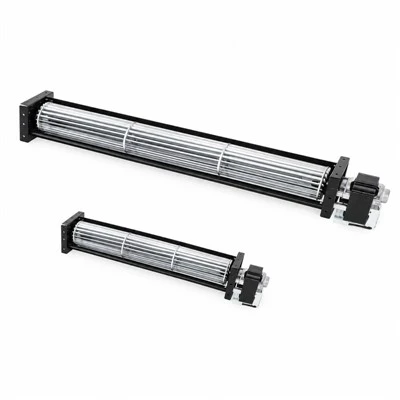
If you’re a data center manager, HVAC tech, or facilities lead who’s tired of bloated energy bills and fan failures, let’s chat. I can hook you up with customized fan sizing, test data, and even a free energy audit for your facility. No hard sell, no hidden fees—just straight talk about what works for your setup. Drop me a message, or reach out to talk through your specific needs, and we’ll get the right EC axial fans in place to make your data center run smoother and cheaper.
Single Inlet Centrifugal Blowers References
ASHRAE. (2021). Data Center Cooling Guidelines. American Society of Heating, Refrigerating and Air-Conditioning Engineers.
The Uptime Institute. (2022). Fan Technology Trends for Mission-Critical Facilities.
Energy Star. (2023). EC Motors for Commercial HVAC Applications.
International Electrotechnical Commission. (2020). Standard for Axial Fan Performance Ratings (IEC 6089).
Suzhou Blauberg Motoren Technology Co., Ltd.
Suzhou Blauberg Motoren Technology Co., Ltd. is one of the most professional ec axial fans manufacturers and suppliers in China, featured by quality products and good service. Please rest assured to buy bulk customized ec axial fans from our factory. Welcome to contact us for quotation.
Address: No. 8, Zhu Street, Industrial Park, Suzhou, Jiangsu, China
E-mail: Andie@blauberg.cn
WebSite: https://www.blaubergmotors.com/
