Hey everyone, if you’ve ever worked with transformers, switchgears, or any high-voltage electrical gear, you’ve probably heard of insulation paper. But today, we’re diving into a question that comes up all the time with our clients—especially when they’re designing or retrofitting equipment for tight spaces: what’s the compression ratio of insulation paper? As an insulation paper supplier, I get asked this at least 2-3 times a week, usually from engineers scrambling to make sure their parts fit right or avoid mistakes that could mess up their gear down the line. Let’s break this down like we’re chatting over a coffee, no stuffy textbooks here. Insulation Paper
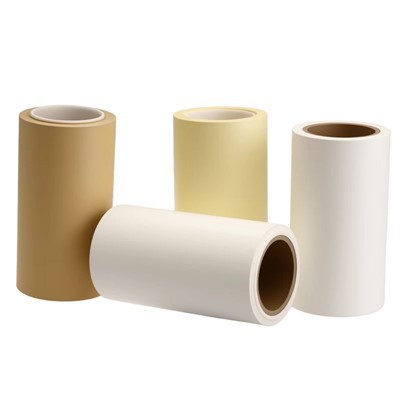
First off, let’s get one thing straight: compression ratio (CR) for insulation paper isn’t a random number we pull out of thin air—it’s tied directly to the paper’s base material, thickness, and what it’s meant for. Most insulation paper we sell is either cellulose (from wood or cotton) or synthetic blends like aramid, right? The good news is, for the standard stuff we stock (the kind that goes into transformers, which is 99% of what our customers need), the compression ratio isn’t wild. Wait, but let’s define it first, because some folks mix this up with “how much it squishes when you squeeze it” vs. “how much space it takes back when you release pressure.”
Let’s keep it simple: compression ratio here is calculated as (original thickness – compressed thickness) divided by original thickness, multiplied by 100 to get a percentage. So if a paper is 1mm thick and squishes to 0.7mm under a specific load, that’s a 30% compression ratio. But—huge but—that’s only under the exact pressure and temperature specs we test it at. Most standard cellulose insulation paper (the common grade for power transformers, called Kraft paper, which is our top-seller) has a compression ratio of between 25% and 35% under typical transformer operating pressure (around 10 to 20 MPa, for the engineers reading this). Wait, but synthetic insulation paper? Like aramid-based? It’s lower—more like 15% to 25%—because synthetic fibers don’t flatten out as easily as cellulose ones. That matters a lot if you’re working in a ultra-compact switchgear where even 5mm of space saved adds up.
Now, why does this matter so much? Let’s use a real example. Last month, a client emailed us panicking—they’d ordered a batch of insulation paper, calculated their component dimensions using a 20% CR, but when they compressed it, it only squished 22%. Turns out, they used room temperature numbers, but their gear operates at 80°C. Oh right! Temperature is a huge variable. When insulation paper heats up, cellulose fibers get a little softer, so they compress more. At 80°C, that same Kraft paper’s CR jumps to 30-38%—way different than room temp. So that client’s mistake? They didn’t account for temp, so their parts didn’t fit, and they had to rework half their order. Not fun for anyone.
Another big factor: how dry the paper is. Insulation paper’s whole job is to insulate, so it needs to be dry (moisture content around 0.5% to 1% for power gear, right? Way lower than the regular paper you use at home). If it’s too wet, cellulose fibers swell, and when you compress it, the water gets squeezed out, but that also affects the CR—like, wet Kraft paper can have a CR up to 45% because the fibers are plumper. But we never sell paper that’s not properly dried, because too much moisture kills insulation performance, so our clients don’t have to worry about that variable if they get our stock.
Wait, let’s talk about the other side too—recovery ratio, which is how much the paper bounces back after you remove pressure. Insulation paper can’t stay squished forever, right? For our standard Kraft paper, after compressing it at 15 MPa and releasing, it recovers about 85-90% of its original thickness within 24 hours. That’s key because if it didn’t bounce back, your parts would be loose, leading to gaps that cause arcing. Synthetic paper recovers even better, like 95%, which is why it’s used in really tight, vibration-heavy equipment—no surprise there.
I should also mention that not all insulation paper is the same thickness. We stock everything from 0.05mm thin (for winding insulation in small transformers) up to 2mm (for spacer blocks in big power transformers). The CR doesn’t change that much with thickness, but the absolute compressed thickness does. For example, a 1mm 0.5% moisture Kraft paper at 80°C compresses to ~0.62mm, while a 2mm same grade compresses to ~1.24mm—so it scales, which is consistent.
What about when clients ask for “custom” CR? Sometimes we work with engineering firms that are building ultra-compact gear, so we can adjust the paper’s density a little during manufacturing to tweak the CR. If they need a lower CR for tight spaces, we can make a denser cellulose paper that only compresses 20-25% under operating pressure. If they need a higher CR for filling gaps in large transformers, we can adjust that too. But that’s a custom run, not our standard stock—something we can quote in 48 hours if you send over your specs.
Let’s get back to that client story I mentioned earlier. They ended up fixing the problem by ordering a thinner grade of our standard Kraft paper, adjusted their calculation to use 35% CR at 80°C, and it worked out. Now they’re a repeat customer, which is why we’re not just selling paper—we’re helping them get the numbers right first. That’s the stuff that makes our job worth it, not just shipping rolls.
Wait, should I address the myths I hear? Like, some people think insulation paper’s CR is fixed, no matter the load. No way—if you apply way more pressure, like 50 MPa, that same Kraft paper can compress up to 50%, but that’s way over what electrical gear uses, and it damages the fibers, making the paper brittle. That’s why our technical team always sends a spec sheet with the CR tied to operating pressure, not max pressure. We don’t want our clients ruining their insulation by squeezing it too hard.
Another myth: synthetic paper always has lower CR. Nope, it depends on the base material. Some high-density aramid paper actually has a CR that’s in the low 20s, same as our denser Kraft. The key is the fiber structure, not whether it’s synthetic or cellulose. We get that question a lot, so we always clarify that in our product guides.
So, to wrap up the basics for anyone new: insulation paper’s compression ratio is the percentage of thickness it loses under typical operating pressure, temperature, and dryness. Standard Kraft (cellulose) insulation paper for power gear has a CR of 25-35% at normal operating conditions, synthetic is 15-25%. Always account for temperature and moisture when calculating, because those shift the number.
Now, if you’re knee-deep in a transformer design, switchgear retrofit, or any project where insulation paper’s fit matters—don’t guess the CR. That’s a quick way to end up with parts that don’t fit, or worse, insulation that fails. Our team has spent years working with insulation paper specs, so we can send over accurate, grade-specific CR numbers, or even help you adjust to custom needs. No stuffy forms, just real talk about your project’s requirements. If you need to chat through your application, hit us up—we’re here to make this part easy for you, not another stress point on your to-do list.
Colorful Wrappping Paper References:
- IEEE Std C57.12.00, Standard for General Requirements for Liquid-Immersed Distribution, Power, and Regulating Transformers.
- "Insulation Materials for Electrical Equipment: Properties and Applications," International Council on Large Electric Systems (CIGRE) Technical Brochure.
- Kraft Insulation Paper: Compression and Recovery Characteristics, Journal of Electrical Materials and Manufacturing, 2021.
Senzo New Material Group Co., Ltd.
As one of the most professional insulation paper manufacturers and suppliers in China, we also support customized service. Please rest assured to buy high quality insulation paper made in China here from our factory. For price consultation, contact us.
Address: Dongying Bonded Area, Shandong, P. R. China
E-mail: info@aonuochina.cn
WebSite: https://www.senzopaper.com/
