Hey there, fellow builders and industry folks. Let me kick this off with a question I get all the time as a container trailer supplier: Can container trailers actually haul construction materials without breaking down or causing a mess? Spoiler alert—yes, they absolutely can, and in ways you might not even realize. I’ve seen a lot of contractors sleep on these trailers, writing them off as just for shipping pallets or moving empty containers, but those folks are missing out on a huge, flexible tool for construction sites. Container Trailer
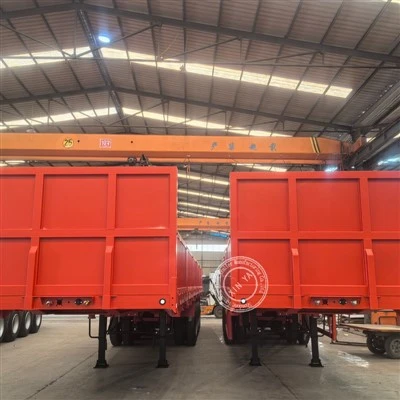
First, let’s get on the same page about what a container trailer is, ‘cause sometimes the lingo confuses people. Unlike a standard flatbed or a dump trailer, a container trailer’s whole setup is built to lock into standard shipping container corner castings—you know, those metal bits on the four corners of every 20ft, 40ft, even 45ft container. That means you don’t need extra straps, crates, or rickety pallet jacks to secure your stuff; the trailer’s twist locks snap right into those corners and hold tight, even over bumpy construction site access roads. I’ve had a lot of construction guys tell me they switch from regular flatbeds ‘cause they waste half their day tightening down loose lumber, rebar, or prefabricated panels, and that’s a hard no-brainer.
Now, let’s talk about the construction materials themselves—what works, what to watch for, and why container trailers fit so well here. Let’s start with the obvious stuff: lumber, steel rebar, pre-cut wall panels, even prefab bathrooms or site offices. All of that is long, bulky, and needs a secure, stable base. A 40ft container trailer can carry a full 40ft high-cube container loaded with 4,000 sq ft of 2x4s or 20 tons of rebar—way more than a standard 20ft dump trailer, which tops out at like 10 tons usually. And since you’re working with a standard container, you can lock the whole thing up at the site overnight, so no one’s stealing expensive lumber or tools off the back of a regular trailer. That’s a big one for sites in areas with high theft rates—we’ve had a few customers save thousands a month on security costs just from that lockable feature.
Then there’s the messy stuff: concrete masonry units (CMUs, aka concrete blocks), gravel, sand, and ready-mix concrete. Wait, hold on—you might think, “Why not just use a dump truck for that?” But container trailers aren’t one-size-fits-all. If your site is on a tight, narrow street where a dump truck can’t turn around, a container trailer can drop off a loaded container near the gate, and a small wheel loader can unload the blocks right there. Or if you’re doing a small renovation job, not a whole new build, you don’t need a full dump truck load of gravel—you can have a 20ft container trailer drop a half-full container, leave it there, and grab more as you go, no wasted space or overages. I’ve had a residential contractor tell me last year he saved $1,200 in material waste by only ordering exactly what he needed, not a full truckload, ‘cause he could have the container trailer deliver smaller loads multiple times.
Wait, but let’s be real—container trailers aren’t perfect for every construction material, right? You wouldn’t, for example, haul loose, powdery stuff like cement powder without some kind of liner or a sealed container. If you toss 80,000 pounds of cement into a regular container, it’ll leak all over the trailer, your site, and the next load you haul. But that’s not a flaw with the trailer—that’s a load prep thing. A lot of our customers use food-grade bulk containers (the kind sealed tight for grain or snacks) for cement, which lock right onto the trailer and keep the powder contained. Or if you’re moving concrete, you can rent a roll-off container that fits the trailer, line it with a plastic tarp, and haul it that way. It just takes a little planning, not a huge overhaul.
Another big win for container trailers on construction sites: flexibility. Let’s say you’re working on a site that’s 50 miles from the supply yard, and you need to move materials between different parts of the site mid-project. A regular dump trailer might have trouble getting across muddy back lots, ‘cause their weight distribution is all off. Container trailers are built with a low deck and heavy-duty axles, so they can handle uneven ground and wet, rutted paths way better than most equipment. I had a civil engineering client last year who was working on a road project out in the boonies—no paved access, just dirt and mud. He switched from his three small flatbeds to two 40ft container trailers, and cut his on-site transport time by 30% ‘cause he could drive the trailers right up to the work zones, no waiting for the dump truck to park 100 yards away.
Oh, and don’t sleep on the reusable part of it. A lot of construction materials end up being moved multiple times—lumber you borrow for forms, temporary site offices, extra rebar. When you use a container trailer, you’re not just moving the material; you’re using the shipping container itself as a mobile storage unit. So you drop the container at the site, unload the lumber, and then use the empty container to store tools and extra material for the next phase, instead of paying for a separate storage bin. That’s a double win, and a lot of our customers tell me the ROI on that is insane—they recoup the extra cost of a container trailer in like two months from not needing extra storage.
But let’s talk about the downsides, ‘cause I don’t wanna be that guy who only hypes the good stuff. If you’re working on a tiny residential remodel—like a bathroom update where you only need a few sheets of drywall and some tile—a container trailer is way overkill. The trailer itself is big, so you might have trouble parking it in a residential driveway, and you’re wasting space for small loads. Also, if you’re hauling super heavy, high-density stuff like granite countertops or steel beams over 60ft long, you might need a specialty extendable container trailer, not a standard one. But for most commercial builds, multi-family housing, and large residential projects, the size and weight capacity work out perfectly. Another thing: if you don’t have the right twist locks or a way to secure the container to the trailer (some guys just chain it, but that’s a bad call), you’ll have issues on the road. That’s why we train all our customers on how to set up the twist locks correctly, and we sell extra hardware if they need it.
Now, here’s a question I get a lot: “Is it more expensive to use a container trailer than a regular flatbed?” Let’s do a quick breakdown. A standard 20ft container trailer costs about $15,000-$25,000 new, compared to a basic flatbed which is $10,000-$18,000. But when you factor in the security, the extra storage, the ability to move materials multiple times without reloading, and the lower theft costs, that extra $5,000-$7,000 pays for itself fast. And if you’re renting instead of buying, it’s even better—you can rent a container trailer for a couple hundred bucks a day, same as a flatbed, but with all those extra benefits. I have a lot of small contractors who rent trailers for big jobs, then switch back to regular flatbeds for smaller ones, which makes total sense.
Wait, let’s throw in a real example to make this concrete (pun intended). Last spring, I worked with a general contractor in Atlanta who was building a 12-unit apartment complex. He was using three dump trucks and two flatbeds to haul lumber, CMUs, and drywall, and he was dealing with $800 a month in tool theft, plus $500 a week in fees for a separate on-site storage bin. He rented two of our 40ft container trailers for the project, one to drop at the lumber yard to load materials, and one to drop at the site. He locked the container at the site every night, so theft dropped to almost zero, and he used the empty container to store tools, so he canceled the storage bin. By the end of the 6-month project, he saved over $28,000—way more than the rental cost of the trailers. That’s the kind of win that makes all the late nights answering questions worth it.
So, to wrap this up: can container trailers be used for construction materials? Absolutely, when they’re the right fit for your job. They’re not a replacement for every dump truck, flatbed, or specialty trailer, but they fill a huge gap in the construction supply chain for flexibility, security, and cost savings. Whether you’re a big GC doing a multi-year commercial build or a small residential contractor doing a new home, there’s a way to use a container trailer to make your job easier and cheaper.

If you’re curious to learn more, or you’re ready to test one out for your next project, I’m here. Don’t overthink it—just hit me up to chat through what you need to haul, the size of your site, and how much you want to save on theft and storage. I can even connect you with other contractors in your area who’ve used our trailers so you can hear it straight from them.
Low Loader Semi-trailer Reference
- Construction Equipment Association. (2022). Heavy-Duty Trailer Specifications for Construction Sites.
- Container Owners Association. (2021). Multi-Use Container Applications in the Construction Industry.
- National Association of Home Builders. (2023). Residential Building Material Transport Efficiency Report.
Shandong Yuncheng Xinya Trailer Manufacturing Co., Ltd.
Shandong Yuncheng Xinya Trailer Manufacturing Co., Ltd. is one of the most experienced container trailer manufacturers and suppliers in China, featured by quality products and good service. Please rest assured to buy CE approved container trailer from our factory. Contact us for customized service and OEM service.
Address: No. 008, Hexie Road, Yangzhuangji Town, Yuncheng County, Heze City, Shandong Province
E-mail: fiona@xinyatrailer.com
WebSite: https://www.china-truckfactory.com/
